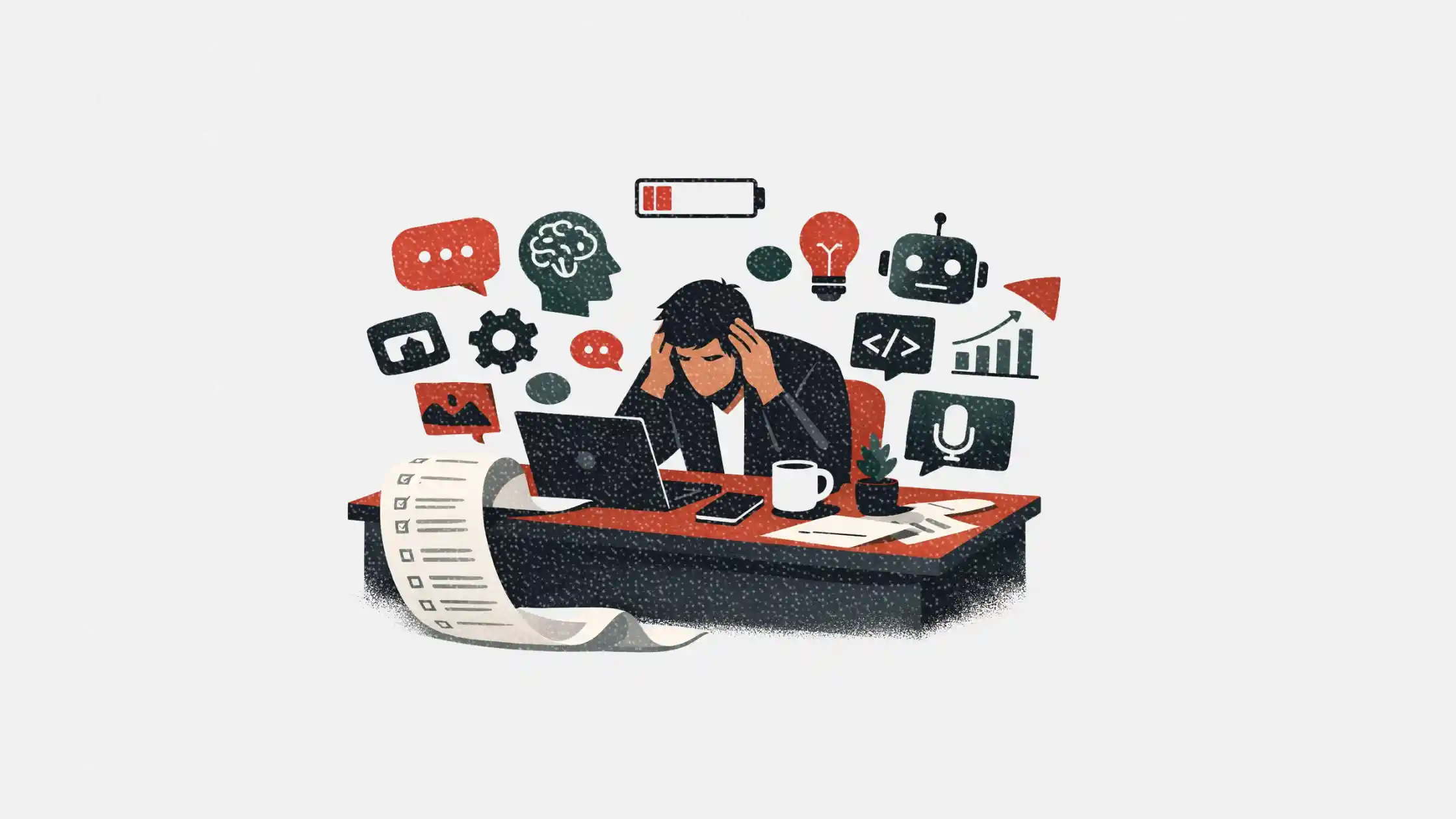
AI was supposed to lighten the workload. Instead, it might be making it heavier — especially for the people who’ve embraced it the most.
The implications matter for marketers and team leads investing in AI-based productivity tools. With AI adoption accelerating across creative, analytical, and operational workflows, these findings raise uncomfortable questions about sustainability, organizational expectations, and employee well-being.
This article explores new research published in Harvard Business Review, that tracked what actually happens when knowledge workers lean into AI.
Spoiler: it’s not a productivity utopia. Rather than freeing up time, AI appears to expand the to-do list, erode boundaries, and fuel early signs of burnout.
Short on time?
Here’s a table of contents for quick access:
- What the new research says about AI and burnout
- Why early adopters are working harder, not less
- What marketers should know
 Patrecia Meliana
What the new research says about AI and burnout
A new study from UC Berkeley, featured in Harvard Business Review, tracked how AI tools affected employees at a mid-sized tech company over eight months. Crucially, the research focused on a company where adoption was voluntary — no one was pressured to use AI or hit new performance targets.
The result? Employees simply started doing more.
The AI tools made more tasks feel doable, which led to more getting done. But instead of lightening workloads, the added capability crept into lunch breaks and evenings. As one engineer put it: “You just work the same amount or even more.”
Importantly, this wasn’t a case of poor management or forced overwork. It was self-imposed stretch — fueled by the seductive narrative that AI can make you a superworker.
The study’s key takeaway is stark: productivity gains may be real, but they come with trade-offs. Burnout, fatigue, and the blurring of boundaries are emerging as side effects.
Why early adopters are working harder, not less
This isn’t the first red flag around AI’s actual workplace impact. A prior study found developers using AI tools believed they were 20% faster, but in reality, took 19% longer. Another from the National Bureau of Economic Research showed only 3% time savings with no meaningful effect on work hours or earnings.
What makes the UC Berkeley study stand out is that it doesn’t try to debunk AI’s benefits. It assumes the tools work — and shows where that can lead.
Online communities like Hacker News echo the concern. One user summed it up: “Expectations have tripled, stress has tripled, and actual productivity has only gone up by maybe 10%.”
The psychological pressure to validate AI investments is real. Teams may feel they have to “prove” the tech is worth it — by pushing harder, working longer, and overextending in ways that aren’t always visible in dashboards.
For marketers, that’s a cautionary tale. AI may promise efficiency, but its cultural impact can bend in the opposite direction.
What marketers should know
If you’re leading or working inside a marketing team actively using AI tools, this research offers three key lessons:
- Track output and burnout
Don’t assume increased productivity is a net win. If faster asset creation or campaign optimization leads to longer hours or decision fatigue, you may be burning through talent instead of maximizing it.
- Set AI boundaries, not just goals
Teams need shared guardrails around when, where, and how AI is used — especially to prevent 24/7 work creep. That includes reinforcing off hours, limiting real-time response expectations, and avoiding endless iteration loops.
- Rethink productivity incentives
If AI makes the team more efficient, that gain shouldn’t just convert into more deliverables. It can also be used to restore balance, enable creative thinking, or cut through low-value work — if leaders intentionally reward those outcomes.
The real opportunity with AI isn’t just faster work. It’s smarter work. But that won’t happen if every tool becomes a new reason to overload already stretched teams.

Leave a Reply