
B2B marketers invest heavily in content creation. Thought leadership pieces, whitepapers, case studies, and comprehensive guides fill editorial calendars across industries.
Yet much of this content never reaches its intended audience—buried on page three of search results where even the most valuable insights go undiscovered.
The missing element in many B2B content strategies isn’t quality or relevance. It’s authority. And authority, in the language of search algorithms, is measured primarily through backlinks from trusted sources.
Why B2B Brands Struggle with Visibility
The B2B content landscape presents unique challenges. Buying cycles are long, often stretching across months of research and evaluation. Target keywords tend to be narrow and highly competitive.
Decision-makers conduct extensive research before engaging with sales teams, making organic search visibility critical for capturing prospects early in their journey.
Yet many B2B brands approach SEO with a purely content-first mentality. They produce excellent material that demonstrates genuine expertise, then wonder why it fails to rank against competitors with objectively inferior content. The answer lies in understanding how backlink authority drives B2B SEO performance—a factor that separates content that ranks from content that languishes.
The authority gap in B2B marketing
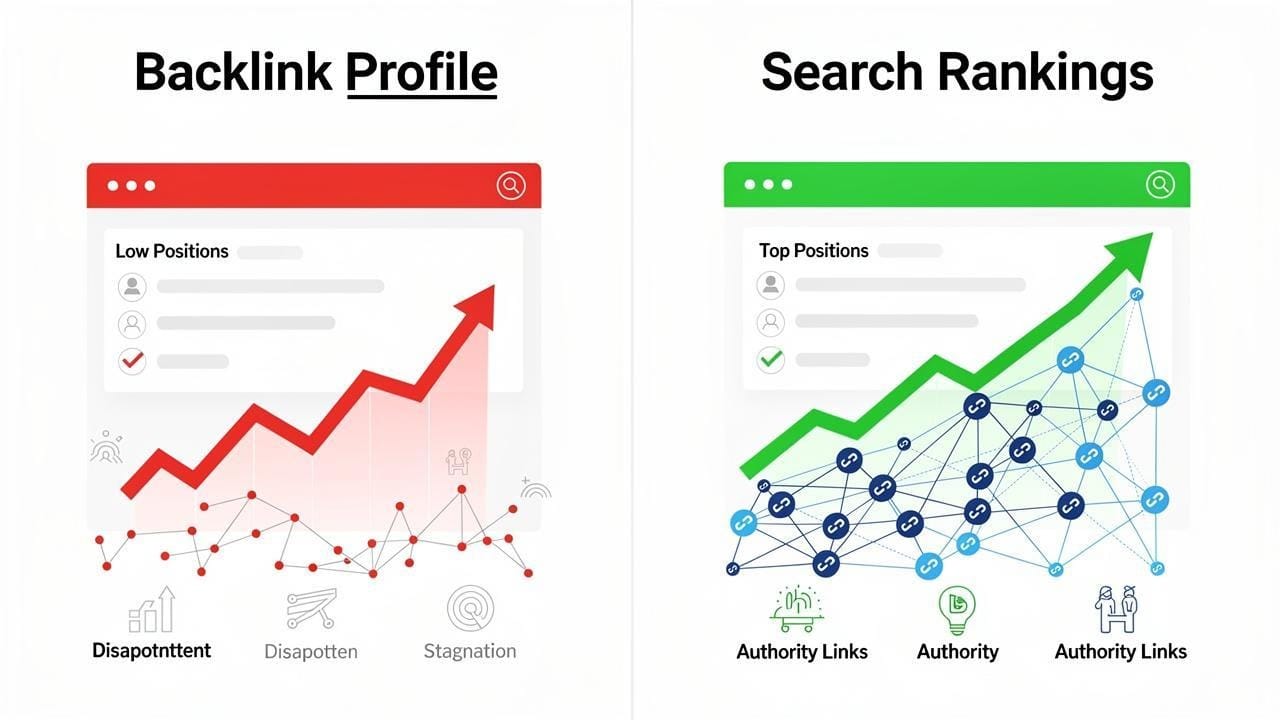
Search engines face a fundamental challenge: they can’t directly evaluate expertise, experience, or the genuine value of information. Instead, they rely on signals that correlate with quality. The most important of these signals remains backlinks from authoritative sources.
When respected industry publications, established news sites, and recognized thought leaders link to content, they’re providing implicit endorsement. Search algorithms interpret these links as votes of confidence, adjusting rankings accordingly.
For B2B brands, this creates both a challenge and an opportunity. The challenge: building authoritative backlinks requires dedicated effort beyond content creation. The opportunity: competitors who focus only on content creation leave significant ranking potential on the table.
Measuring link building ROI
The return on link building investment compounds over time, making it fundamentally different from paid acquisition channels that stop delivering the moment spending stops.
A quality backlink acquired today continues contributing to rankings indefinitely. Unlike paid search campaigns where each click costs money, organic traffic driven by strong backlink profiles flows continuously without incremental cost. For B2B companies with high customer lifetime values, this compounding effect makes strategic link building one of the most cost-effective long-term marketing investments available.
The challenge lies in attribution. Link building’s impact appears gradually across ranking improvements, traffic growth, and eventually pipeline contribution. Teams expecting immediate results often abandon efforts before the compounding effect materializes.
Quality over shortcuts
The pressure for quick results has led many B2B marketers down problematic paths. Private blog networks, purchased links from low-quality sites, and other manipulative tactics promise fast rankings but deliver long-term penalties.
Search algorithms have become increasingly sophisticated at identifying artificial link patterns. Brands that pursue shortcuts often find themselves worse off than before, with penalties that take months or years to recover from. Those seeking to build sustainable authority should explore safe alternatives to PBN links that deliver results without risking algorithmic penalties.
Sustainable link building focuses on earning placements through genuine value exchange: expert commentary in industry publications, contributions to respected research, partnerships with complementary brands, and content that naturally attracts links because it solves real problems.
Integrating link building with content strategy
The most effective B2B content strategies treat link building not as a separate discipline but as an integral component of content planning. Before creating any major piece, teams should ask: what makes this content linkable? The intersection of content marketing and SEO growth strategies creates compounding returns that neither approach achieves alone.
Original research attracts citations from analysts and journalists. Comprehensive guides become go-to references that other content creators link to. Expert commentary positions brand representatives as thought leaders whom publications want to quote.
This integration requires coordination between content teams focused on production and SEO teams focused on visibility. When both work toward shared goals, the result is content that simultaneously serves audience needs and builds the authority required to reach them.
Building authority in competitive markets
B2B markets often feature established incumbents with years of accumulated backlinks and domain authority. Newer entrants can feel locked out of competitive keywords regardless of content quality.
The path forward requires strategic targeting. Rather than competing head-on for the most competitive terms, successful challengers identify specific topics where they can establish authority quickly. They build clusters of content and backlinks around these focused areas, gradually expanding into broader terms as their domain authority grows.
This approach takes longer than many marketers prefer, but it builds sustainable competitive advantage. A backlink profile established through genuine industry relationships and quality placements creates barriers that competitors cannot easily replicate.
The long-term view
B2B buying cycles already operate on extended timeframes. Marketing strategies should match this reality. Link building delivers its strongest returns for organizations willing to invest consistently over months and years, treating authority building as an ongoing program rather than a one-time project.
The brands dominating organic search in competitive B2B markets didn’t achieve that position through content alone. They combined quality content with strategic link building, allowing both elements to reinforce each other over time.
For B2B marketers evaluating where to allocate resources, the question isn’t whether link building matters—the data on that point is clear. The question is whether the organization is prepared to invest in building genuine authority, or whether it will continue competing with one hand tied behind its back.
The hidden ROI of strategic link building isn’t really hidden at all. It’s visible in the organic traffic numbers, ranking positions, and pipeline contributions of every B2B brand that’s made authority building a core component of their marketing strategy. The only thing hidden is the opportunity cost paid by those who haven’t.
Leave a Reply