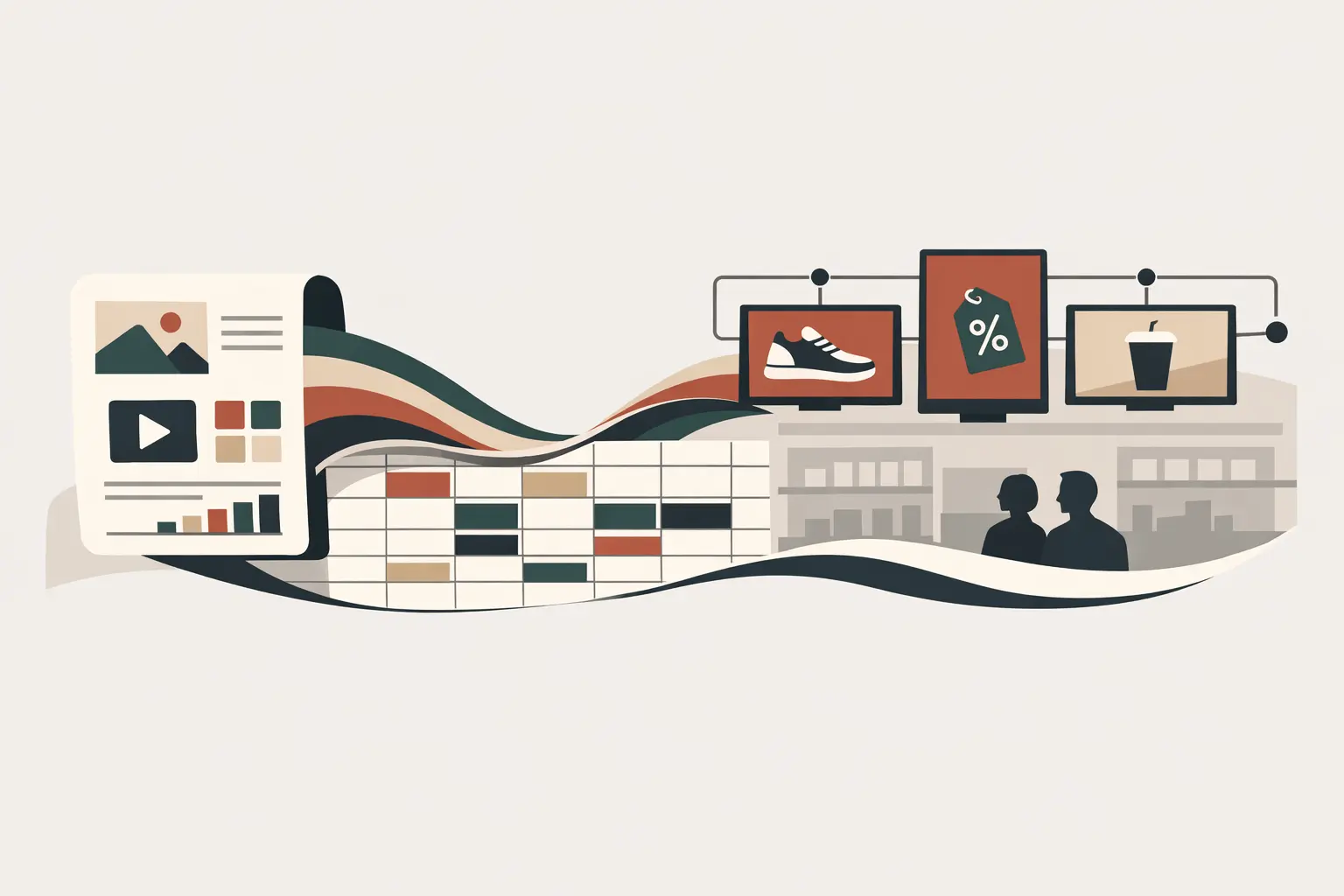
Canva has acquired Melbourne-based adtech startup Doohly for $30 million as it expands into digital out-of-home (DOOH) advertising. Doohly provides software for running information and advertising screens in offices and retail locations.
For marketers, the deal matters because DOOH is increasingly managed like a software channel: creative velocity, scheduling, and network operations can become part of a broader content workflow rather than a standalone media specialty.
Short on time?
Here’s a quick look at what’s inside:
- What Doohly’s platform does in the DOOH workflow
- Why Canva would add digital out-of-home to a creative platform
- How Doohly stacks up against Broadsign, Hivestack, Scala, and Navori
- What this signals for retail media growth and screen-based ads
- What marketers should do if they plan to scale DOOH creative
What Doohly’s platform does in the DOOH workflow
Doohly sells software used to operate screen networks, including content management, player software, scheduling, and reporting. It is positioned for environments like offices and retail, where screen owners need reliable tooling to manage what plays, when it plays, and how performance is reported back.
The company cites operational scale signals: support for 100+ networks, operations in 13+ countries, and processing of 1 billion+ creatives monthly. It also claims 100% client retention since inception, which, if representative, suggests it is embedded in customers’ operational workflows where switching costs can be meaningful.
Named customers include Mitre 10, Rebel Sport, Mobil, LiquorLand, and Darwin International Airport, indicating usage across retail and venue contexts where uptime and scheduling control are central.
 Patrecia Meliana
Why Canva would add digital out-of-home to a creative platform
Canva’s core value for marketers is making creative production faster and more accessible across teams. DOOH expansion can be read as a distribution adjacency: if more brand and retail environments rely on screens, the distance between “design a creative” and “publish it to a screen network” becomes strategically important.
This is also consistent with the way creative platforms are responding to AI-driven content volume. As teams generate more variants, the bottleneck shifts to trafficking and governance: approvals, scheduling, localization, and ensuring the right creative appears in the right place. Owning or tightly integrating a DOOH operations layer can make that workflow more cohesive.
How Doohly stacks up against Broadsign, Hivestack, Scala, and Navori
Doohly operates in a competitive DOOH and digital signage software category that includes established players like Broadsign, Scala, and Navori, along with platforms connected to programmatic DOOH such as Hivestack.
Broadly, these vendors span two needs: (1) network operations and content management for screen owners, and (2) programmatic buying and supply enablement for advertisers. Doohly’s positioning, based on the product description, sits primarily on the operations side: managing screens, scheduling, and reporting.
Canva’s ownership could influence differentiation if it ties creative production, templating, and collaboration into DOOH network execution. The competitive question becomes whether an integrated “create plus operate” workflow reduces friction enough to win network operators and retail media teams who currently stitch together separate tools.
What this signals for retail media growth and screen-based ads
Doohly’s fit with retail and venue screens links to a wider trend: retail media growth is pushing more ad inventory into physical spaces, and those spaces increasingly need software to manage content and monetize attention.
For brands, that can mean DOOH becomes less of a bespoke buy and more of a repeatable channel with always-on placements, faster creative refresh cycles, and tighter ties to promotional calendars. For network operators, it raises the value of tooling that can handle many creative variants and frequent changes without operational strain.
What marketers should do if they plan to scale DOOH creative
If DOOH is moving closer to a “content ops” model, marketers should prepare accordingly:
- Treat DOOH assets as a variant system: design templates, localization rules, and promotion-based swaps, not one-off files.
- Build governance into the workflow: approvals, brand safety checks, and version control matter when creatives change frequently across many locations.
- Ask how reporting works: what data you get back, how fast, and whether it can be reconciled with broader campaign measurement.
- Coordinate with retail and trade teams: DOOH creative often maps to in-store execution realities, not just media plans.


Leave a Reply