Anthropic’s Claude is seeing a sharp rise in paid consumer adoption, fueled by a mix of product launches, public controversy, and well-timed marketing.
For B2B marketers and PR professionals, this is more than a growth story. It is a case study in how positioning, product packaging, and narrative control can directly influence revenue, even in a crowded AI market.
This article explores what’s behind the surge and what it signals for AI adoption among paying users.
Short on time?
Here’s a table of contents for quick access:
- What’s driving Claude’s paid subscriber surge
- How the DOD feud and marketing boosted visibility
- How Claude’s product updates are converting users
- What marketers should know about AI subscription trends
 Patrecia Meliana
What’s driving Claude’s paid subscriber surge
Anthropic’s Claude is experiencing record growth in paid subscriptions, according to transaction data analyzed by Indagari across millions of U.S. consumers.
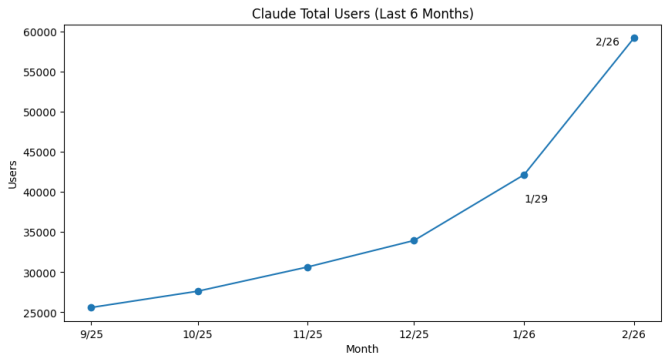
The key signal is not just awareness but willingness to pay. Paid subscriptions have more than doubled this year, with the strongest spike occurring between January and February. A significant portion of these users are entering at the US$20 per month Pro tier, suggesting a broad base of adoption rather than a niche of high spenders.
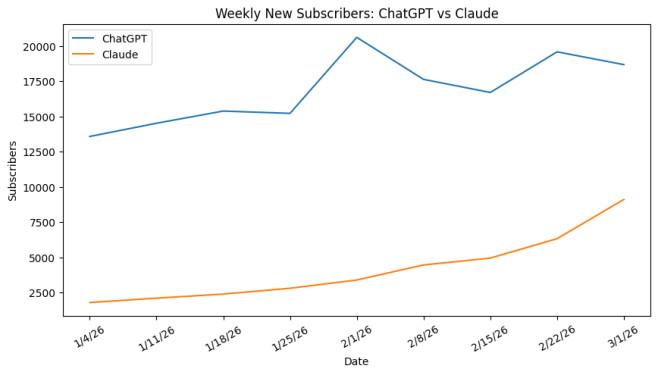
The data also shows returning users coming back in large numbers, indicating that Claude is not only acquiring users but reactivating dormant ones. This kind of re-engagement is often harder to achieve and points to improved product-market fit.
 Patrecia Meliana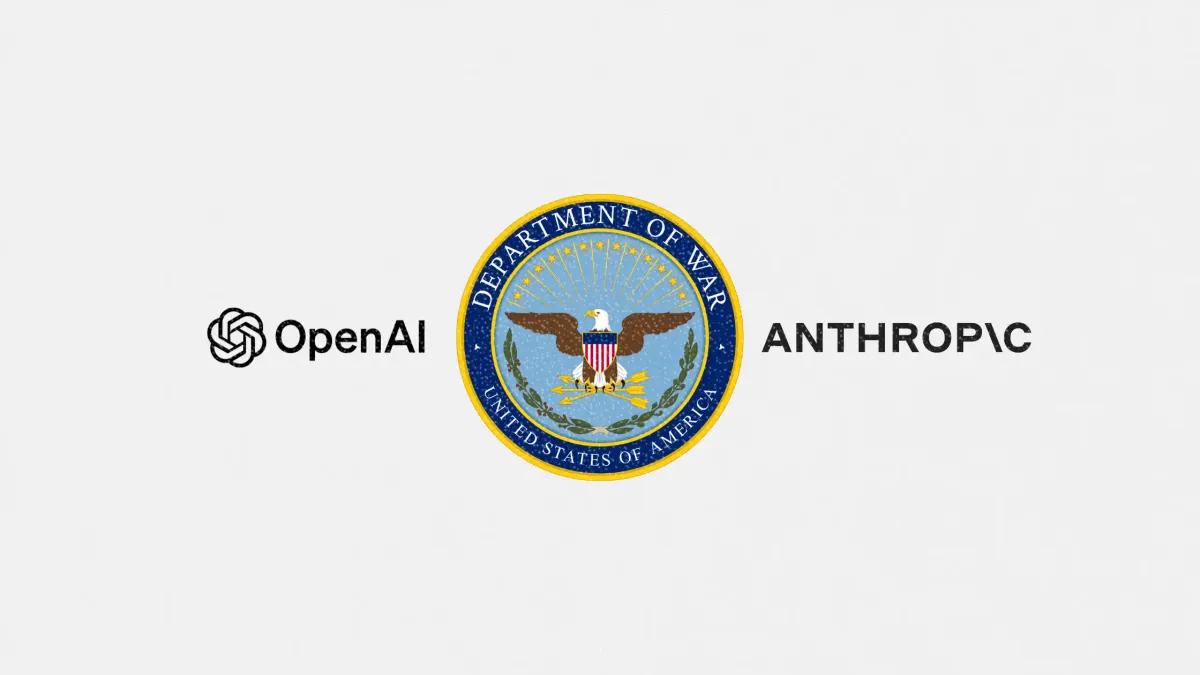
How the DOD feud and marketing boosted visibility
Claude’s growth is not happening in a vacuum. A combination of controversy and brand positioning has amplified its visibility.
In late January, reports surfaced about a dispute between Anthropic and the Department of Defense over how its AI could be used. Anthropic publicly refused to support lethal autonomous operations or mass surveillance. The situation escalated into legal and regulatory tension, drawing widespread media coverage.
At the same time, Anthropic ran Super Bowl ads that directly challenged OpenAI’s approach, around ads and user experience. The messaging was clear and differentiated: Claude positions itself as a safer, more user-aligned alternative.
For marketers, this is a reminder that narrative matters. Product growth here is tightly linked to values, positioning, and timing. The controversy created awareness, but the brand stance gave users a reason to choose.
How Claude’s product updates are converting users
Beyond visibility, Claude’s product strategy is playing a critical role in conversion.
Recent launches like Claude Code and Claude Cowork target developers and productivity-focused users. These are high-intent segments that are more likely to pay for tools that improve workflows.
The newly introduced Computer Use feature adds another layer. It allows Claude to interact with a user’s computer, performing actions like clicking, scrolling, and executing tasks. Combined with Dispatch, which enables task assignment from mobile devices, the product moves closer to an autonomous assistant model.
Importantly, these features are not available on the free tier. This creates a clear upgrade path and reinforces the value of paid plans. Instead of gating basic functionality, Anthropic is monetizing advanced capabilities tied to real productivity gains.
What marketers should know about AI subscription trends
Claude’s growth offers several practical insights for marketers navigating the AI space:
1. Positioning can drive revenue, not just awareness
Anthropic’s stance on AI safety and its contrast with competitors helped convert attention into paid users.
2. Feature gating works when tied to real utility
Advanced capabilities like autonomous task execution justify subscription costs more effectively than cosmetic upgrades.
3. Controversy can accelerate adoption if aligned with brand values
The DOD dispute amplified Claude’s visibility, but the company’s clear ethical position made it resonate.
 Patrecia Meliana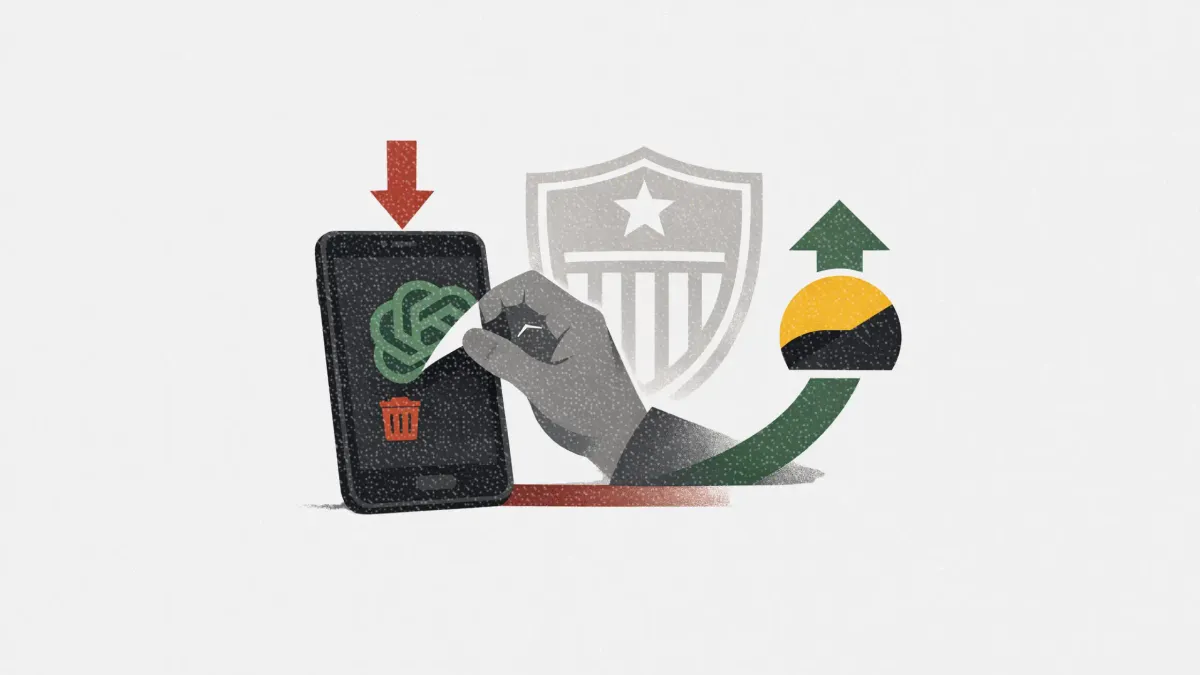
4. Retention is becoming a competitive advantage
The return of previous users suggests that continuous product improvement is critical in subscription-based AI models.
5. Mass-market pricing still dominates
Most users are opting for lower-tier plans, reinforcing the importance of accessible entry points in scaling adoption.
Despite this momentum, ChatGPT remains the dominant player in consumer AI subscriptions. Even with some churn following its own DOD-related announcements, it continues to add users at a faster absolute rate.
 Falencia Naoenz
Claude’s surge in paid subscribers highlights a shift in how AI tools compete. It is no longer just about capability. It is about trust, positioning, and delivering tangible value that justifies recurring spend.
For marketers, the takeaway is clear: growth in AI is becoming a full-stack challenge that blends product, narrative, and pricing strategy. The companies that align all three will win not just users, but paying customers.


Leave a Reply