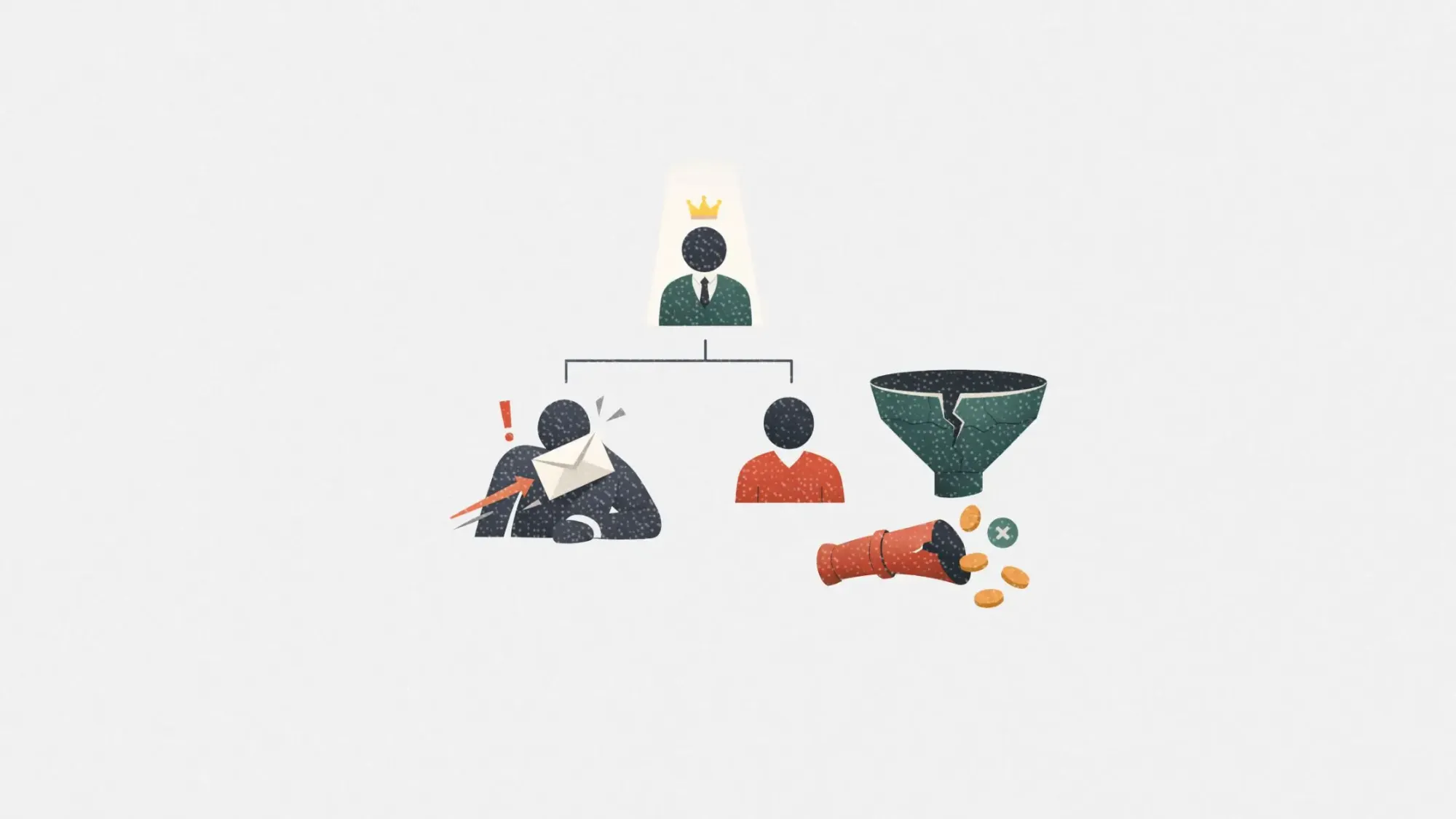
B2B outreach has a dirty secret: the majority of campaigns fail not because of weak copy or poor timing, but because they target the wrong person entirely. You can write the most compelling cold email in the world and still get zero replies if it lands in the inbox of someone who has no authority to act on it.
Understanding how to reach actual decision-makers in your outreach from the very first step is what separates programs that generate real pipeline from those that drain time and budget.
Short on time?
Here’s a quick look at what’s inside:
- The real cost of targeting the wrong contact
- Building a contact discovery system that scales
- The step that most teams skip: testing before you send
- Putting the pieces together
The real cost of targeting the wrong contact
Research consistently shows that B2B buying decisions involve an average of six to ten stakeholders. Yet most outreach campaigns still treat “finding someone at the company” as good enough. It isn’t. Emailing a mid-level manager when the real decision-maker sits two levels above them wastes your sequence, damages your sender reputation, and signals immediately that you haven’t done your homework.
The fix requires deliberately thinking about who you’re reaching, not just where they work. Understanding the difference between an influencer, a champion, and a true decision-maker within any given account is a skill that dramatically changes your reply rate. Different titles require fundamentally different value propositions, and treating them interchangeably is one of the most expensive mistakes in outreach.
Building a contact discovery system that scales
Once you understand who you’re targeting, the next challenge is finding them consistently and at scale without sacrificing data quality. The most effective approaches combine three layers.
First, a broad contact database for initial prospecting, somewhere you can search by industry, company size, geography, seniority level, and job function to surface qualified targets efficiently. Second, a verification layer to confirm emails are deliverable before any message is sent. Blasting unverified contacts is one of the fastest ways to destroy a sending domain’s reputation. Third, enrichment capabilities that add context to raw contact data: LinkedIn profiles, company news, recent hiring signals, and funding rounds that make personalization feel natural rather than formulaic.
When these three layers work together, outreach moves from spray-and-pray to a precise, repeatable system. Teams that invest in this infrastructure consistently outperform those relying on manually assembled lists and gut instinct about who the right contact might be.
The step that most teams skip: testing before you send
Here’s where a significant amount of outreach ROI gets left on the table. Most teams invest heavily in finding the right contacts and crafting the right message, then send everyone to the same generic landing page or a CTA that was never designed with their specific audience in mind. This is a mistake that no amount of outreach volume can compensate for.
Before any campaign goes live, the pages your prospects land on need to be tested for the audience you’re sending. Pre-launch design testing for B2B lead generation, using attention heatmaps and visual analysis, can reveal whether your CTAs are drawing the right focus, whether key value propositions are visible above the fold, and whether your layout is actually guiding visitors toward the action you want them to take. Small layout and copy adjustments that are invisible to the naked eye without this kind of testing, can produce dramatic shifts in conversion rate.
For B2B outreach specifically, the page a prospect lands on after clicking your CTA needs to do three things simultaneously: validate that the decision to click through was the right one, surface the value proposition relevant to their role, and make the next step feel low-friction. Getting any one of these wrong creates a drop-off regardless of how well the outreach itself performed.
Putting the pieces together
A successful B2B outreach program is a system with interdependent parts. Weak contact data undermines great copy. Great copy sent to the wrong decision-maker goes nowhere. And even the right email to the right person fails if the destination page can’t convert.
The teams that consistently outperform invest equally in who they’re contacting, what they’re saying, and what happens after the click. That means segmenting by seniority and decision-making authority, personalizing messaging to match each contact’s position in the buying process, and testing destination pages before traffic hits them.
None of these steps is complicated in isolation. But most organizations still treat them as separate problems owned by separate teams. Closing those gaps and building a coherent system that connects contact discovery to conversion is where the real competitive advantage in B2B outreach lives.
Leave a Reply