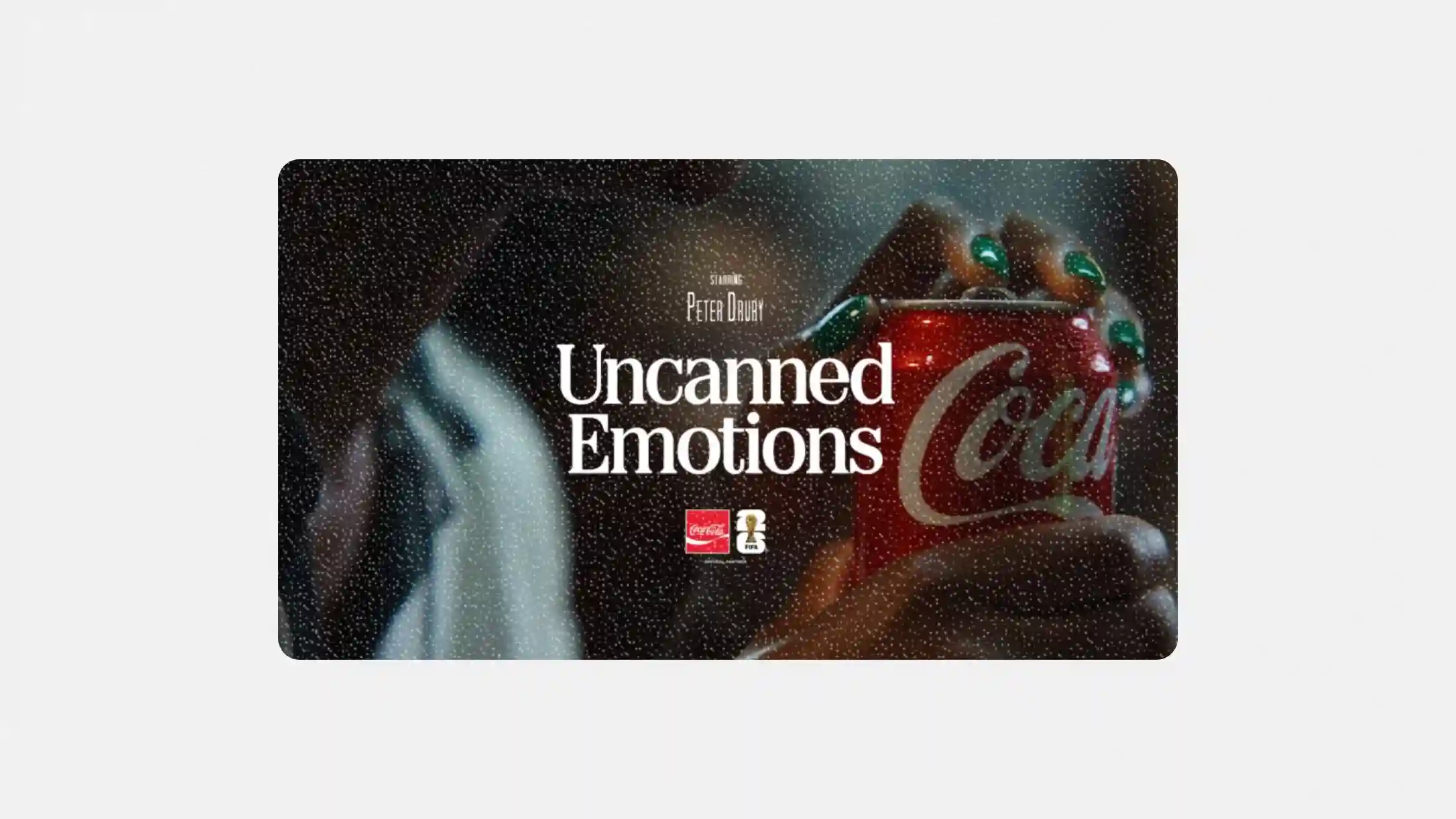
Coca-Cola is doubling down on emotional storytelling as it ramps up its FIFA World Cup 2026 marketing push. Its latest global brand film, “Uncanned Emotions,” shifts the spotlight from spectacle to something more visceral: the unpredictable, often chaotic emotional journey of football fans.
This article explores how Coca-Cola is evolving its World Cup narrative strategy, why this creative direction matters for brand storytelling, and what marketers can learn from its approach to emotional resonance at global scale.
Short on time?
Here’s a table of contents for quick access:
- What is Coca-Cola’s “Uncanned Emotions” campaign about
- How Coca-Cola is building a multi-layered World Cup marketing ecosystem
- Why emotional storytelling is becoming a competitive advantage
- What marketers should know about scaling emotional campaigns
 Patrecia Meliana
What is Coca-Cola’s “Uncanned Emotions” campaign about
Coca-Cola has launched “Uncanned Emotions,” its second global brand film tied to the FIFA World Cup 2026, continuing a three-part campaign series that began with “Bubbling Up.”
While the first installment focused on anticipation and energy, this new film zooms in on the raw highs and lows of fandom during a match. It captures moments of anxiety, heartbreak, relief, and joy, positioning Coca-Cola as a constant companion throughout that emotional rollercoaster.
To reinforce authenticity, the brand brought in legendary commentators Peter Drury and Luis Omar Tapia to narrate the film in a live match style. This creative choice blurs the line between advertising and broadcast, making the experience feel less like a commercial and more like a shared cultural moment.
The campaign is designed to resonate with hardcore football fans while remaining accessible to broader audiences who connect with the emotional stakes, even if they are not deeply invested in the sport.
How Coca-Cola is building a multi-layered World Cup marketing ecosystem
“Uncanned Emotions” is not a standalone creative. It sits within a broader, integrated World Cup ecosystem that Coca-Cola has been steadily expanding.
The brand is activating across multiple touchpoints:
- Experiential marketing: The FIFA World Cup Trophy Tour returns, giving fans physical access to the tournament’s most iconic symbol
- Collectibles and nostalgia: A renewed collaboration with Panini introduces a custom sticker collection in both physical and digital formats
- Music-driven storytelling: Through its label Real Thing Records, Coca-Cola released a reimagined version of “Jump” featuring global artists, tying music into the campaign narrative
Patrecia Meliana
This layered approach shows how Coca-Cola is moving beyond traditional campaign bursts into a sustained engagement model that spans content, culture, and community.
It also reinforces its long-standing partnership with FIFA, which spans more than five decades, giving the brand both credibility and continuity in the space.
Patrecia Meliana
Why emotional storytelling is becoming a competitive advantage
Coca-Cola’s strategy reflects a broader shift in brand marketing: emotion is no longer just a creative choice, it is a differentiator.
In high-saturation environments like global sports events, functional messaging gets lost. What cuts through is relatability. By focusing on shared emotional experiences, Coca-Cola is tapping into something that scales globally without requiring translation.
Arnab Roy, President, Coca-Cola Global Category, framed it clearly: the World Cup is a moment where “billions of hearts beat in sync,” and every emotion, from joy to heartbreak, has a place.
For marketers, this highlights a key shift:
- Campaigns are moving from product-centric to experience-centric
- Storytelling is increasingly built around audience emotion, not brand messaging
- Authenticity is being engineered through format choices, like live-style narration
In other words, the execution matters just as much as the message.
What marketers should know about scaling emotional campaigns
Coca-Cola’s approach offers several practical takeaways for marketing teams looking to build similar impact:
1. Design for emotional universality
Focus on feelings that transcend geography and language. Emotions like anticipation, tension, and joy travel well across markets.
2. Blur content formats
Borrow from adjacent formats such as live broadcasts, documentaries, or user-generated content to make campaigns feel less scripted and more real.
3. Build ecosystems, not one-off ads
Combine storytelling with experiences, partnerships, and cultural touchpoints to extend campaign lifespan and engagement.
4. Leverage nostalgia and collectability
Collaborations like Panini tap into existing fan behaviors, making campaigns more participatory and less passive.
5. Integrate music and culture early
Music is not just an add-on. It is a distribution and emotional amplification channel that can extend campaign reach.
Patrecia Meliana
For B2B marketers and brand strategists, the takeaway is clear: emotional storytelling is not just for consumer brands. It can be adapted to enterprise narratives, product launches, and even employer branding, as long as the human angle is authentic.
As the FIFA World Cup 2026 approaches, the brands that win attention will not just be the loudest, but the most relatable. Emotional resonance, when executed well, becomes a scalable advantage.

Leave a Reply