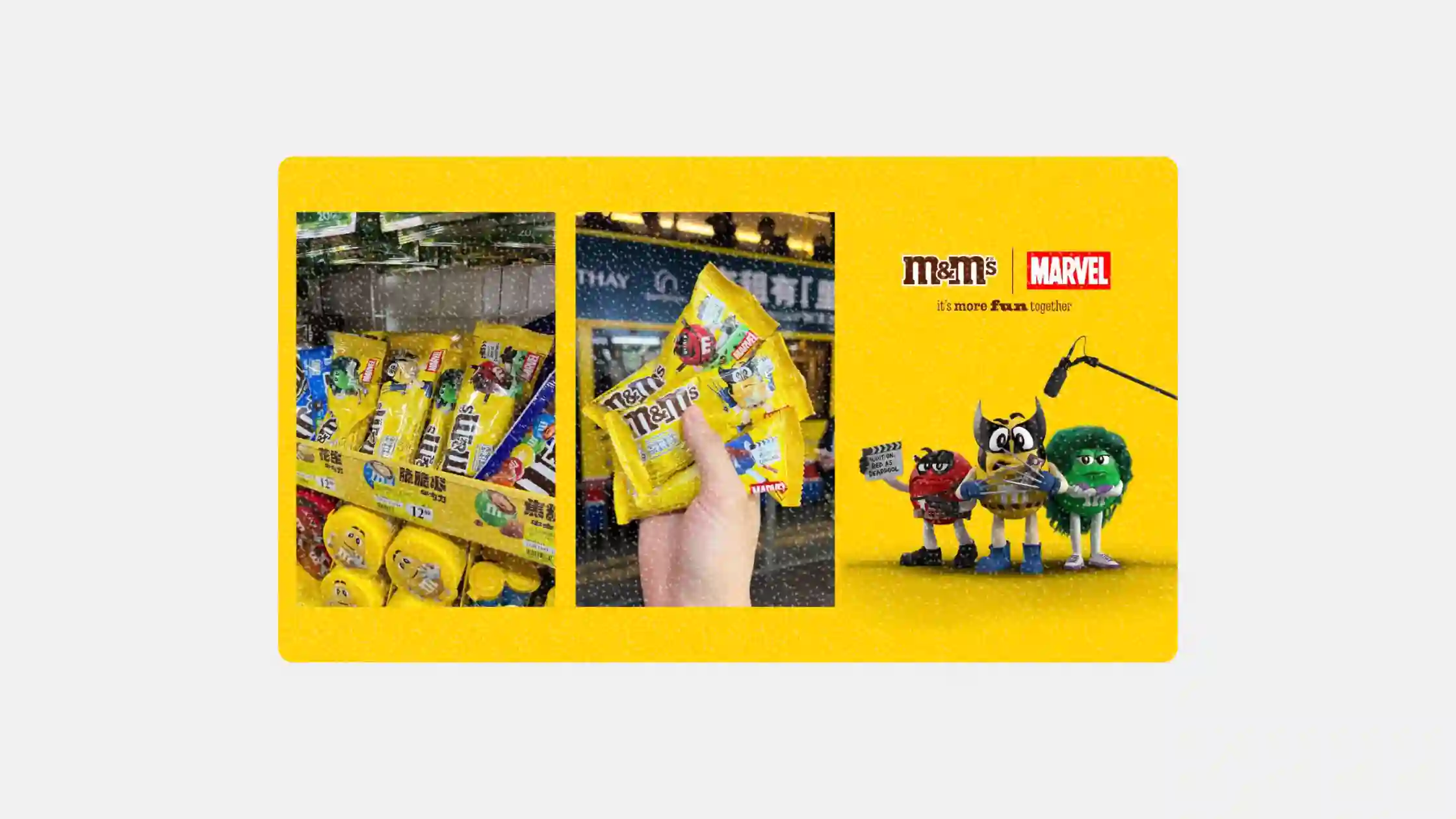
Mars is doubling down on the intersection of commerce, entertainment, and data with its latest M&M’S and Marvel campaign across Asia-Pacific. Instead of treating gaming as a brand awareness play, the company is tying it directly to verified purchases, turning every transaction into a measurable engagement moment.
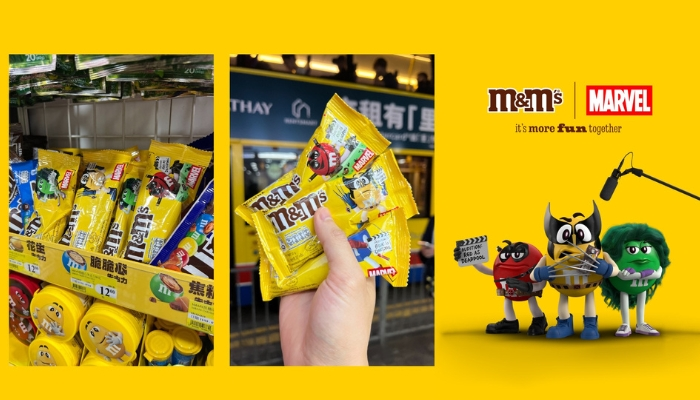
This article explores how the “Be a hero with M&M’S | Marvel” campaign works, why it matters for marketers experimenting with gamification, and what it signals about the future of purchase-driven engagement in APAC.
Short on time?
Here’s a table of contents for quick access:
- How the M&M’S x Marvel gaming campaign works across APAC
- Why purchase-linked gaming is becoming a serious marketing channel
- What marketers should know about gamified commerce in APAC
 Patrecia Meliana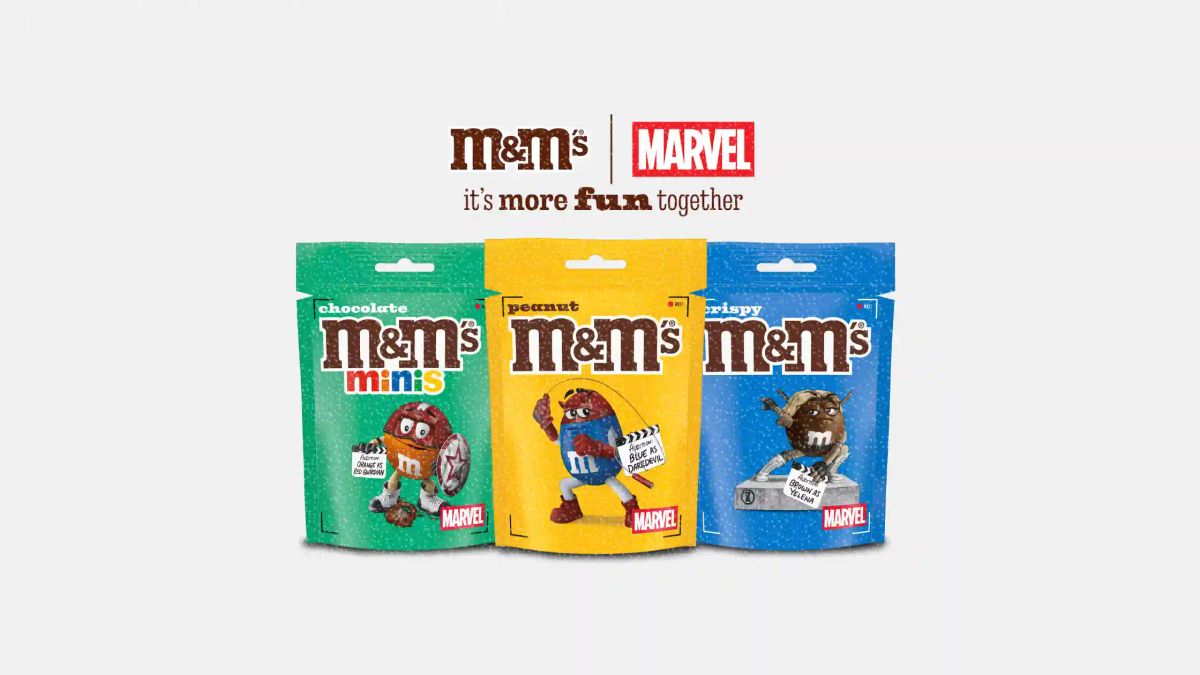
How the M&M’S x Marvel gaming campaign works across APAC
Mars has rolled out its “Be a hero with M&M’S | Marvel” campaign across eight APAC markets, including Malaysia, Singapore, Thailand, Taiwan, Vietnam, South Korea, the Philippines, and Hong Kong. The campaign runs from April 1 to May 31, 2026.
At its core, the activation connects physical product purchases to a digital gaming experience powered by SUPERFAN’s game engine and audience intelligence platform.
The mechanics are straightforward but strategically layered:
- Consumers scan QR codes on packaging or in-store materials
- They are routed into a campaign game layer without needing to download an app
- Registration happens via dominant local messaging platforms like WhatsApp, LINE, and KakaoTalk
- Users upload receipts, which are validated through an AI-powered scanner
- Each verified purchase unlocks gameplay access and experience points
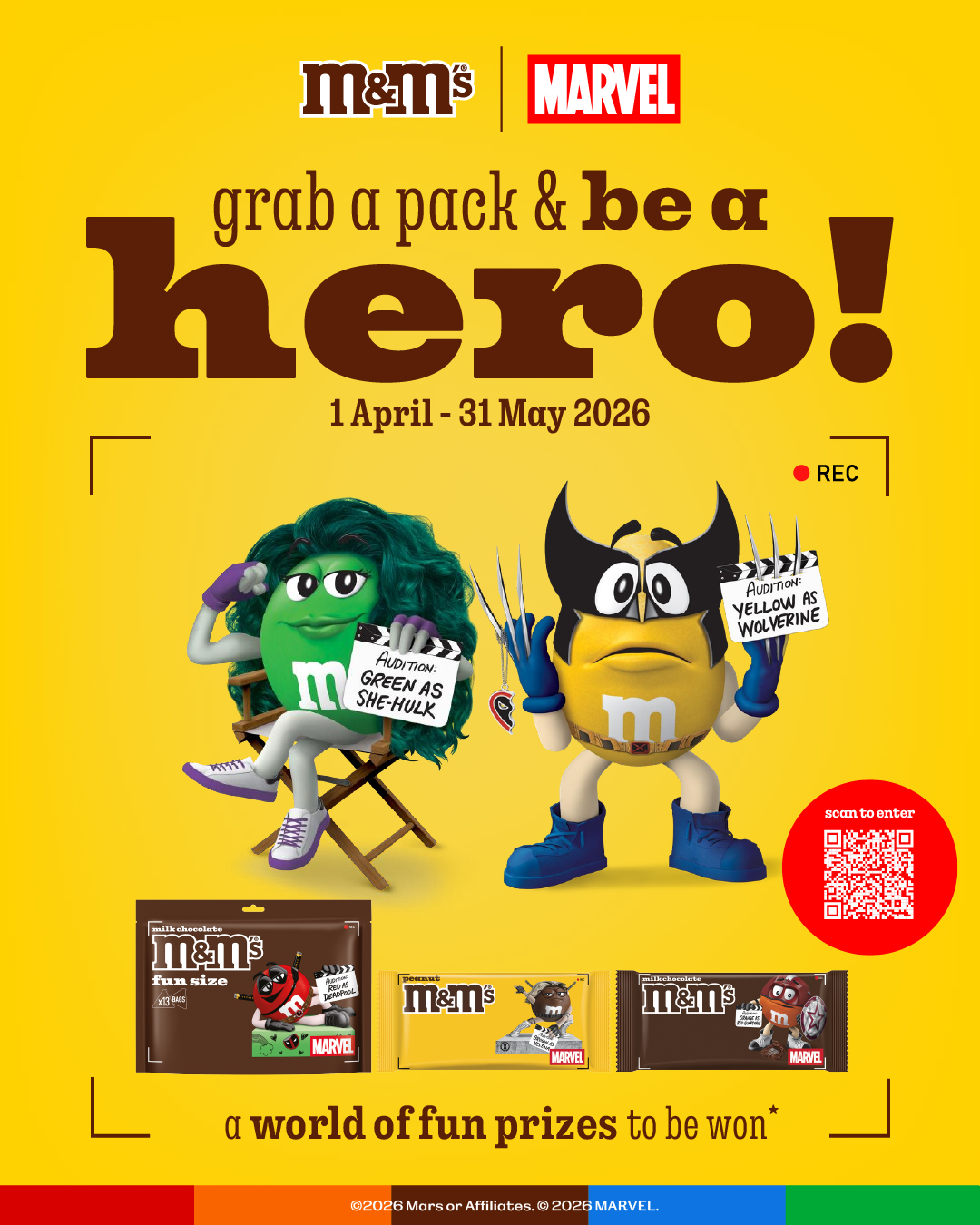
Repeat purchases translate into more entries and gameplay opportunities, effectively turning buying behavior into a loop of engagement and reward. Incentives include a grand prize trip to Shanghai Disneyland, iPads for selected winners, and TikTok discount vouchers for all registered participants.
SUPERFAN’s infrastructure handles cross-market deployment, receipt validation, and audience tracking, positioning the campaign as one of the largest purchase-linked gaming activations in the APAC confectionery category.
Patrecia Meliana
Why purchase-linked gaming is becoming a serious marketing channel
This campaign is not just a branded experience. It reflects a shift in how brands are thinking about gaming as a performance layer rather than a passive engagement tool.
Traditionally, branded games have struggled to prove ROI. Engagement was high, but attribution was weak. By linking gameplay directly to verified purchases, Mars is solving that gap.
SUPERFAN’s approach reframes gaming as a “verified action channel.” That means:
- Engagement is tied to real transactions, not just impressions
- Data collection becomes more structured and actionable
- Cross-market behavior can be compared within a unified system
There is also a distribution advantage. By embedding onboarding into messaging platforms like WhatsApp and LINE, the campaign removes friction. No app downloads, no email sign-ups, just instant entry into the experience.
For APAC markets, where super apps and messaging ecosystems dominate user behavior, this is a critical design choice. It aligns with how consumers already interact with brands, rather than forcing them into new environments.
The Marvel tie-in adds another layer. It brings built-in cultural relevance and fandom, which helps accelerate participation without requiring heavy education or awareness spend.
What marketers should know about gamified commerce in APAC
For marketers, this campaign offers several practical takeaways that go beyond confectionery or entertainment partnerships.
1. Gaming is moving from awareness to conversion
Gamification is no longer just about engagement metrics. When tied to purchase validation, it becomes a measurable driver of sales and repeat behavior.
2. Messaging platforms are the new front door
Instead of building standalone apps, brands are embedding experiences inside platforms users already trust. This reduces drop-off and speeds up onboarding.
3. AI is enabling scalable verification
Receipt scanning powered by AI allows brands to validate purchases across multiple markets without manual intervention. This is key for scaling similar campaigns regionally.
4. Repeat purchase loops can be engineered
By linking rewards to multiple entries, brands can incentivize frequency, not just participation. This turns campaigns into ongoing engagement systems rather than one-off activations.
5. Entertainment IP still matters, but execution matters more
Marvel brings attention, but the real value comes from how the experience is structured. Without the purchase linkage and seamless onboarding, the IP alone would not deliver the same impact.
Patrecia Meliana
Mars’ APAC campaign shows how brands are evolving from campaign-based marketing to system-based engagement. By combining gaming, AI validation, and messaging platforms, M&M’S is turning everyday purchases into trackable, repeatable interactions.
For marketers, the takeaway is clear. The future of gamification is not about building bigger experiences. It is about building smarter ones that connect directly to business outcomes. If this model proves effective at scale, expect more brands to treat gaming not as a side experiment, but as a core part of their commerce and retention strategy.

Leave a Reply