
Social platforms are no longer just discovery channels for products and trends. They are now shaping high-stakes decisions like education financing.
A new study from Sallie shows that TikTok is playing a growing role in how Gen Z searches for scholarships, blending peer advice, algorithmic discovery, and short-form content into a new kind of search behavior.
This article explores how TikTok is evolving into a scholarship discovery engine, what drives trust on the platform, and where risks like misinformation come into play. More importantly, it breaks down what this shift signals for marketers navigating Gen Z attention and intent.
Short on time?
Here’s a table of contents for quick access:
- How TikTok is becoming a scholarship search engine
- Where Gen Z still looks for scholarships and why that matters
- Trust, influence, and the rise of peer-driven financial advice
- The misinformation problem in TikTok scholarship content
- What marketers should know about Gen Z’s search behavior shift
 Patrecia Meliana
How TikTok is becoming a scholarship search engine
TikTok is no longer just a passive discovery platform for Gen Z. It is becoming an active search tool, even for complex and high-value decisions like funding education.
According to the study, about 68% of Gen Z students have used TikTok to search for scholarships at least occasionally. More notably, 1 in 5 students search for scholarships on TikTok at least once a week.
This behavior is not just exploratory. It is producing results. Around 62% of students who searched TikTok discovered new scholarship opportunities, and nearly 1 in 10 successfully won at least one scholarship they first encountered on the platform.
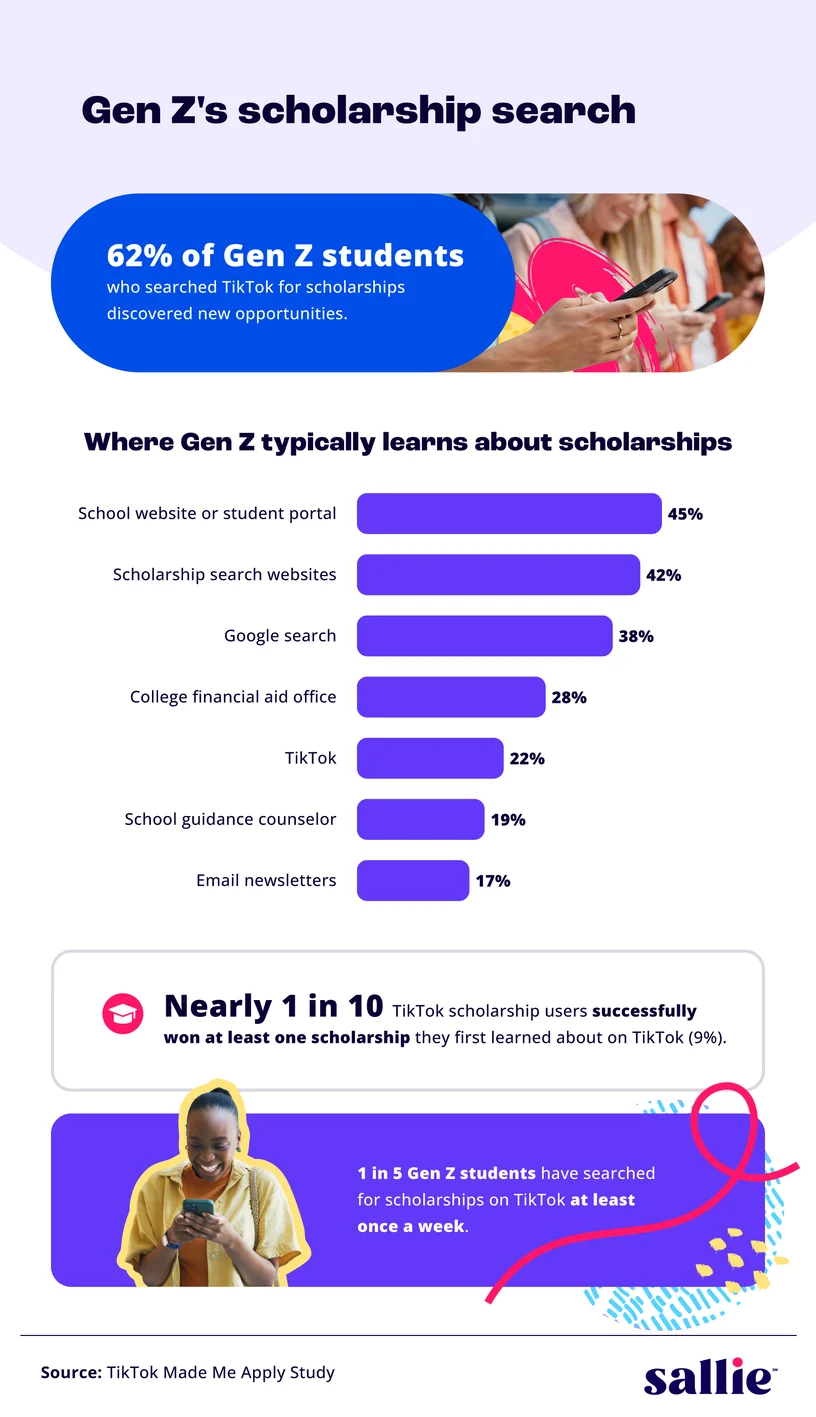
The takeaway is clear. TikTok is functioning as a discovery engine, not just a content feed. For marketers, this reinforces a broader shift where search intent is increasingly distributed across social platforms.
Patrecia Meliana
Where Gen Z still looks for scholarships and why that matters
Despite TikTok’s rise, traditional channels still dominate scholarship discovery.
The top sources include school websites and student portals at 45%, followed by scholarship search websites at 42%, and Google search at 38%. TikTok ranks lower at 22%, placing it fifth overall.
This creates a hybrid journey. Students often discover opportunities through social content but still rely on more formal channels to validate and act on them.
For marketers, this highlights an important dynamic. Social platforms may drive awareness and intent, but conversion often depends on credibility layers outside the platform. Ignoring either side creates friction in the user journey.
Trust, influence, and the rise of peer-driven financial advice
One of the most striking findings is who Gen Z trusts.
Current college students are the most trusted source for scholarship advice on TikTok at 59%, followed by recent graduates at 38%. Certified financial advisors rank significantly lower at 31%.
Trust is driven less by credentials and more by relatability. In fact, 3 in 5 students said personal success stories were the top factor influencing whether they trusted a creator’s advice.
This shift reflects a broader trend. Authority is being redefined by proximity and lived experience rather than formal expertise.
For brands, especially in finance and education, this creates both an opportunity and a challenge. Traditional authority signals are weakening, while creator-led storytelling is gaining influence.
Patrecia Meliana
The misinformation problem in TikTok scholarship content
The same qualities that make TikTok effective for discovery also introduce risk.
About 1 in 3 students reported encountering scholarship content they believed was misleading.
Common red flags include:
- Fake or non-existent scholarships
- Fees required for supposedly free opportunities
- Exaggerated eligibility claims
- Paid services promising access to scholarships
Only 27% of students said they always verify scholarship information before applying.
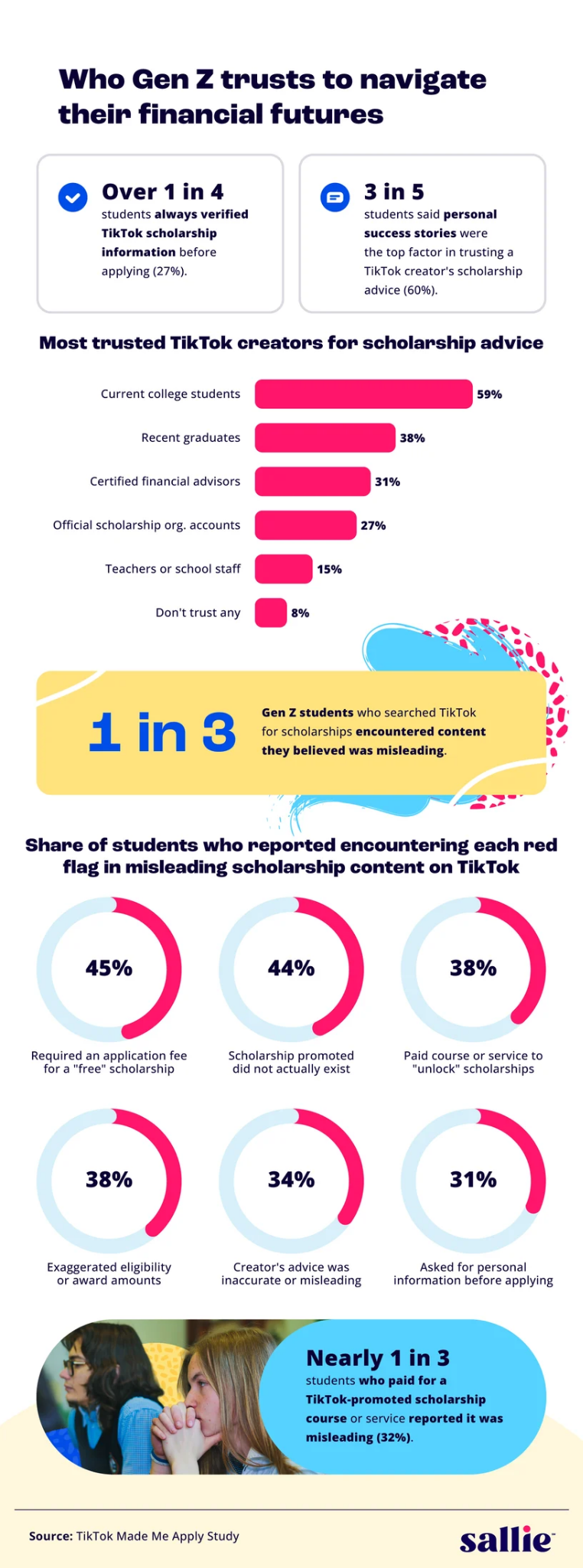
This creates a volatile environment where discovery is fast, but verification is inconsistent. It also explains why some students feel overwhelmed or pressured. Around 38% said TikTok made them feel like they were falling behind in their scholarship search.
For marketers, this raises brand safety and ethical considerations. Visibility without trust can quickly backfire.
What marketers should know about Gen Z’s search behavior shift
This trend goes beyond scholarships. It signals a structural shift in how Gen Z approaches search, trust, and decision-making.
Here are the key implications:
1. Social search is now intent-driven
TikTok is not just for inspiration. It is being used for actionable decisions. Marketers should treat it as a search channel, not just a branding platform.
Patrecia Meliana
2. Peer credibility beats institutional authority
Creators with relatable experiences often outperform official sources. Brands should collaborate with credible voices who can translate complex topics into real-world narratives.
3. Discovery and validation are decoupled
Users may discover on TikTok but verify elsewhere. This means marketers need consistent messaging across social, search, and owned channels.
4. Misinformation creates both risk and opportunity
Brands that prioritize transparency and verification can stand out in a noisy, often unreliable environment.
5. Content formats matter
Top-performing scholarship content includes “hidden gem” reveals, essay tips, and success stories. These formats can be adapted across industries to drive engagement.
Patrecia Meliana
TikTok’s role in scholarship discovery highlights a bigger shift in digital behavior. Search is no longer confined to search engines, and trust is no longer owned by institutions.
For marketers, the challenge is not just showing up on platforms like TikTok. It is understanding how users move between discovery, validation, and decision-making across channels. As Gen Z continues to blend social content with high-stakes decisions, brands that can balance relatability with credibility will have a clear advantage.

Leave a Reply