YouTube is sharpening its focus on livestreaming, rolling out a set of updates designed to help creators maintain engagement during peak moments while unlocking new monetisation pathways.
At a time when live content is becoming more community-driven and interactive, YouTube’s latest moves signal a shift toward protecting real-time engagement rather than interrupting it. For brands and creators relying on live formats, this is less about new features and more about changing the rules of audience attention.
This article explores what’s changing, why it matters, and how marketers and creators should respond.
Short on time?
Here’s a table of contents for quick access:
- What YouTube changed in live streaming and monetisation
- Why YouTube is prioritising real-time engagement
- What marketers should know about YouTube live updates
 Patrecia Meliana
What YouTube changed in live streaming and monetisation
YouTube has introduced several updates aimed at improving both engagement and revenue opportunities for livestream creators.
- Gifting has been expanded beyond vertical streams
Viewers can now send gifts during horizontal livestreams via mobile devices, and the feature is rolling out to more regions including Indonesia, Thailand, Australia, and others.
- The platform is introducing automatic ad-free windows
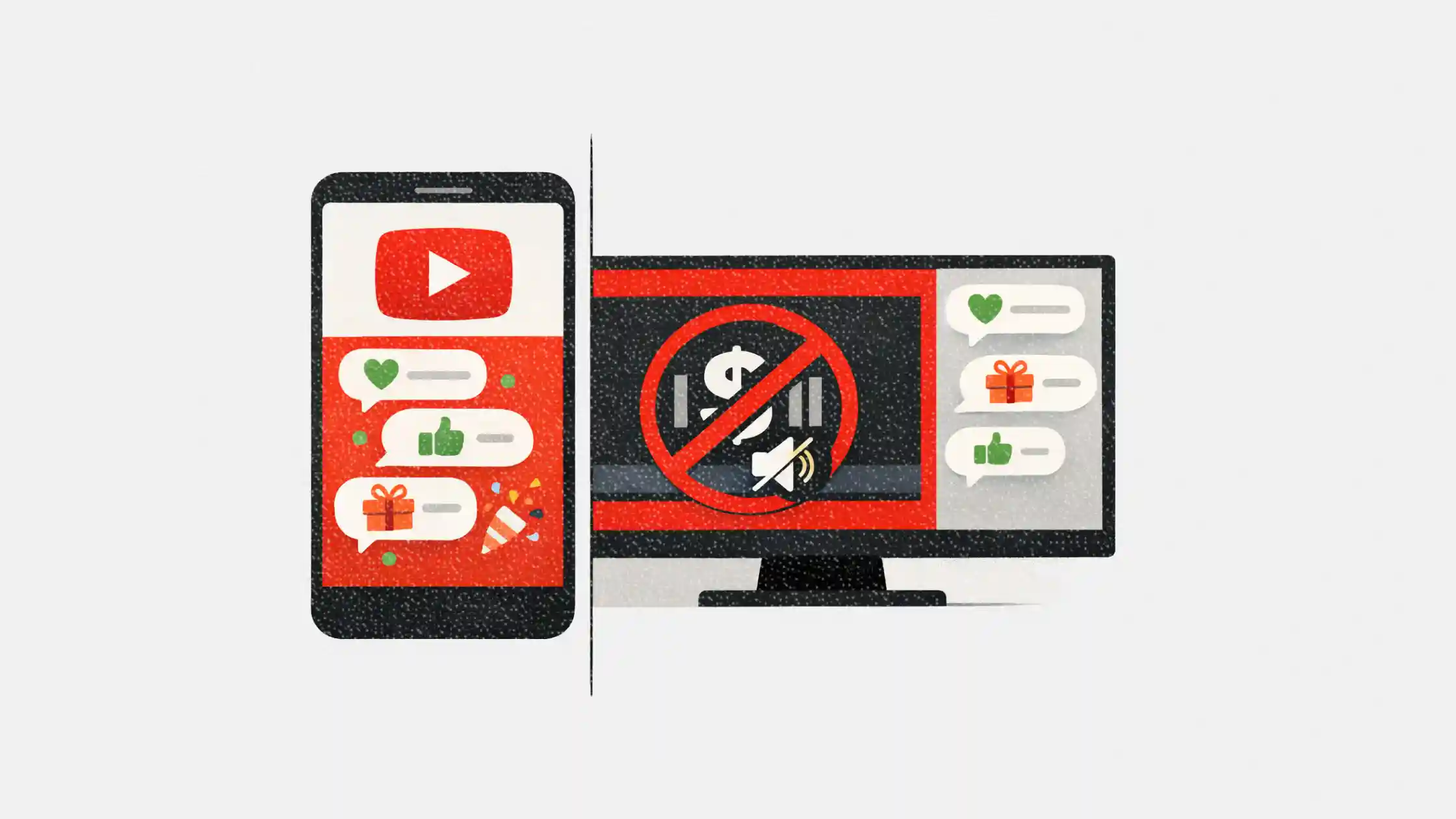
So after purchases like Super Chats, Super Stickers, or gifts. This ensures that moments of fan support are not interrupted by ads, provided creators have automatic ads enabled.
- YouTube is launching a system that detects spikes
Thus, in live chat activity and temporarily holds back ads for all viewers during those peak moments. The goal is to “protect the vibe” and maintain momentum when engagement is highest.
- Creators can now stream in both vertical and horizontal formats simultaneously while keeping a single shared chat
Additional customization tools, including vertical cropping and multiple stream keys, are expected to follow.
Why YouTube is prioritising real-time engagement
These updates reflect a broader shift in how YouTube views livestreaming. It is no longer just a content format. It is an interactive environment where audience participation directly shapes the experience.
Holding back ads during high chat activity is particularly telling. Traditionally, platforms optimise for ad delivery. Here, YouTube is choosing to delay monetisation in favor of preserving engagement, at least temporarily. That suggests a longer-term bet that stronger community moments drive more sustainable revenue.
The expansion of gifting also aligns with this direction. Instead of relying solely on ads or subscriptions, YouTube is leaning into real-time, fan-driven monetisation. This mirrors trends seen on platforms like TikTok and Twitch, where audience participation is tightly linked to revenue.
The dual-format streaming update addresses another shift: device fragmentation. With over 30 percent of live watch time in the US coming from connected TVs in 2025, YouTube is adapting to a multi-screen reality where format flexibility is essential.
What marketers should know about YouTube live updates
For marketers and brand teams, these changes are not just product updates. They reshape how live content should be planned and monetised.
Here are the key takeaways:
Engagement is now a monetisation lever
Peak chat activity can suppress ads, which means brands need to think beyond impressions. High engagement moments may reduce short-term ad exposure but increase long-term loyalty and conversion.
Fan-driven revenue is becoming central
Gifting and Super features are no longer niche. Brands working with creators should consider how campaigns can encourage participation, not just passive viewing.
Live content needs to be format-flexible
With simultaneous vertical and horizontal streaming, campaigns must be designed for both mobile-first and TV audiences. Creative that works in one format may not translate directly to another.
Timing matters more than ever
Since ads can be paused during peak engagement, marketers should rethink when key messages or integrations appear during a livestream.
Creator partnerships will evolve
As monetisation shifts toward real-time interaction, brands may need to collaborate more closely with creators on audience engagement strategies, not just content placement.
Patrecia Meliana
YouTube’s latest updates point to a clear direction: engagement first, monetisation second, but ultimately both working together. By protecting high-energy moments and expanding fan-driven revenue tools, the platform is redefining how value is created during live streams.
For marketers, the implication is straightforward. Live content is no longer just a channel. It is a dynamic environment where timing, interaction, and community behavior directly impact results. Adapting to that reality will be key to staying relevant.