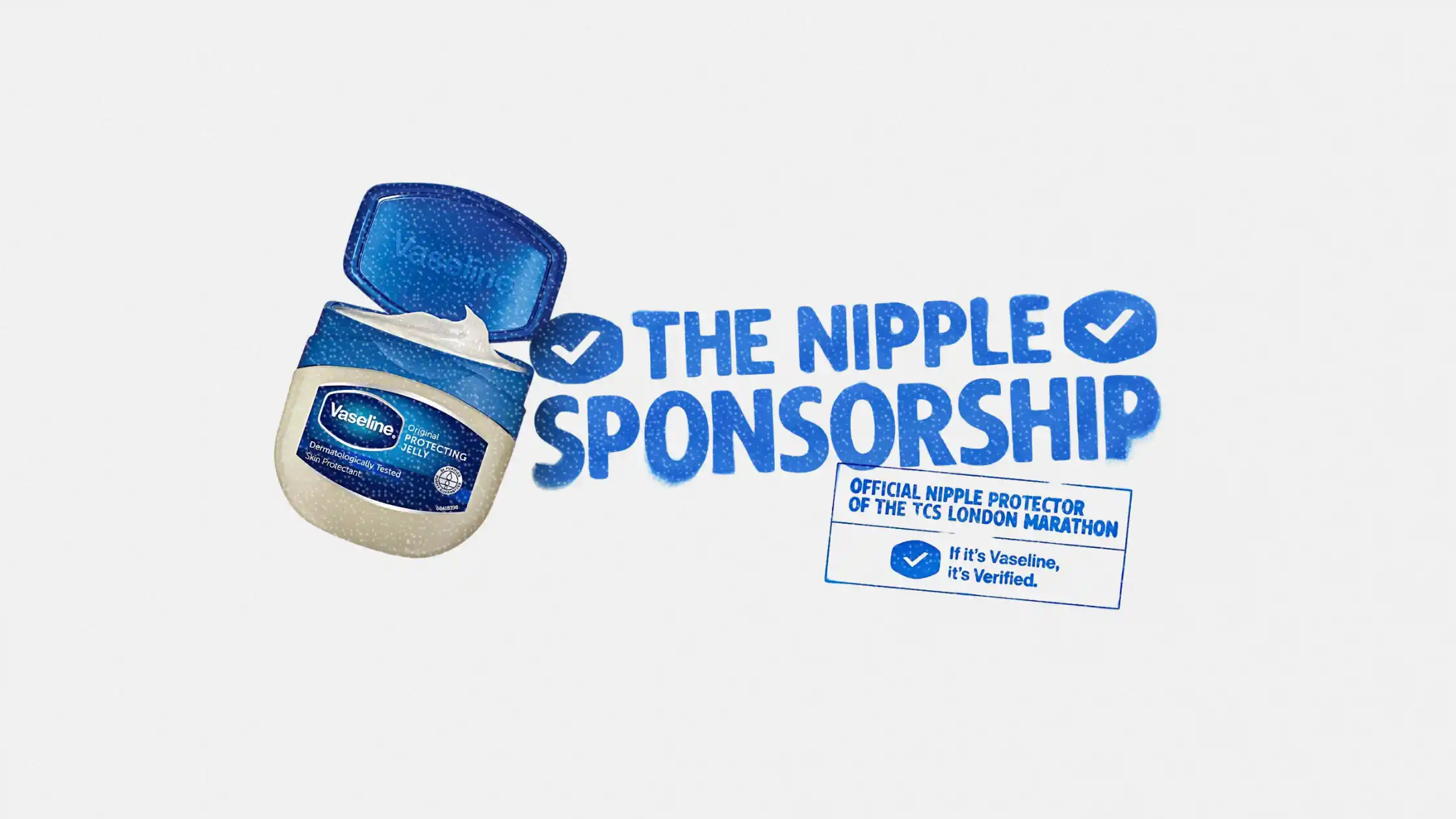
Vaseline has taken one of running’s most awkward and under-discussed issues and turned it into a full-scale global marketing platform. At the 2026 TCS London Marathon, the brand positioned itself as the “Official Nipple Protector,” leaning into a real, widely experienced problem that most brands avoid talking about.
This article explores how Vaseline’s “Nipple Sponsorship” campaign moves beyond stunt marketing into something more strategic: a repeatable, insight-driven model for turning community behavior into brand ownership, and what that means for marketers looking to build relevance in crowded categories.
Table of Content
- What did Vaseline actually do at the London Marathon?
- Why “runner’s nipple” became a strategic marketing opportunity
- How Vaseline turned a community hack into a global platform
- What marketers should know about behavior-led brand building
 Patrecia Meliana
What did Vaseline actually do at the London Marathon?
At the 2026 TCS London Marathon, Vaseline activated its campaign “The Nipple Sponsorship” by becoming the “Official Nipple Protector,” addressing a common but rarely acknowledged issue among runners.
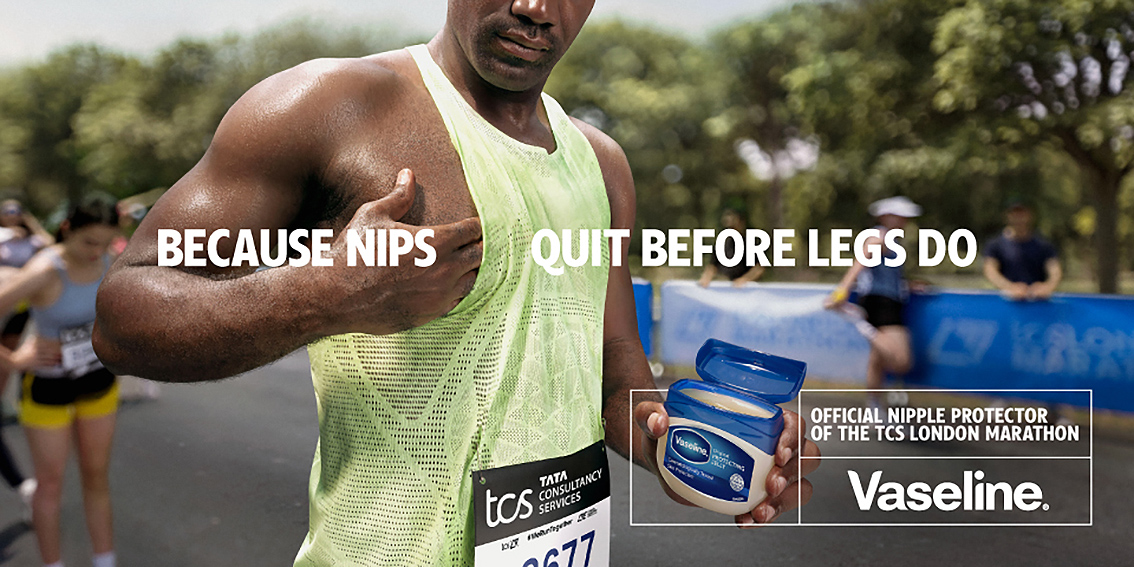
The campaign included on-ground distribution of petroleum jelly at the marathon running show, as well as “Nip stops” along the 26.2-mile course where runners could reapply protection mid-race.
The scale was significant. The brand supported more than 100,000 runners over race weekend, embedding itself directly into the participant experience rather than staying at the level of awareness or sponsorship visibility.
Beyond the physical activation, Vaseline extended the campaign through creator partnerships, working with running influencers to normalize conversations around nipple care and friction prevention during training and race preparation.
Why “runner’s nipple” became a strategic marketing opportunity
The campaign is rooted in a simple but powerful insight: nipple chafing is extremely common, but rarely discussed openly.
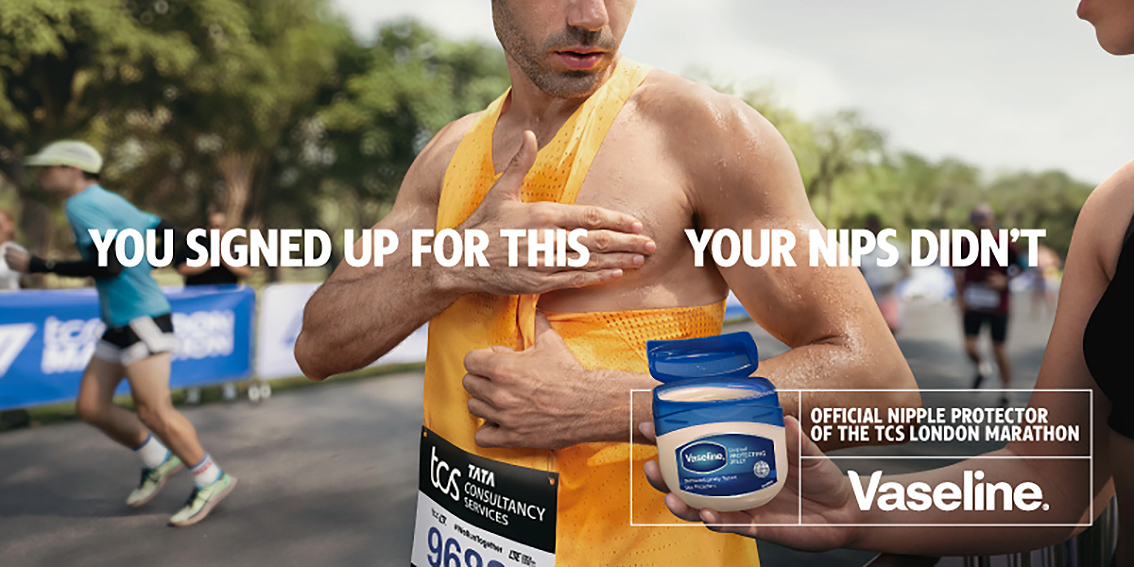
According to research cited by the brand, 92 percent of marathon participants experience chafing, 67 percent report bleeding, and one in three runners experience irritation specifically in the nipple area.
This creates a classic marketing gap. The problem is:
- Widely experienced
- Emotionally uncomfortable to talk about
- Already being solved informally by users
That last point matters most. A large share of runners were already using Vaseline as a solution. The brand did not invent the behavior. It simply formalized and scaled it.
From a positioning standpoint, this is less about product innovation and more about narrative ownership. By naming the problem directly, Vaseline moves from being a generic utility product to the default solution for a specific use case.
Patrecia Meliana
How Vaseline turned a community hack into a global platform
The campaign builds on Vaseline’s “Verified” platform, where community-submitted skincare hacks are tested and validated.
Nipple protection for runners consistently emerged as one of those validated use cases, making it a natural candidate for amplification.
Instead of stopping at validation, Vaseline extended the idea into a global rollout:
- Activations across cities including Singapore, Barcelona, Madrid, Rotterdam, Sydney, and Hong Kong
- Integration into major endurance events
- Expansion through creator ecosystems and running communities
This reflects a broader shift in how brands approach innovation. Rather than building from scratch, they are:
- Identifying existing user behavior
- Validating it at scale
- Turning it into branded IP
The same thinking is visible in Vaseline’s “Originals (OGs)” initiative, which converts viral skincare hacks into actual product formats while crediting creators.
The nipple sponsorship campaign sits at the intersection of those two strategies: validation and amplification.
What marketers should know about behavior-led brand building
This campaign offers several practical lessons for marketers:
1. Own the uncomfortable truth
Most brands avoid awkward or taboo topics. Vaseline leans into one. That creates immediate differentiation and memorability.
2. Start with behavior, not messaging
The insight did not come from brainstorming. It came from observing what users were already doing at scale.
3. Turn usage into positioning
Many products are used in ways that are not officially marketed. The opportunity is to formalize those behaviors into brand narratives.
4. Build platforms, not one-off stunts
This is not just a marathon activation. It is a global, repeatable platform that can show up wherever running happens.
5. Combine utility with storytelling
The campaign works because it solves a real problem while also being culturally provocative enough to spark conversation.
For B2B marketers, especially in martech and SaaS, the takeaway is clear: your most powerful positioning may already exist in how customers are using your product, not in how you describe it.
Atikah Amalia
Vaseline’s “Nipple Sponsorship” is easy to dismiss as a clever stunt, but that misses the bigger picture. This is a case study in how to turn overlooked user behavior into scalable brand equity.
As categories become more crowded and attention harder to earn, marketers who can identify and own real, lived customer truths will have a clear advantage. The challenge is not just finding those insights, but having the courage to build a brand around them.