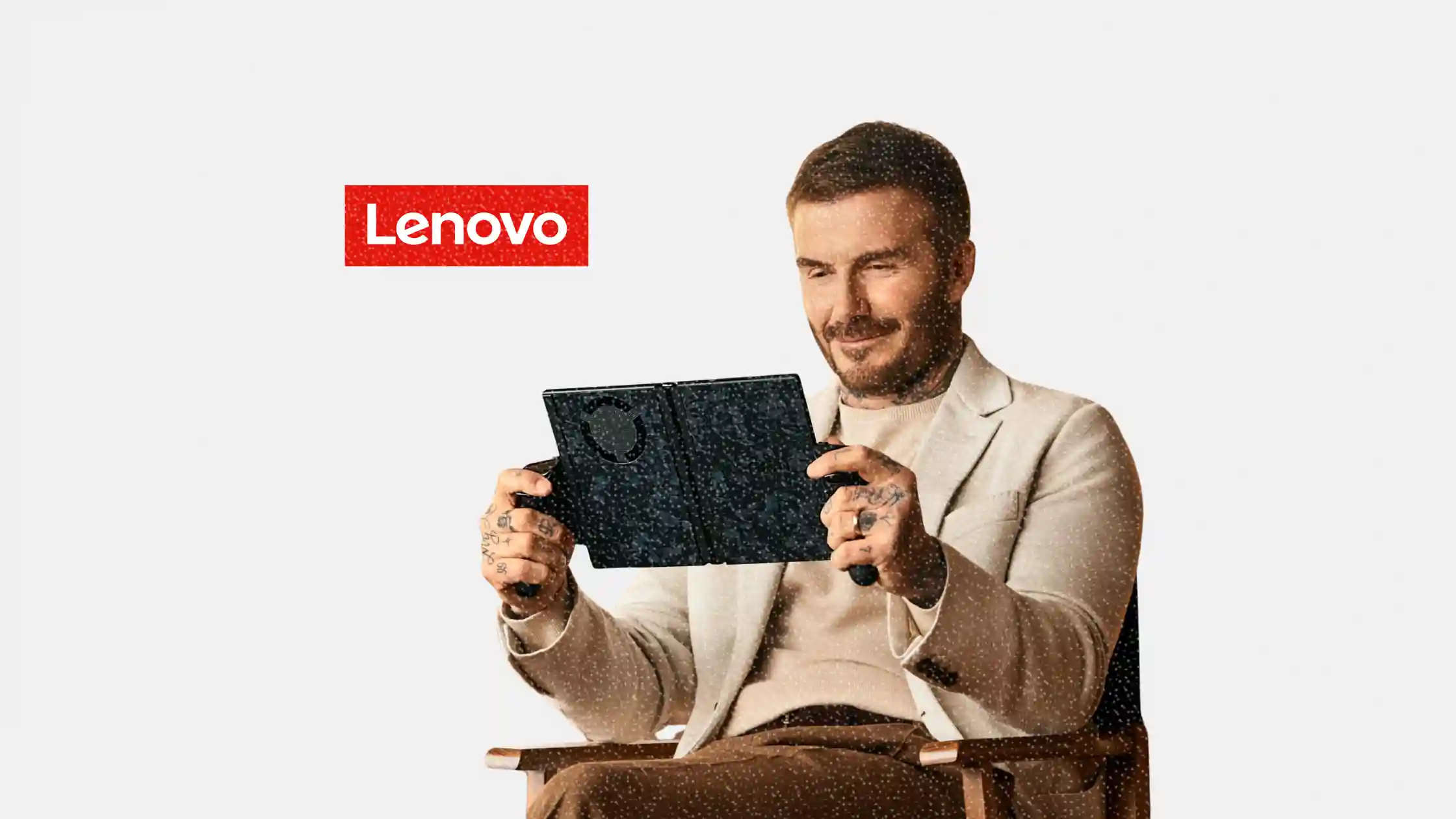
Lenovo is bringing AI marketing closer to mainstream consumer culture with a new global campaign featuring David Beckham. The campaign, called “Maximum David,” positions Lenovo’s AI-powered ecosystem as a practical tool for creativity, productivity, entertainment, and global sports engagement.
The launch arrives just weeks before FIFA World Cup 2026, where Lenovo is also serving as an Official Technology Partner. That timing matters. AI messaging is becoming increasingly crowded across the tech industry, and Lenovo appears to be betting that cultural relevance, celebrity influence, and football fandom can make enterprise AI feel more accessible and emotionally engaging.
For marketers, the campaign is another sign that AI branding is shifting away from technical promises and toward lifestyle positioning. Instead of focusing only on automation or infrastructure, brands are now framing AI as a personal productivity companion tied to ambition, creativity, and everyday performance.
Table of contents
Jump to each section:
- Why Lenovo launched the “Maximum David” campaign
- How Lenovo is connecting AI, football, and consumer culture
- What marketers should know about celebrity-led AI campaigns
- Why AI marketing is becoming more human-centered
 Patrecia Meliana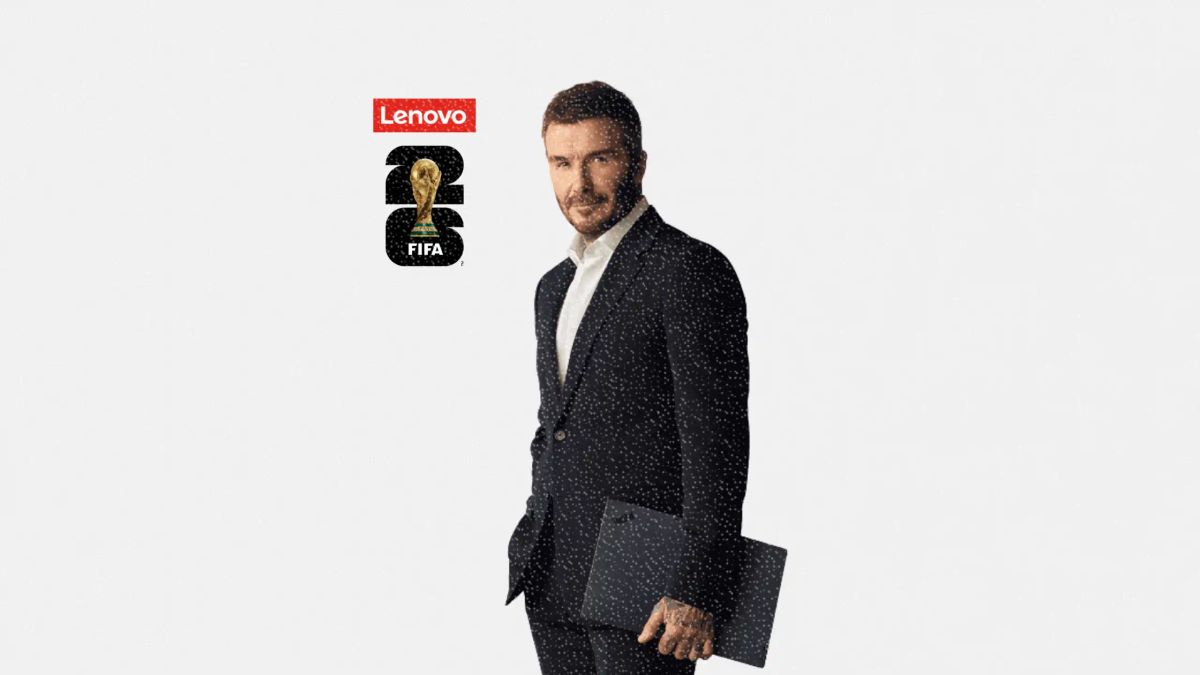
Why Lenovo launched the “Maximum David” campaign
Lenovo’s new campaign highlights how its AI portfolio supports people juggling multiple responsibilities across work, travel, creativity, and entertainment. David Beckham was chosen as the face of the campaign because his public identity extends far beyond football.
Today, Beckham operates across sports ownership, fashion, business investments, media, and global partnerships. Lenovo is using that multi-dimensional image to demonstrate how AI tools can fit into increasingly fragmented lifestyles and work environments.
The campaign includes film, social, digital, retail, and experiential activations. In the hero film, Beckham uses Lenovo AI tools to design a chicken coop, manage projects, tune his motorcycle, and relax with gaming sessions between work commitments.
According to Lenovo vice president of AI innovation and brand strategy Santi Pochat, the campaign is meant to reflect “real ambition, real work, and real moments of connection.”
The timing also aligns with Lenovo’s broader FIFA strategy. The company is positioning itself not just as a hardware partner, but as an AI infrastructure and fan experience player capable of supporting large-scale sporting ecosystems.
How Lenovo is connecting AI, football, and consumer culture
The campaign reflects a broader shift happening across technology marketing. AI brands increasingly need cultural storytelling, not just technical credibility.
Football gives Lenovo a massive global attention engine, while Beckham provides instant familiarity across multiple demographics. Together, they allow Lenovo to frame AI as something embedded into entertainment, lifestyle, and emotional experiences instead of purely workplace efficiency.
Lenovo says its FIFA-related AI initiatives will support:
- Smarter operational systems
- Enhanced fan experiences
- Performance insights for teams and players
- AI-powered audience engagement tools
This matters because sports partnerships are becoming major proving grounds for AI-enabled experiences. Brands are using tournaments and live events to demonstrate personalization, immersive engagement, predictive insights, and real-time content delivery.
For B2B marketers, this campaign also highlights how enterprise technology companies are increasingly borrowing consumer marketing playbooks. Celebrity partnerships, emotional storytelling, and lifestyle positioning are now becoming central to enterprise AI branding.
That creates new pressure for marketers. AI products are becoming harder to differentiate based purely on technical capabilities. Narrative and positioning increasingly matter just as much as product performance.
What marketers should know about celebrity-led AI campaigns
Celebrity partnerships in AI marketing can easily become superficial if the technology itself feels disconnected from the story. Lenovo avoids some of that risk by grounding the campaign in Beckham’s everyday routines and business activities instead of futuristic AI hype.
Here are a few practical takeaways for marketers:
1. Use AI storytelling that feels familiar
Many AI campaigns still rely heavily on abstract messaging. Lenovo instead uses relatable moments like productivity management, creative experimentation, and entertainment to demonstrate utility.
For marketers, this approach often works better than overloading audiences with technical claims.
2. Tie AI to identity, not just efficiency
The campaign positions AI as an extension of ambition and lifestyle. That framing matters because audiences increasingly associate technology choices with personal identity and work culture.
AI products marketed purely around automation can sometimes feel cold or threatening. Human-centered positioning softens that perception.
3. Build campaigns around ecosystems
Lenovo is not promoting a single AI product. The company is promoting an integrated ecosystem spanning devices, services, fan experiences, and enterprise solutions.
That ecosystem narrative helps larger technology brands create stronger long-term positioning instead of relying on one-off product launches.
4. Use major events as AI demonstration stages
Global sports tournaments now function as experiential AI showcases. Brands can demonstrate personalization, live engagement, analytics, and immersive experiences at massive scale.
Marketers should expect more AI partnerships around entertainment, gaming, and sports over the next two years.
Why AI marketing is becoming more human-centered
The Lenovo campaign reflects a growing industry trend: AI messaging is becoming less technical and more emotional.
Over the last two years, many AI campaigns focused heavily on speed, automation, and productivity gains. While those themes still matter, brands are now realizing that mainstream audiences respond more strongly to narratives around creativity, ambition, balance, and self-expression.
This shift is especially important as AI moves from early adopters to broader consumer and business audiences.
For marketers, that means:
- AI positioning needs emotional relevance, not just technical differentiation
- Partnerships with creators, athletes, and entertainers will likely increase
- Brands need clearer narratives around how AI improves everyday experiences
- Human-centered storytelling may become a competitive advantage in crowded AI categories
The challenge is credibility. Audiences are becoming more skeptical of vague AI branding, especially when campaigns overpromise capabilities or rely too heavily on buzzwords.
Campaigns that connect AI to practical, visible outcomes will likely perform better than abstract futurist messaging.
As more brands enter the AI race, the winners may not simply be the companies with the most advanced models or infrastructure. They may be the ones that explain AI in ways people genuinely relate to.