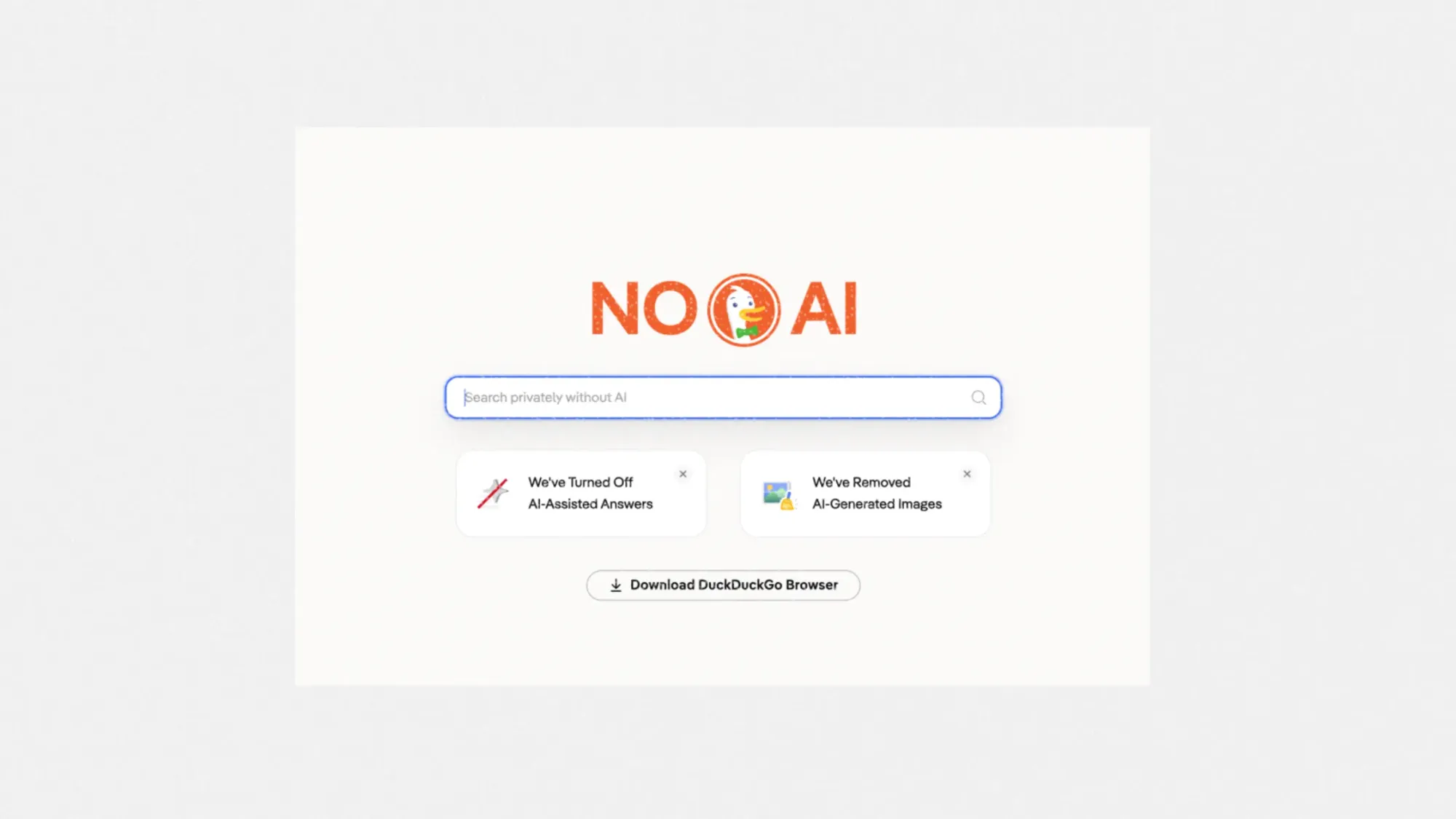
DuckDuckGo is doubling down on a growing trend: users who want search results without AI-generated answers. As traffic to its AI-free search experience continues to rise, the privacy-focused search engine has launched new browser extensions that make its no-AI search mode easier to access and set as the default search experience.
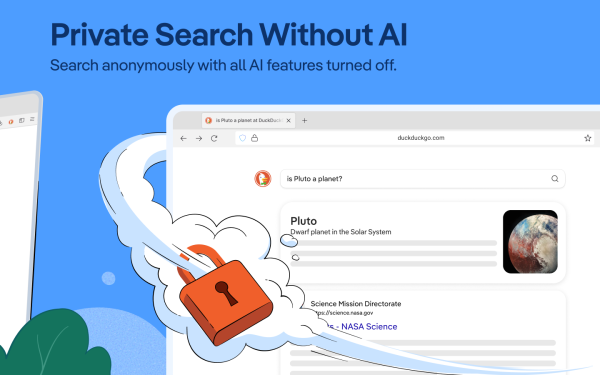
The move comes at a pivotal moment for the search industry. Following Google’s recent AI-first overhaul of Search, many users are finding themselves pushed toward AI-generated summaries, conversational search experiences, and interactive AI features by default. DuckDuckGo is betting that not everyone wants that future.
For marketers, this is more than a product update. It reflects a broader shift in user behavior and growing concerns about AI-generated content, trust, discoverability, and how people navigate the web. The rise of AI-free search experiences could create new opportunities and challenges for brands that depend on organic visibility.
Table of contents
Jump to each section:
- Why DuckDuckGo is expanding its no-AI search experience
- How Google’s AI-first search strategy is changing user behavior
- What marketers should know about the rise of AI-free search
- Why this matters for search marketing and content visibility
Why DuckDuckGo is expanding its no-AI search experience
DuckDuckGo has introduced new Chrome and Firefox extensions that allow users to set its AI-free search page, noai.duckduckgo.com, as their default search engine.
The company says the experience removes AI-generated answers, AI chat prompts, and reduces AI-generated images in search results. Users who already browse through the DuckDuckGo browser can maintain these settings automatically, even after clearing browsing history.
According to DuckDuckGo, the extensions are designed to provide a consistent AI-free search experience at a time when AI-generated search results are becoming increasingly common across major search platforms.
While DuckDuckGo continues to offer AI-powered products, including its own chatbot and premium subscription services, the company appears to recognize that a growing segment of users wants more control over how AI appears in their search experience.
How Google’s AI-first search strategy is changing user behavior
The timing of DuckDuckGo’s announcement is notable.
Google recently unveiled one of the biggest transformations to Search in more than two decades, positioning AI-generated overviews and AI Mode as central parts of the search experience. Instead of prioritizing traditional link-based results, Google increasingly surfaces AI-generated answers, interactive responses, charts, visualizations, and follow-up conversations.
That shift has sparked mixed reactions.
DuckDuckGo reports that visits to its no-AI search page increased nearly 30% week-over-week following Google’s announcement. The company also says U.S. app installs climbed 18.1% week-over-week, while U.S. iOS installs peaked at nearly 70% growth during the same period.
Traffic reportedly reached a record high on May 28, with visits to the no-AI search experience tripling compared to previous levels. More importantly, DuckDuckGo says traffic has remained elevated rather than spiking briefly, suggesting sustained interest rather than a short-term reaction.
The trend mirrors growing interest in alternative search engines such as Kagi and other platforms that prioritize traditional web search experiences.
What marketers should know about the rise of AI-free search
The growth of AI-free search isn’t necessarily a rejection of AI itself. Instead, it appears to reflect a desire for greater transparency, control, and direct access to original sources.
Here are several strategic considerations for marketers:
1. Search fragmentation is accelerating
For years, Google dominated search behavior. Today, users are increasingly spreading searches across AI chatbots, traditional search engines, social platforms, and niche search experiences.
Marketers should diversify traffic strategies rather than relying exclusively on Google search visibility.
2. Original content becomes more valuable
AI-generated answers often summarize existing content. As some users actively seek original sources and direct links, publishers that produce unique research, expert commentary, and first-party insights may see stronger engagement opportunities.
3. Trust is becoming a competitive advantage
Many users remain skeptical about AI hallucinations, inaccurate summaries, and source attribution issues.
Brands that prioritize transparency, citations, expertise, and clear sourcing can strengthen credibility regardless of which search platform users choose.
4. Monitor alternative search engines
While Google remains dominant, marketers should pay closer attention to referral traffic from platforms such as DuckDuckGo, Kagi, Perplexity, and AI search tools.
User behavior is becoming more fragmented, and understanding those shifts early can reveal new audience opportunities.
Why this matters for search marketing and content visibility
The broader implication is that search is entering a transitional period.
For years, SEO strategies focused primarily on ranking within traditional search results. Today, marketers must think about visibility across multiple discovery environments:
- Traditional search results
- AI-generated search overviews
- AI chat interfaces
- Alternative search engines
- Social search platforms
- Community-driven discovery channels
DuckDuckGo’s recent growth suggests that some users still value direct access to links and original web content. That could benefit publishers and brands concerned about losing visibility inside AI-generated summaries.
At the same time, the search landscape is becoming increasingly polarized. Some users embrace AI-powered experiences, while others actively seek ways to avoid them.
The winning strategy for marketers may not be choosing one side. Instead, it is ensuring content remains discoverable across both worlds.
 Patrecia Meliana
DuckDuckGo’s latest no-AI search extensions highlight a growing divide in how people want to interact with information online. While major platforms race toward AI-first experiences, a meaningful segment of users appears to be looking for a return to more traditional search results.
For marketers, the lesson is clear: search behavior is becoming more diverse, not less. Brands that adapt to multiple discovery channels, prioritize trustworthy content, and maintain visibility across both AI-powered and traditional search environments will be better positioned as the next phase of search continues to evolve.