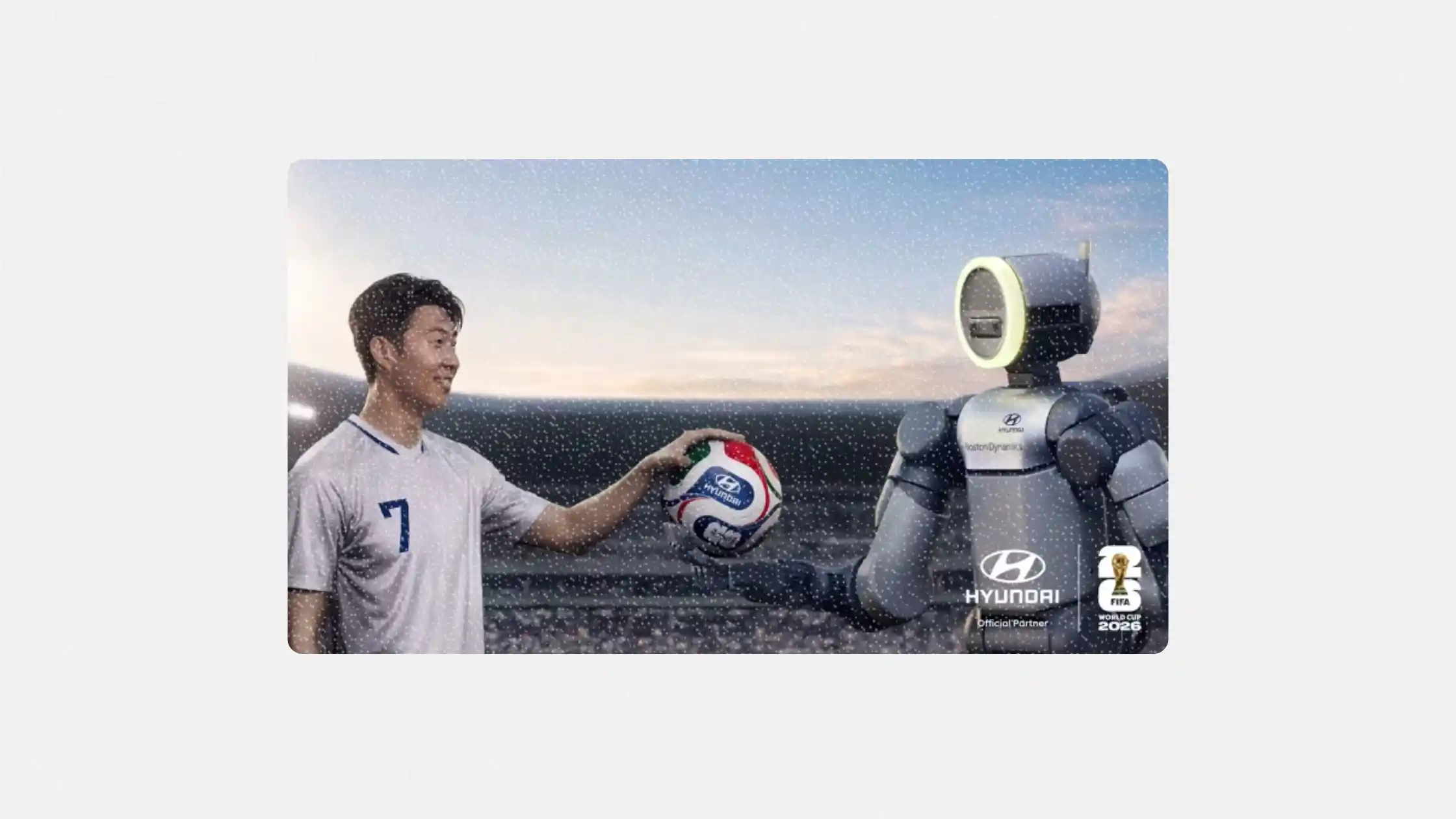
Hyundai is turning its FIFA World Cup 2026 sponsorship into something much bigger than a traditional sports marketing campaign. The automaker has launched “Next Starts Now,” a global initiative that combines football stars, emerging athletes, robotics, creator content, fan experiences, and cultural storytelling under a single brand platform.
At the center of the campaign is a cinematic film featuring Tottenham Hotspur star Son Heung-min, five rising football talents, and an unexpected appearance from Boston Dynamics’ Atlas humanoid robot. For marketers, the campaign offers a clear example of how brands are increasingly connecting sport, culture, innovation, and community engagement instead of relying solely on sponsorship visibility.
Table of contents
Jump to each section:
- What is Hyundai’s “Next Starts Now” campaign?
- Why Hyundai is combining football, robotics, and culture
- What marketers should know about Hyundai’s strategy
- What happens next for brand sponsorship marketing?
 Patrecia Meliana
What is Hyundai’s “Next Starts Now” campaign?
As FIFA World Cup 2026’s official mobility partner, Hyundai has launched a global campaign led by a 60-second film featuring Son Heung-min, five emerging football players, and Boston Dynamics’ Atlas robot. The creative debuted on 1 June and will run across television, digital, and social channels worldwide.
The film follows a new generation of football talent as they prepare for and compete on the sport’s biggest stage. The campaign culminates with Atlas kicking off the match before the screen closes with the tagline, “Next Starts Now.”
Hyundai has also revealed the five young athletes featured in the campaign:
- Da’vian Kimbrough (Mexico)
- Bruno Cabral (Argentina)
- Stella Spitzer (USA)
- Kauan Basile (Brazil)
- Khalil Mitchell (England)
Beyond the hero film, Hyundai is supporting the campaign with social content, influencer partnerships, out-of-home advertising, streaming media, FIFA Fan Festival activations, dealership experiences, CRM initiatives, and digital advertising across major platforms.
Why Hyundai is combining football, robotics, and culture
The campaign reflects Hyundai’s broader shift away from purely product-focused advertising toward cultural storytelling and innovation-led brand positioning.
Rather than focusing on vehicle features, Hyundai is using football and robotics as symbols of future potential. Son Heung-min represents achievement and inspiration, while Atlas showcases Hyundai’s investment in advanced mobility and robotics through its ownership of Boston Dynamics.
This approach also helps Hyundai extend the value of its 27-year FIFA partnership beyond event sponsorship. Instead of simply placing logos around matches, the brand is creating an ecosystem of experiences and content that can live before, during, and after the tournament.
The strategy aligns with Hyundai’s recent cultural initiatives, including its support of CNN’s K-Everything series exploring South Korea’s influence across entertainment, food, beauty, and popular culture.
 Patrecia Meliana
What marketers should know about Hyundai’s strategy
Hyundai’s campaign highlights several important trends shaping modern brand marketing.
1. Sponsorships are becoming content platforms
Major sponsorships are no longer just media buys. Brands increasingly treat them as year-round content engines that generate stories, social engagement, creator collaborations, and experiential marketing opportunities.
2. Innovation works best when it supports a narrative
Atlas is not included simply because robotics are interesting. The robot reinforces Hyundai’s message about future innovation and next-generation potential. Technology becomes more memorable when tied to a clear human story.
3. Emerging talent can be more powerful than established stars
While Son Heung-min provides credibility and reach, the campaign places significant emphasis on rising athletes. This creates a stronger connection to themes of growth, ambition, and the future.
4. Multi-channel execution is now expected
The campaign stretches across TikTok, YouTube, Meta platforms, fan festivals, OOH advertising, influencer content, dealership activations, and CRM programs. Modern campaigns increasingly require integrated experiences rather than isolated media placements.
 Patrecia Meliana
Practical ideas marketers can apply
- Build campaigns around a larger cultural narrative instead of individual product messages.
- Use sponsorships to create recurring content series rather than one-off advertisements.
- Combine established ambassadors with emerging voices to increase authenticity.
- Design campaigns that connect digital engagement with physical experiences.
 Patrecia Meliana
What happens next for brand sponsorship marketing?
Hyundai’s “Next Starts Now” campaign illustrates how sponsorship marketing is evolving. Brands are moving beyond visibility and toward participation, creating ecosystems that blend entertainment, technology, community, and culture.
As global sporting events become increasingly competitive marketing environments, simply appearing alongside the action may no longer be enough. Brands that can create meaningful stories and experiences around those moments are more likely to earn attention and long-term relevance.
For marketers, Hyundai’s approach serves as a reminder that the most effective campaigns often connect multiple worlds at once. In this case, football, robotics, innovation, and culture all reinforce a single brand message about shaping the future today.