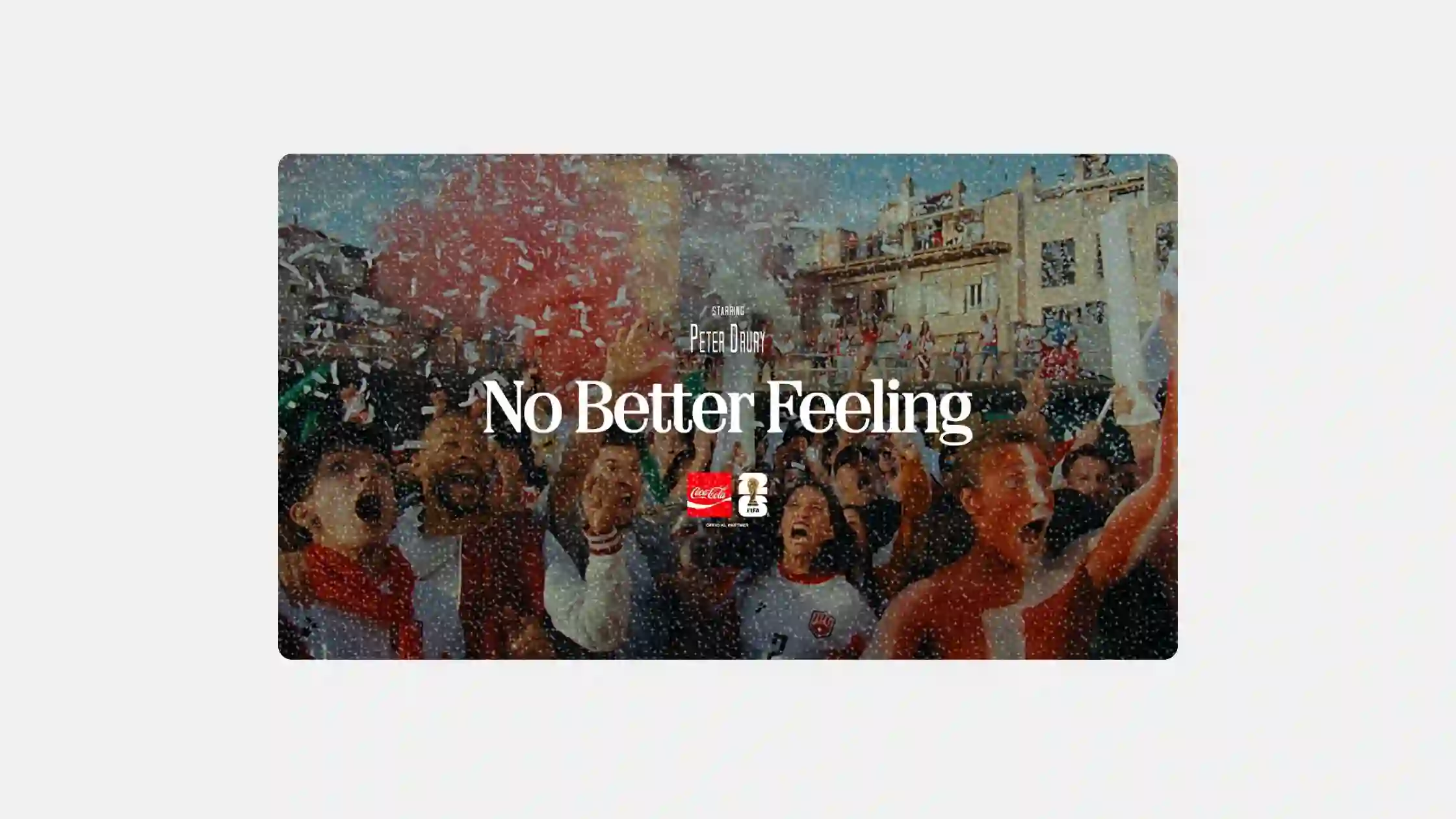
As FIFA World Cup 26 approaches, Coca-Cola is closing out its global “Feel it all” campaign with a film that leans heavily into one of football’s most emotionally charged experiences: the VAR check. The new spot, “No better feeling,” positions the brand not around the game itself, but around the emotional rollercoaster fans experience while watching it.
Featuring José Mourinho, J Balvin, and commentary from Peter Drury and Luis Omar Tapia, the campaign highlights a growing trend in sports marketing. Brands are increasingly moving away from product-centric storytelling and toward emotional narratives designed to create deeper audience connection.
For marketers, Coca-Cola’s latest FIFA activation offers a masterclass in how emotional storytelling can amplify sponsorship investments at a global scale.
Table of contents
Jump to each section:
- How Coca-Cola turned VAR into a World Cup storytelling device
- Why emotional marketing is driving major sports campaigns
- What marketers should know about fan-first storytelling
- The bigger play behind Coca-Cola’s FIFA World Cup strategy
- Why this campaign matters beyond football
How Coca-Cola turned VAR into a World Cup storytelling device
Coca-Cola has unveiled “No better feeling,” the third and final film in its FIFA World Cup 26 campaign platform, “Feel it all.”
The cinematic spot follows football supporters through one of the game’s most tension-filled moments: a VAR review. Rather than focusing on goals, star players, or match highlights, the film centers on the emotional swings experienced by fans as they wait for a crucial decision.
The campaign features global football figure José Mourinho and music superstar J Balvin alongside everyday supporters from around the world. Narrated by Peter Drury and Luis Omar Tapia, the film mirrors the emotional rhythm of a football match, moving from anticipation and anxiety to celebration and relief.
According to Coca-Cola, the campaign is designed to show how football creates a shared emotional experience regardless of geography, status, or background.
Why emotional marketing is driving major sports campaigns
Sports sponsorships have become increasingly competitive, making emotional differentiation more important than ever.
For decades, brands relied on athlete endorsements and logo visibility to maximize tournament partnerships. Today, marketers are focusing more on emotional resonance, cultural relevance, and fan participation.
Coca-Cola’s approach reflects this shift. Rather than selling a beverage, the company is selling a feeling. The brand positions itself as a companion to every emotional moment fans experience throughout the tournament.
This strategy is particularly relevant in an era where audiences are bombarded with content. Emotional storytelling creates stronger memory retention and often generates greater social sharing than traditional promotional messaging.
The campaign also aligns with a broader trend across football marketing. Brands including adidas, Nike, and other major sponsors have increasingly adopted cinematic storytelling formats that blur the line between advertising and entertainment.
 Patrecia Meliana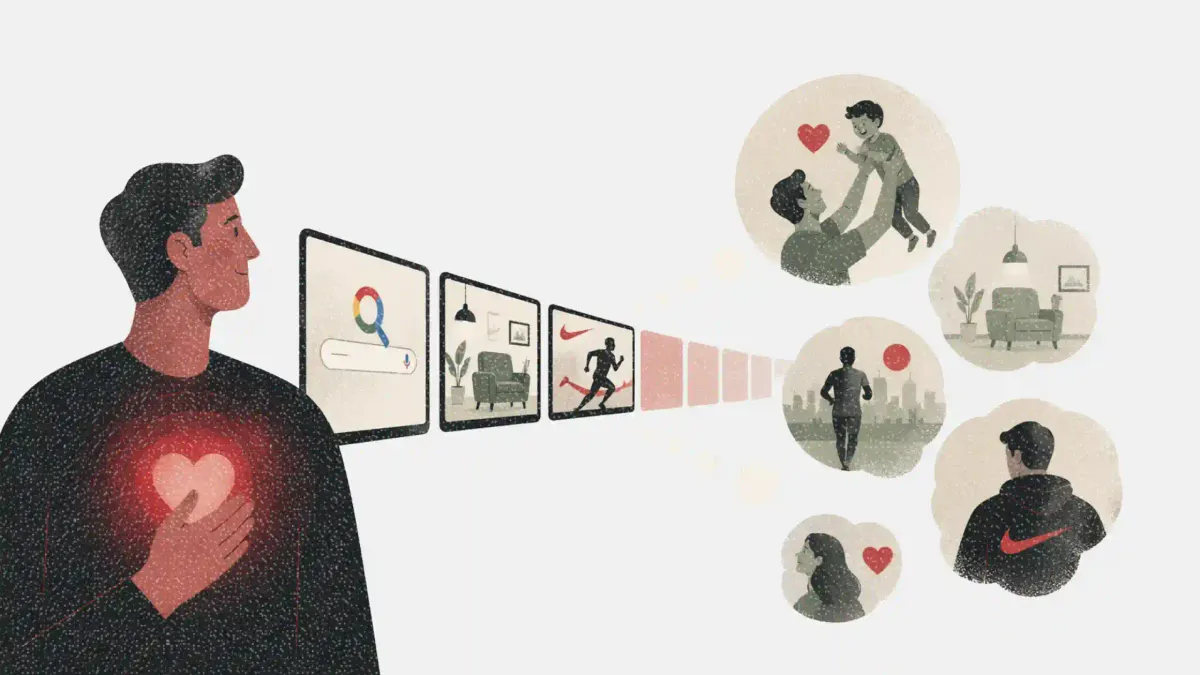
What marketers should know about fan-first storytelling
There are several practical lessons marketers can take from Coca-Cola’s latest World Cup campaign:
1. Focus on emotional truths
The strongest campaigns often revolve around experiences audiences instantly recognize. Almost every football fan understands the stress of waiting for a VAR decision.
2. Make sponsorships feel human
Instead of leading with tournament branding, Coca-Cola focuses on fan emotions. The sponsorship becomes part of the story rather than the story itself.
3. Use cultural icons strategically
José Mourinho and J Balvin add credibility and global appeal, but they do not dominate the narrative. The emotional journey remains centered on fans.
4. Build campaigns as connected chapters
“No better feeling” completes a three-part campaign that began with “Bubbling up” and continued through “Uncanned emotions.” This serialized approach allows brands to sustain momentum over longer periods instead of relying on a single campaign burst.
 Patrecia Meliana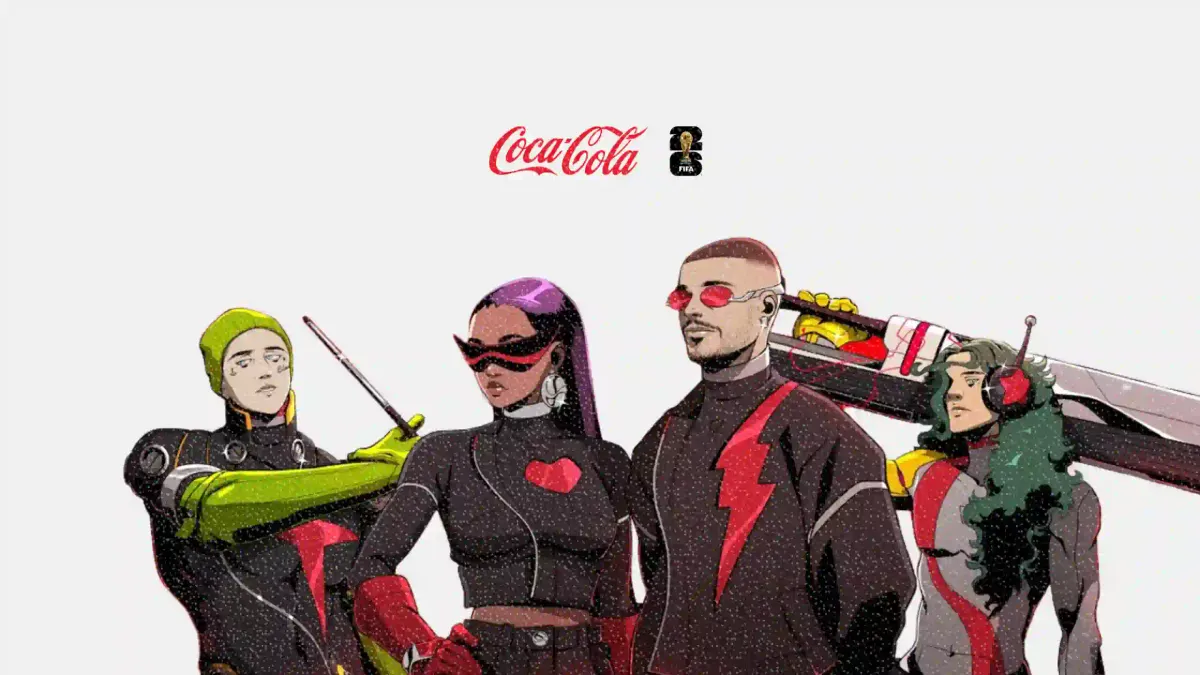
Recommended tools for marketers
- Brandwatch for monitoring fan sentiment during major sporting events.
- Sprout Social for tracking audience engagement across campaign phases.
- Google Trends for identifying emerging conversations around live sports moments.
- Canva AI and Adobe Firefly for creating reactive content during real-time events.
The bigger play behind Coca-Cola’s FIFA World Cup strategy
The film is only one piece of Coca-Cola’s broader FIFA World Cup 26 activation strategy.
The company’s campaign ecosystem includes the FIFA World Cup Trophy Tour, a Panini sticker partnership, and fan experiences across all 16 host cities in the United States, Canada, and Mexico.
This demonstrates a key principle of modern sponsorship marketing: major partnerships are no longer driven by a single advertisement. Instead, they operate as interconnected experiences spanning digital, physical, social, and experiential channels.
For Coca-Cola, the creative campaign provides the emotional narrative while activations deliver tangible audience engagement opportunities.
 Patrecia Meliana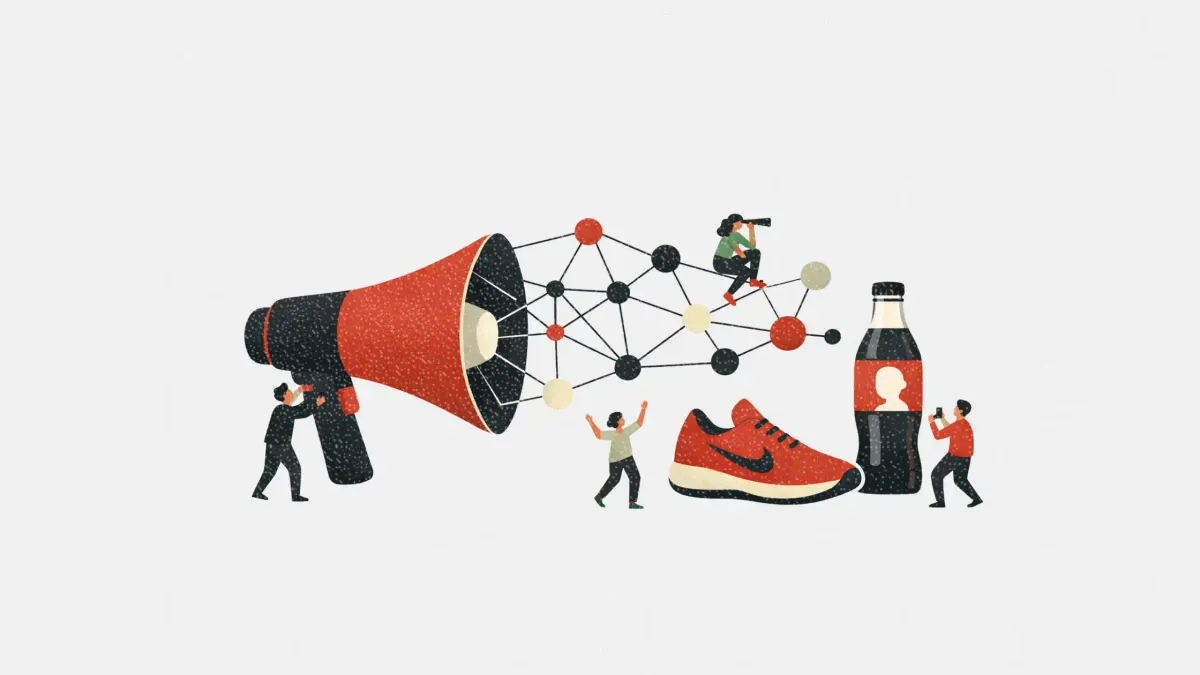
Why this campaign matters beyond football
“No better feeling” highlights how global brands are evolving sports marketing from visibility-driven sponsorships into emotion-driven storytelling.
As attention becomes harder to earn, marketers must create campaigns that connect with audiences on a deeper level. Coca-Cola’s latest World Cup film shows that the most powerful stories are often not about the event itself, but about how people feel while experiencing it.
For brands preparing campaigns around major cultural moments, that may be the most valuable takeaway of all.