Formula 1 fandom is not just about the people who can afford a ticket to Silverstone. It is the group chats, the watch parties, the highlight clips, the live commentary energy, and the very specific ritual of snacking while the lights go out.
Doritos is leaning into that at-home reality with “The Crunch Prix,” a global campaign tied to its official Formula 1 partnership. The brand outlined the broader “Taste the Thrill” platform in an official newsroom post, positioning the chip’s crunch and flavour as a stand-in for the sensory overload fans chase on race weekends.
Instead of treating F1 like a logo placement exercise, the creative idea is simple: make the fan experience the main character, then exaggerate it until it feels like an actual race.
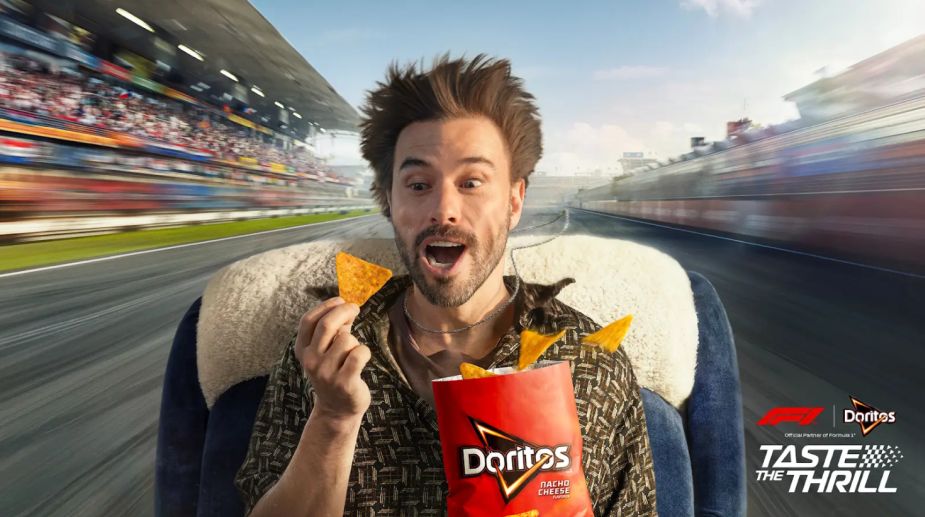
Table of contents
Jump to each section:
- Why “The Crunch Prix” is built for the way fans actually watch F1
- How Doritos is using authenticity signals to earn attention
- Silverstone’s “Doritos Thrill Zone” and the shift from ads to experiences
- Doritos Loaded, Gordon Ramsay, and why food is doing the branding
- What this means for marketers
Why “The Crunch Prix” is built for the way fans actually watch F1
“Most fans will never attend a race in person” is the core insight Doritos is building around with “Taste the Thrill.” That is not a downer. It is the whole reason F1 has become so internet-native: the sport is experienced through sound, pacing, commentators, social clips, and shared reactions as much as through physical attendance.
“The Crunch Prix” turns the couch ritual into the spectacle. The campaign film borrows familiar F1 language and moments (lights out, pit stops, overtakes, gravel traps, photo finishes) and maps them onto a fan at home eating Doritos, pushing something ordinary into something cinematic.
That mapping matters because it respects how fandom actually behaves. Fans do not need to be told F1 is fast. They want to feel like they are part of the weekend, even if they are watching on a phone while scrolling.
How Doritos is using authenticity signals to earn attention
In sports marketing, “authenticity” is often code for “did you hire the people fans already trust?” Doritos makes that move explicit through commentary.
The campaign is voiced by David Croft (Sky Sports F1 lead commentator since 2012), including his recognisable “lights out” call. For Spanish-language LATAM markets, the campaign uses F1 commentator Fernando Tornello.
Those details do two things at once:
First, they compress the distance between an ad and the broadcast experience fans associate with real races.
Second, they give the creative permission to be playful. When the voice sounds like race day, viewers are more likely to accept the joke that a beanbag or couch can become an F1 “race seat” without the whole thing feeling like brand cosplay.
Silverstone’s “Doritos Thrill Zone” and the shift from ads to experiences
Doritos is pairing the film with a real-world presence at the FORMULA 1 PIRELLI BRITISH GRAND PRIX 2026 weekend at Silverstone, including a “Doritos Thrill Zone” in the F1 Fan Zone.
The on-site plan is built around participation, not passive viewing: digital screens featuring the film, interactive activities, and a Doritos virtual racing game with prizes that include a Mercedes‑AMG PETRONAS F1 Team Hot Lap in a Mercedes‑AMG PETRONAS F1 Team car wrapped in a custom Doritos design. The terrace also includes a live interview with David Croft and an appearance by F1 content creators (including MattP1Tommy), with fans invited to compete against them in the game.
This is the pattern to notice. The campaign is not asking fans to watch an ad and move on. It is trying to convert race weekend attention into something fans can do, win, share, and remember.
Doritos Loaded, Gordon Ramsay, and why food is doing the branding
The “Taste the Thrill” platform also has a culinary arm: Doritos Loaded. At Silverstone, Doritos Loaded appears through two dedicated trucks (in the F1 Fan Forecourt and Made at Vale), serving dishes built around Doritos’ triangular chips.
Doritos also tied this into its newly announced Gordon Ramsay partnership, with Ramsay creating recipes for the Doritos Loaded menu and, more broadly, eight signature Doritos Loaded recipes as part of the collaboration.
In practice, this makes “Official Savoury Snack” feel less like a sponsorship line and more like a lived experience. A branded food moment is easier to justify in a fan’s day than a branded message, especially when the event environment is already built around queues, merch, and collectable experiences.
What this means for marketers
F1 is a case study in fandom that lives across broadcast, social, creators, and in-person spectacle. Doritos is treating that reality as the strategy, not as a distribution channel.
- Build around the fan ritual, not the sport’s “official” story
“The Crunch Prix” starts from a real behaviour (watching from the couch with snacks) and turns it into the creative engine. That is often more scalable than trying to own driver narratives or team performance. - Use trust signals that fans already associate with “real” moments
Recognisable commentators like David Croft (and localisation via Fernando Tornello in LATAM) function like shorthand for authenticity. It reduces the friction of disbelief when the ad gets stylised. - Let experiences carry the brand message without over-explaining it
The Thrill Zone, racing game, creator participation, and prizes are all designed to feel like race weekend extensions. For marketers, the takeaway is that the brand does not need to say “we understand fans” if the format proves it. - Treat food as a participation mechanic, not just a product
Doritos Loaded turns chips into something fans can try, queue for, talk about, and recreate. In fandom-heavy environments, “something to do” often beats “something to see.” - Connect social-first behaviour to on-the-ground moments
Doritos positions the platform as social-first and notes reactive social content tied to its Mercedes‑AMG PETRONAS F1 Team partnership. That matters because F1 attention spikes in real time, and brands that plan for reaction (not just pre-scheduled posts) can feel present during the moments fans actually share.
The bigger cultural signal here is that “being part of the weekend” is now the product. Fans want proximity, not necessarily access. Doritos is translating proximity into three formats that match how fandom works today: a film that feels like broadcast language, on-site experiences that reward participation, and food that makes the sponsorship tangible.
For marketing teams, the lesson is not “do more activations.” It is to anchor creative in what communities already do, then design brand touchpoints that make those rituals feel bigger, more shareable, and more worth showing friends.