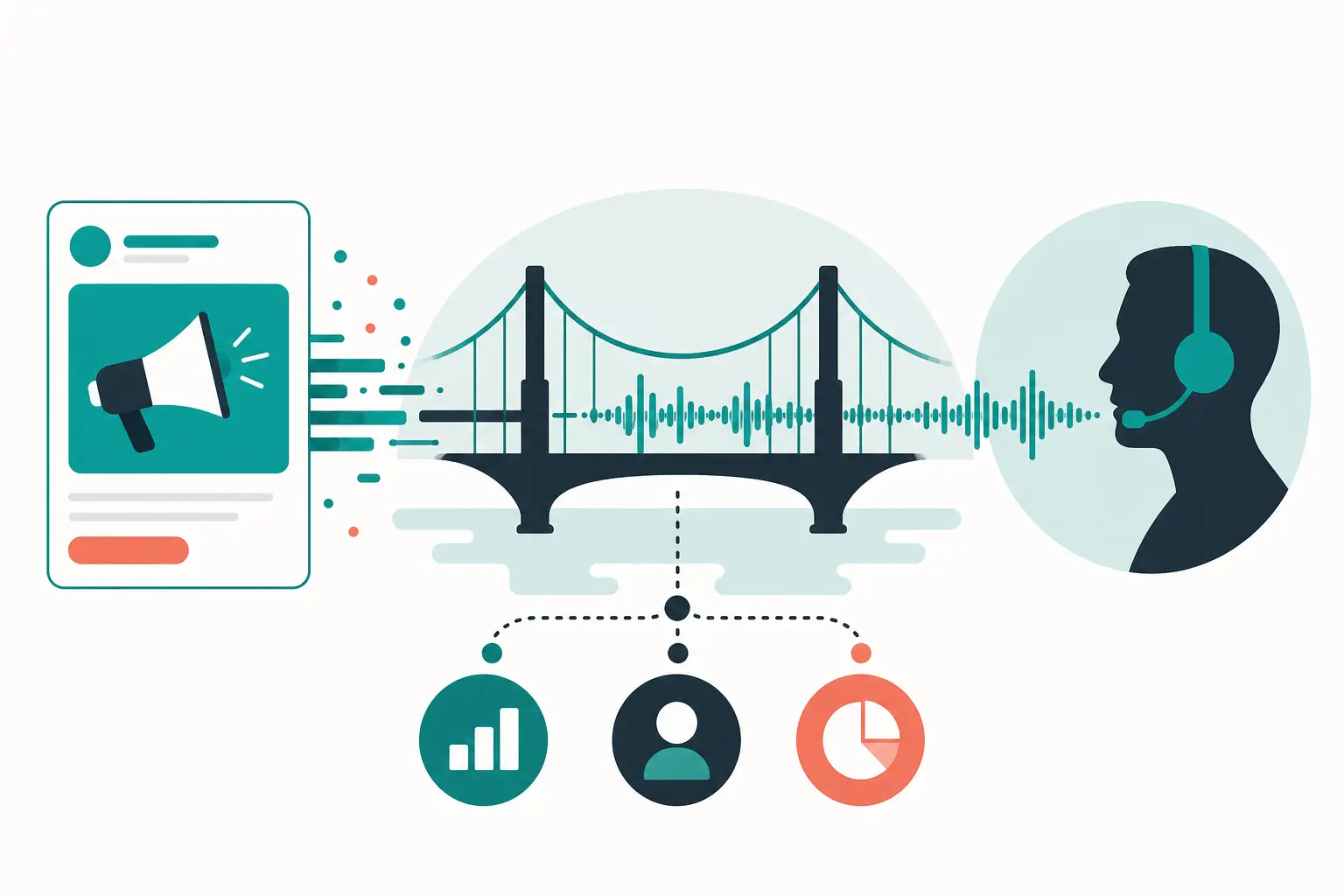
CTM has added attribution support for OpenAI Ads and introduced AskCTM, an AI agent designed to answer performance questions from campaign and call data inside its conversation analytics platform.
The July 20 announcement puts CTM in a familiar martech lane: helping marketers prove whether a new traffic source is creating qualified conversations, not only clicks. That matters as brands test AI search and answer engines, but it does not remove the usual measurement problem. Marketers still need clean tracking, disciplined source setup, and a clear view of what happens after a lead arrives.
Key Takeaways
- CTM has added OpenAI Ads attribution so marketers can connect AI ad clicks to calls, form fills, chats, and appointments.
- AskCTM gives users a conversational way to query campaign and customer interaction data inside CTM’s analytics platform.
- The update is useful for AI search experimentation, but marketers still need reliable tagging and conversion hygiene to make the data meaningful.
Table of contents
Jump to each section:
- What CTM is adding to OpenAI Ads attribution
- Why this fits the AI search advertising shift
- Where CTM sits against call and conversation analytics rivals
- What marketers should do with this now
What CTM is adding to OpenAI Ads attribution
CTM says the new OpenAI Ads integration connects ad clicks from OpenAI’s advertising channel to downstream actions including phone calls, form fills, chats, and appointments. For teams that sell through consultative calls or high-intent inbound conversations, that is a more useful signal than traffic volume alone.
The company is also rolling out AskCTM, described as an AI agent that can answer natural-language questions across campaign and customer interaction data. Instead of waiting for a report build, a marketer could ask which campaigns created booked appointments, which channels produced unanswered calls, or which campaigns are driving low-quality conversations.
CTM framed the launch around speed and visibility. Todd Fisher, CTM’s co-founder and CEO, said marketers need “more than click data” as AI-driven ad channels emerge. That is a fair diagnosis, although the practical value depends on whether customers already trust the underlying event tracking inside CTM.
Why this fits the AI search advertising shift
AI search advertising is moving faster than the measurement habits around it. Marketers can buy into new surfaces, but they still need to know whether those surfaces create revenue-facing conversations rather than curiosity clicks.
That puts CTM’s update in the broader AI marketing automation trend. The product is not trying to generate creative or optimize bids. It is trying to make AI ad traffic measurable inside the customer journey, especially for businesses where the decisive moment still happens over a call, chat, form, or appointment.
The skepticism is simple: attribution integrations often sound cleaner than they behave. If campaign naming, call routing, offline conversion tracking, and CRM handoff are messy, an AI layer can make the reporting interface faster without making the underlying numbers more reliable.
Where CTM sits against call and conversation analytics rivals
CTM operates in conversation analytics and call tracking, a category that overlaps with marketing analytics, sales enablement, and contact center intelligence. Its closest alternatives are not generic web analytics tools. They are platforms that connect marketing spend to customer conversations and lead outcomes.
| Company | Comparable focus | Practical distinction for marketers |
|---|---|---|
| CTM | Conversation analytics, call tracking, attribution, and workflow automation | Emphasizes tying campaigns to calls, forms, chats, appointments, and AI-assisted reporting. |
| CallRail | Call tracking and marketing attribution for small and mid-market teams | Often appeals to agencies and local-service marketers that need simpler call attribution workflows. |
| Invoca | AI conversation intelligence and revenue attribution for enterprise teams | Typically targets larger businesses with complex sales journeys and contact center data. |
| Marchex | Conversation intelligence and call analytics | Competes around call outcomes, lead quality, and voice-based customer intelligence. |
Against that backdrop, the OpenAI Ads integration is less about a single channel and more about positioning. CTM wants to be the system marketers check when a new AI advertising source starts feeding leads into a real sales process.
What marketers should do with this now
For most teams, the immediate action is not to rebuild attribution around OpenAI Ads. It is to test whether AI ad traffic can be measured with the same rigor as search, social, and referral campaigns.
Marketers already using CTM should audit the basics before treating AskCTM answers as decision-ready. That means checking UTM consistency, lead source mapping, call disposition rules, missed-call handling, and whether downstream appointments or closed deals are being passed back accurately.
Teams not using CTM can still take the same lesson from the announcement. AI search ads will create new reporting pressure. The winners will not be the teams with the flashiest dashboards, but the ones that connect emerging channel data to actual customer interactions without losing the messy operational details in between.