An AI system can make campaign decisions faster than a human team. It can also act before anyone pauses to ask who can see the customer data underneath those decisions.
That creates a paradox for agencies. The more intelligence they centralize across audiences, media, and outcomes, the more useful their AI may become. Yet centralizing the raw records behind that intelligence can turn a performance advantage into a governance risk. A vendor’s ownership structure may look independent while its technical design still asks clients to trust policies, contracts, and access controls.
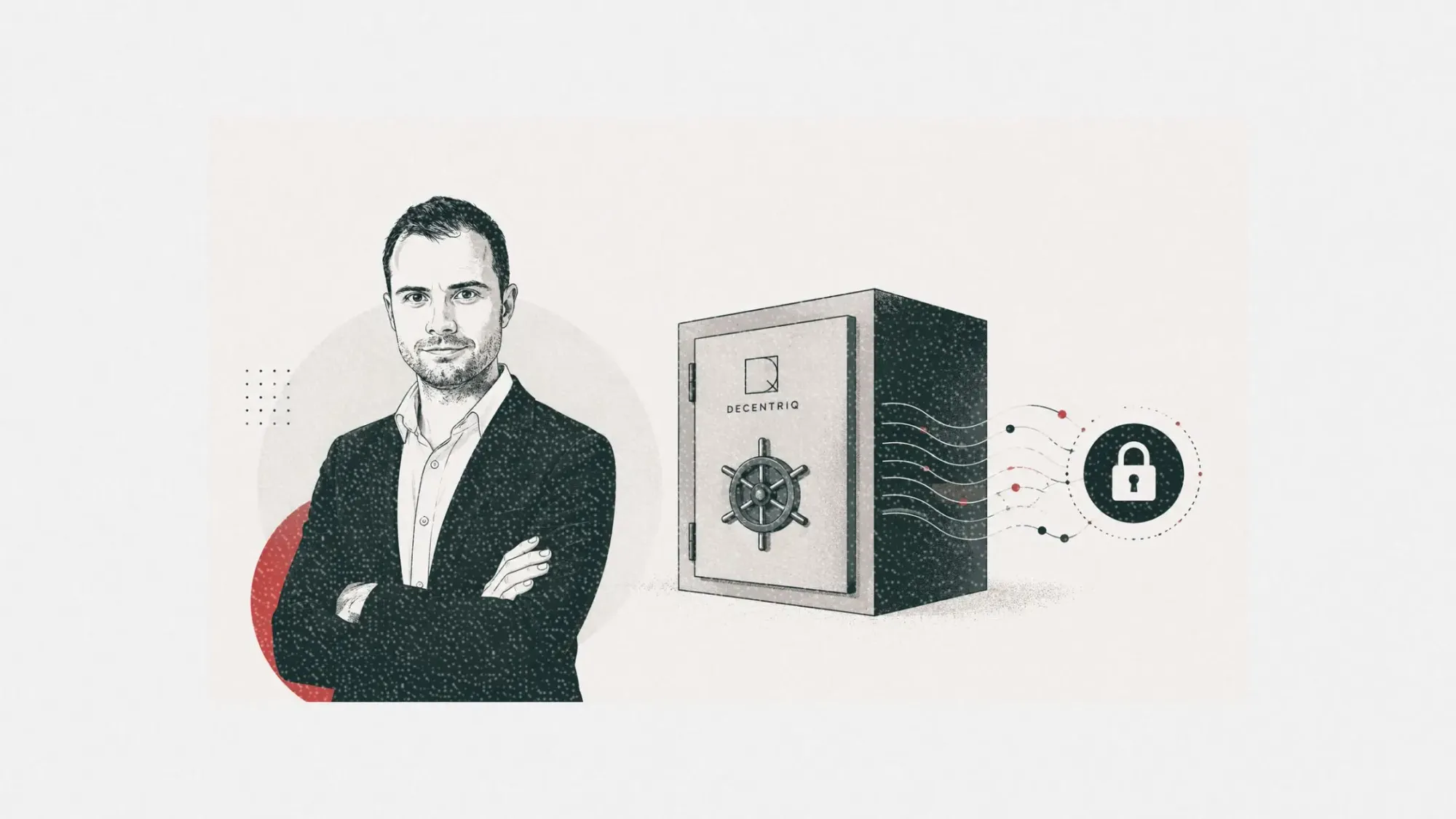
This tension sits at the center of Decentriq, a Swiss data collaboration company Max Groth co-founded in 2019 and now leads as CEO. Decentriq’s official materials describe its clean rooms as environments where organizations can analyze sensitive data without exposing raw records, using confidential computing to keep data inaccessible during processing.
In an interview with ContentGrip, Max explains why AI is pushing buyers to test neutrality at the level of architecture, how client-owned clean rooms alter the agency relationship, and why technical independence does not remove the need for hands-on support.
Table of contents
Jump to each section:
- The ownership test is getting weaker
- Centralize intelligence, not raw data
- Auditability changes the buyer’s question
- Client-owned clean rooms shift agency power
- The new moat combines trust and support
The ownership test is getting weaker
For years, neutrality in marketing infrastructure was often framed as an ownership question. Buyers wanted to know whether a platform was independent or controlled by a holding company with media and creative interests. Max argues that independence still matters, but it no longer resolves the risk on its own.
The proposed Publicis acquisition of LiveRamp made that distinction concrete. Publicis announced the agreement a few months back, saying LiveRamp would remain a neutral, interoperable platform with open access after the transaction. Max says the announcement nevertheless prompted buyers to inspect every layer of their infrastructure and ask who could technically view their data, whatever the contract or corporate structure promised.
He has seen the change surface in procurement. A recent clean room request for information from a large brand included a dedicated conflict-disclosure section covering revenue sharing, data access, joint products, and relationships with major holding companies. Max says that section had not appeared a year earlier.
The result is not a simple split between agency-owned and independent vendors. An independent platform can still expose or pool raw data. An acquired platform can still make strong operational commitments. The harder question is whether either platform can prove its guarantees from the way the system runs.
Centralize intelligence, not raw data
Agentic marketing raises the stakes because the system is no longer just producing a report for a person to review. It may plan, recommend, and execute. To work well, that system needs enough signal across audiences, media, and outcomes to make a useful decision.
Max distinguishes between two responses to that need: “centralize the data” and “centralize the intelligence.” The first pools raw information so a model can see as much as possible. The second brings together aggregated signals and outcomes while keeping the underlying records out of view.
That separation is the technical guardrail. Decentriq uses confidential computing, which processes encrypted data inside an isolated trusted execution environment. Its attestation mechanism can provide cryptographic evidence that the environment is genuine and running the expected code before data is sent.
The distinction also complicates a familiar agency promise: better AI through more connected data. More connection can improve the available signal, but it does not follow that an agency or its technology provider needs visibility into every raw record. The operating model has to preserve the difference between computing on information and possessing it.
Auditability changes the buyer’s question
The practical problem with contractual neutrality is not necessarily bad intent. It is that a buyer may reach a ceiling on what can be checked.
Max recalls a conversation with someone who served as his company’s internal expert on a major identity platform. Despite years of experience with the product, he described parts of its internal operation as a black box. No formal audit had been refused. The limits surfaced in an ordinary discussion when the customer could not verify the architecture from outside.
For Max, the difference is “trusting a promise versus being able to verify one.” A policy can describe who should have access. A technical guarantee can demonstrate what access is possible. That shifts procurement from reviewing an assurance to testing a property of the system.
It also changes what agencies should ask vendors. Conflict disclosures and contractual controls remain useful, but they answer organizational questions. AI systems need a second layer of diligence: what data becomes visible during computation, who can change the code, what outputs can leave, and what evidence proves those controls were enforced.
Client-owned clean rooms shift agency power
Architecture changes the agency-client relationship as well as vendor selection. Max sees more brands wanting to own clean room infrastructure themselves rather than leaving it entirely inside an agency.
That arrangement moves the agency from controlling a pool of data across accounts to working inside an environment governed by each client. Max describes it as “a shift from the agency holding the keys to the agency operating inside someone else’s house.”
The change can look restrictive from the agency side. Shared infrastructure has historically made it easier to reuse integrations, compare signals, and move quickly. Client ownership adds boundaries. Teams may need to configure workflows within separate environments and accept that raw data cannot move freely between them.
But those boundaries can make collaboration more durable. The client keeps control of sensitive information while the agency contributes strategy, execution, and interpretation. Value moves away from privileged possession of pooled records and toward the ability to generate useful intelligence under rules the client can defend.
The new moat combines trust and support
Technical neutrality is not the finish line. Max says marketers can complete deep diligence, satisfy themselves that a platform cannot see their data, and still underestimate the operational help required to use the technology well.
“The realization was that independence in the technology and support in the relationship are two different things, and having one doesn’t guarantee the other,” he says. No-code tools can reduce friction, but marketers may still need help with setup, integrations, and live campaigns until the workflows become familiar.
This is the complication for privacy-first vendors. A technically strong platform can minimize access while still leaving customers exposed to implementation risk if the relationship is too hands-off. Agencies face the inverse problem: excellent service cannot compensate for an architecture that depends on pooling more data than the system needs.
Max expects speed to matter more as AI compresses the advantage of scale and integration depth. “The vendors I’d watch are the ones whose only path to shipping AI features fast is pooling more data centrally to make it work, because that’s the same old trade-off, just moving faster.”
The agency model is not becoming less valuable. Its value is moving. As AI takes on more decisions, agencies will have to combine connected intelligence with boundaries they can verify, then support clients inside those boundaries. Trust will depend less on who owns the plumbing and more on whether the system can prove what nobody is allowed to see.