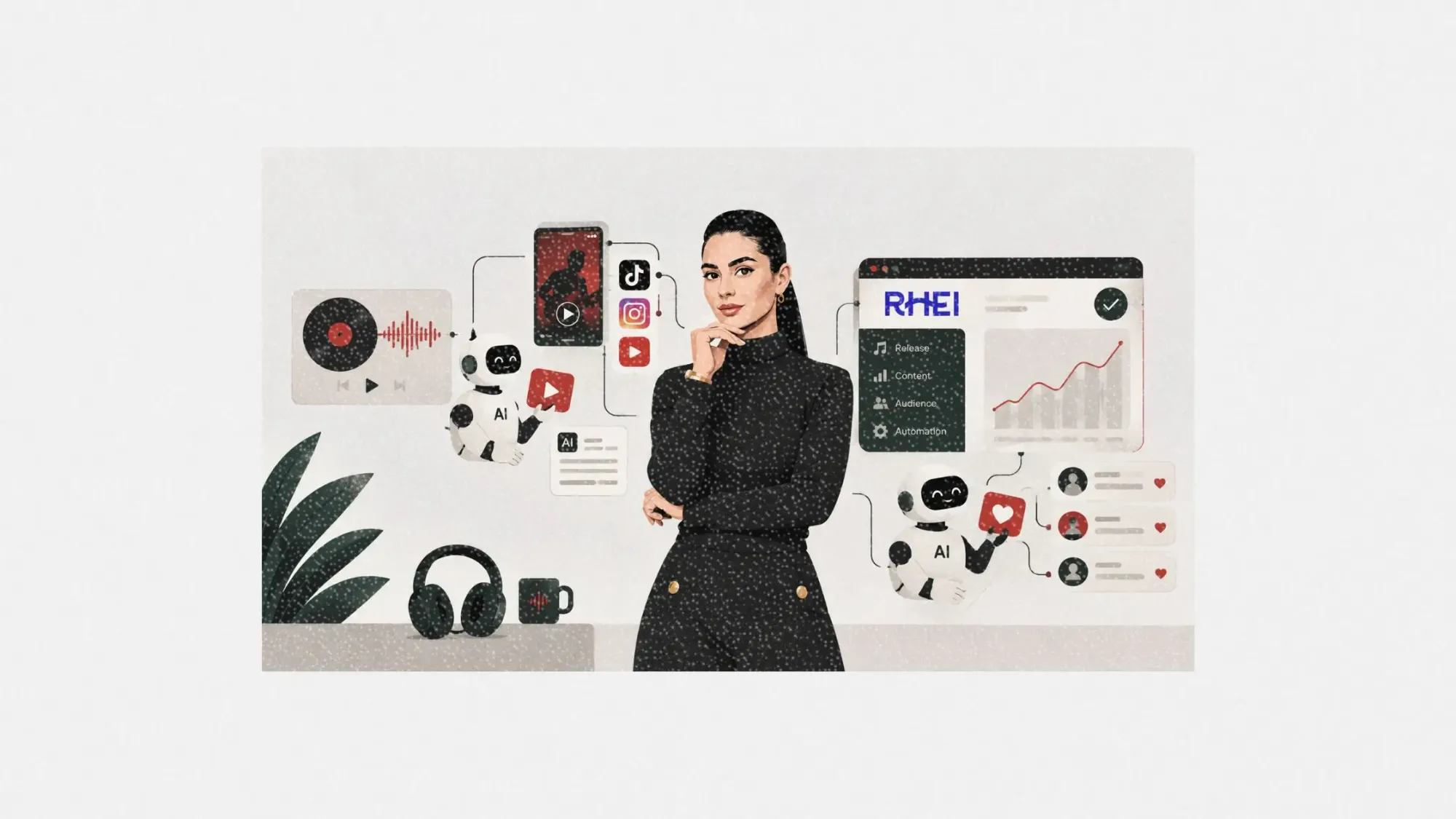
A finished track is only the start. RHEI wants AI agents to handle the campaign work that follows without taking the artist’s voice with it.
Finishing a song once meant the hard part was over. Now it can mark the start of another job: cutting vertical video, writing captions, scheduling posts, pitching playlists, answering fans, and tracking copies across platforms.
The work is individually small and collectively relentless. One clip takes half a day. One release needs several versions. A catalog turns the same checklist into a permanent operation. Automation promises relief, but it also creates a new risk. The faster a platform can make and publish material, the easier it becomes to flatten an artist into a template.
That long operational tail is familiar to Shahrzad Rafati, Founder and CEO of RHEI, a Vancouver technology company that builds AI tools for creators and media companies. Her experience sits at the intersection of audience growth, content operations, and the limits of automating creative work.
On August 3, 2026, RHEI announced Made for Music, an AI music release platform for artists, labels, and distributors. It turns a track or performance into campaign writing, visual and video assets, social posts, fan replies, playlist materials, and rights-management work. The launch extends the fully managed enterprise service RHEI introduced in April 2025 into a product that artists and their teams can operate directly.
In an email interview with ContentGrip, Shahrzad explained what the first 48 hours can look like, where humans still make the call, and how audience behavior can pull a campaign away from its original plan.
Table of contents
Jump to each section:
- A release now starts after the song is done
- The platform takes the tail, not the taste
- What RHEI says happened at scale
- Audience data can change the campaign
- Keep the human hand on the release
A release now starts after the song is done
Shahrzad puts the problem plainly: “The bottleneck is rarely the creative work itself.” It is everything that gathers around the music after recording stops. A team cuts and reformats video for each platform, writes and approves captions, schedules uploads, checks that they went live, and then starts answering the audience.
Made for Music divides that work among specialized agents. In Shahrzad’s example, the first eight hours go to asset generation. A creative director agent drafts a press release, artist bio, electronic press kit, playlist and sync pitches, cover art, thumbnails, and metadata. At the same time, a production agent prepares a lyric video, visualizer, and short-form cuts for TikTok, Reels, and Shorts.
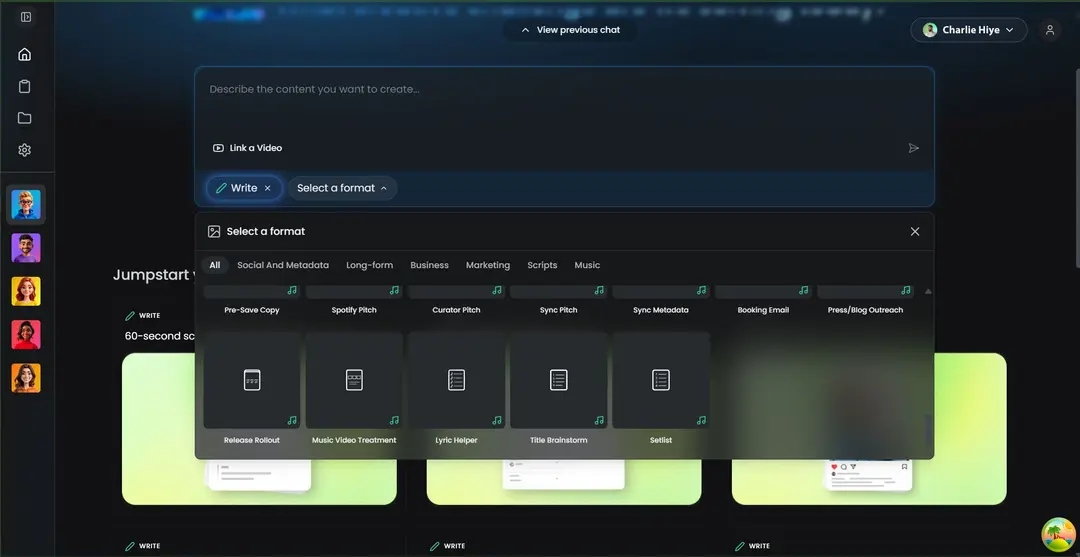
Hours eight through 24 belong to the artist or label. The team reviews voice, tone, and creative direction before locking the release schedule. During hours 24 through 48, approved material goes live, a community agent helps identify and answer fans, and a rights agent starts monitoring user-generated uploads that may be monetized.
Shahrzad sums up the compressed workflow: “The result: what previously required a coordinator, a video editor, a copywriter, and a community manager working across multiple tools happens inside one platform.” The promise is not a machine-written song. It is one place for the work that begins when the song is done.
The platform takes the tail, not the taste
Speed creates its own editorial problem. A system that can make a press release, playlist pitch, caption, and reply can also repeat the same polished language until every artist sounds alike.
Shahrzad draws the boundary at two moments: outreach and community engagement. “While the platform accelerates content creation, its purpose is to protect and amplify the artist’s unique identity, not replace it.” The software can pre-structure a pitch around an artist’s story and tone, but a human editor checks whether the message carries real context and sounds credible to the recipient.
Fan replies work under a similar rule. The system drafts within an artist’s vocabulary, voice, and brand guardrails. A person still provides oversight. That checkpoint matters most for smaller artists because a reply that feels personal can strengthen a community, while a generic or automated response can spend trust for the sake of speed.
The same division applies to publishing. Made can prepare and schedule material across platforms, but the artist or label approves the creative direction before anything goes live. Automation handles the queue. The people involved remain responsible for taste.
What RHEI says happened at scale
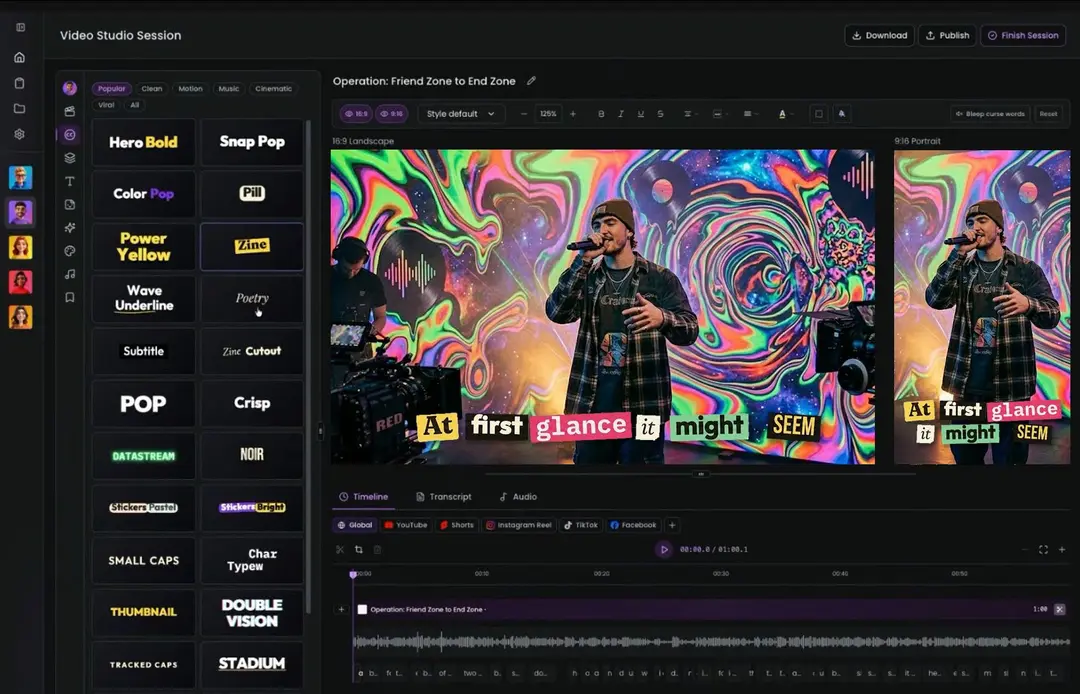
The handoff is easiest to see in a promotional clip. Shahrzad describes the old routine as one editor cutting footage, another person writing copy, and the artist’s team uploading and scheduling separate versions for TikTok, Reels, and Shorts. Made can now find moments, add lyrics, reformat the video, and schedule the set in one run. She puts the change this way: “What used to require two or three people and half a day is now something an artist or label can run themselves in minutes.”
RHEI says it has applied the same operating model to more than 70 channels for a major-label partner, covering eight genres and five languages. According to figures supplied by RHEI, those channels grew 218% in 12 months while the comparison market grew 43%, and a typical channel rose 245% during a period when the median competitor declined. The company also says the portfolio beat that comparison market for 23 consecutive months.
The company supplied two sharper turnaround claims. RHEI says it grew two dormant label-owned channels by 16 times and 63 times, with one moving from 600,000 to 38 million monthly views. These performance figures came from RHEI’s interview responses. ContentGrip did not audit the underlying channel analytics, so they should be read as the company’s account of its own results.
The numbers illustrate the commercial case RHEI is making. The strongest use of an agent is not producing one more asset. It is keeping a catalog moving across more channels than a human team could reasonably tend by hand.
Audience data can change the campaign
More output is useful only when the plan points in the right direction. Shahrzad’s example involves Yameii Online, a virtual musician and the lead character in the Oseanworld series, and the 2023 album CANDY.
The first instinct was a standard push on digital streaming platforms, built around editorial playlists and algorithmic listening. RHEI says the audience data showed fans behaving less like passive listeners and more like participants. Their engagement suggested that the campaign should give them a way to interact with the artist’s identity.
RHEI responded with an interactive experience called Which Yameii Are You? and rewards for fans. The company says it drew tens of thousands of visits in its first 24 hours. RHEI also attributes more than 20 million all-time streams and 35% Spotify follower growth to the wider campaign results. These figures, like the channel-growth claims, were supplied by RHEI and were not audited by ContentGrip.
Shahrzad describes the pivot simply: “The data surfaced what the fanbase was ready for, and the campaign followed it.” The example complicates the simple case for automation. The system earns its place not by repeating the first plan faster, but by helping a team notice when fans are asking for a different one.
Keep the human hand on the release
Made for Music is built on a specific trade: software absorbs the repeated work around a release, while artists and labels keep the decisions that shape identity. The arrangement only holds if review is a real checkpoint rather than a ceremonial click.
For marketing teams, the useful question is not whether an AI agent can write a caption or resize a clip. Many tools can. The harder question is where the workflow stops until a person approves the voice, the audience reading, and the decision to publish.
Shahrzad’s own reset comes from cold water swimming. She says the shock clears away emails and deadlines because it demands complete attention. A music release needs a similar line of focus. Let the platform carry the checklist, but keep people present for the calls that make the work recognizably theirs.