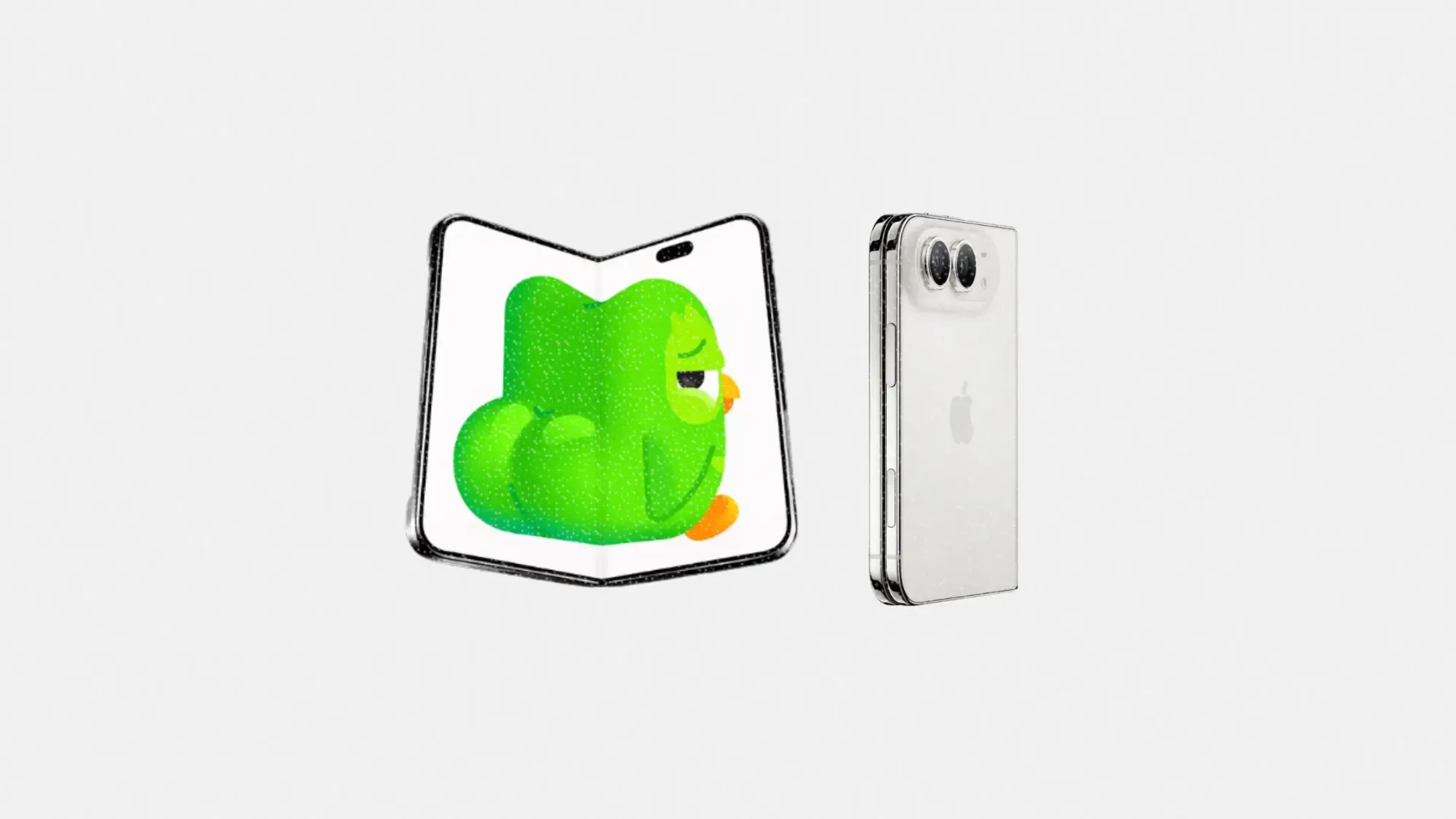
Brand accounts are funniest when they stop sounding like brand accounts. Apple’s new iPhone Duo gave Duolingo an obvious opening because its mascot is literally called Duo. But the moment became much more interesting when Samsung jumped into the conversation and Duolingo immediately refused to play the friendly ally.
The sequence unfolded quickly after Apple’s official iPhone Duo announcement. Duolingo joked that Apple had named a phone after its mascot. Samsung Mobile US then tagged Duolingo with a message of “solidarity,” arguing that Apple had copied Samsung too. Duolingo answered by calling Samsung an “ugly stranger” trying to claim it as a twin.
That final reply is what changed the tone. This was no longer only Samsung using an Apple launch to advertise its history in foldables. It became three brands improvising in public, with each account trying to sound more like a participant in internet culture than a corporate channel.
iPhone Duo: $1999
Duo on your iPhone: free https://t.co/n00QC15t6u— Duolingo (@duolingo) September 9, 2026
Table of contents
Jump to each section:
- Why Duolingo changed the joke
- Samsung made a product argument through internet language
- This is what brand-as-creator behavior looks like
- What marketers should know about reactive brand banter
Why Duolingo changed the joke
Duolingo’s first post was almost inevitable. Apple had chosen “Duo” for its first foldable iPhone, handing a language-learning brand whose mascot is named Duo a ready-made naming joke. Duolingo posted that Apple had named a phone after it and “made it bend over.”
they named a phone after me and made it bend over 😭 pic.twitter.com/ouC7qtEaVF
— Duolingo (@duolingo) September 9, 2026
Samsung then entered with a different agenda. Its “They copied us too #Solidarity” reply tried to turn Duolingo’s joke into a shared complaint about Apple, linking a mascot-name coincidence with Samsung’s much more strategic claim that Apple was arriving late to foldables.
I’m so sorry, @DuoLingo. They copied us too #Solidarity
— Samsung Mobile US (@SamsungMobileUS) September 9, 2026
Duolingo’s answer broke the alliance immediately. By replying that an “ugly stranger” was calling it a twin, the account made Samsung part of the joke too rather than simply helping Samsung pile onto Apple.
when an ugly stranger calls you twin 😂😭 No Brand 🙅♂️✋ https://t.co/sroMBt1NS8
— Duolingo (@duolingo) September 9, 2026
That matters because it kept Duolingo’s own brand character intact. The account did not suddenly become a Samsung campaign partner. It behaved like the same unpredictable internet personality audiences already associate with the brand, even when a much larger technology company tried to recruit it into the joke.
Samsung made a product argument through internet language
Underneath the banter, Samsung still had a serious competitive point to make. Apple’s iPhone Duo is its first foldable phone, while Samsung has spent years iterating on its Galaxy Z Fold line. Samsung’s social posts repeatedly framed Apple as arriving in territory Galaxy already knows.
The Duolingo exchange made that positioning easier to consume. Instead of asking people to read a specification chart or product-history thread, Samsung attached its argument to a joke already moving through social media. The product message was still “we were here first,” but the delivery felt closer to a reply in a group chat.
That distinction is useful. Reactive marketing often fails when the cultural reference is merely decoration around a prewritten brand claim. Here the interaction itself carried the claim. Samsung’s experience in foldables gave the joke a reason to exist beyond chasing attention.
This is what brand-as-creator behavior looks like
The exchange also illustrates why some brand accounts now behave more like recurring online characters than distribution channels. Duolingo has spent years building a deliberately chaotic social persona around Duo, while Samsung has repeatedly used Apple launch days as opportunities for competitive humor.
Those habits created a shared language before iPhone Duo ever existed. When Apple supplied the trigger, both brands already knew how their accounts were supposed to behave. That is why the exchange could move quickly without a long explanation of who was joking about what.
For Duolingo, consistency mattered more than being agreeable. Its social persona works because Duo can be needy, absurd, confrontational or dismissive depending on the joke. Letting Samsung have the final word would have made the interaction cleaner for a traditional partnership, but less believable for the character Duolingo has built.
For Samsung, the value came from entering someone else’s joke without losing the product story. It briefly borrowed Duolingo’s cultural momentum, but the reference still pointed back to Samsung’s foldable history.
What marketers should know about reactive brand banter
The useful lesson is not that every brand needs to roast a competitor. This worked because each participant already had a recognizable role and the trigger was easy to understand without explanation.
- A strong brand voice should survive the interaction.
Duolingo did not become nicer because Samsung tagged it. Its reply stayed consistent with the personality people expect from the account. Reactive content becomes more memorable when audiences can predict the character, but not necessarily the punchline. - The joke should still carry a real brand truth.
Samsung’s strongest position was not simply that Apple deserved teasing. It was that Samsung has longer experience making foldables. The humor compressed that argument into a social exchange instead of replacing it. - Other brands are participants, not props.
Samsung invited Duolingo into its framing, but Duolingo had its own incentives and its own voice. Once brands interact publicly, the conversation can move somewhere the first account did not control. That unpredictability is part of what makes the exchange feel native to social media. - Speed works best when the character is already defined.
Neither Samsung nor Duolingo had to invent a new personality for this moment. Their previous social behavior gave their teams a clear range of acceptable responses. That makes fast reactions easier because the creative question becomes “what would our character say?” rather than “what should a corporation say?”
The iPhone Duo launch will ultimately be judged on products, reviews and sales. But for a few posts, Samsung and Duolingo turned the launch into something closer to live internet theater, where brands could interrupt, tease each other and refuse alliances in public.
For marketers, that is the more interesting shift. A social account can function as a media channel, but the most culturally fluent ones increasingly behave like characters with continuity. The brand does not only publish content. It enters scenes, responds to other characters and gives audiences a reason to follow what happens next.