
Marathon weekends have a recognizable rhythm. Runners chase finish lines, spectators hold up signs, and brands usually try to become part of that shared determination. A swimwear brand questioning the routine would stand out before anyone even read its signs.
That was the joke behind Speedo‘s Anti-Run Club at the Toronto Waterfront Marathon on October 18, 2026. Instead of celebrating running with another familiar slogan, the company put representatives wearing Speedo swimwear along the route to make a case for swimming as a companion to long-distance training.
Table of contents
Jump to each section:
- Why the Anti-Run Club joke works at a marathon
- Inside the Toronto race-day takeover
- How Speedo reframes endurance culture
- What marketers can learn from the Anti-Run Club
Why the Anti-Run Club joke works at a marathon
The Anti-Run Club name sounds like a provocation, especially at a race where people have spent months preparing to run. That contrast is the point. Speedo picked an occasion when endurance, exercise routines and the physical demands of training are already on people’s minds, then suggested a different way to pursue some of the same goals.
The argument was not that running is bad. Instead, Speedo framed swimming as a lower-impact activity that can complement miles on the road. This makes the humor easier to receive: the event is still about celebrating movement, even if the message arrives from a company better known for pools than pavement.
A swimmer trying to get attention at a swimming event would be expected. At a marathon, the brand’s presence creates a visual contradiction that people can understand without a lengthy explanation. The joke also provides an opening for Speedo to discuss an actual benefit of its core category.
Inside the Toronto race-day takeover
Along the Toronto route, Speedo-clad representatives appeared with playful signs. Guerrilla posters and a digital billboard extended the idea beyond the immediate crowd, making the Anti-Run Club resemble a deliberately misplaced fan club rather than a conventional athletic sponsorship.
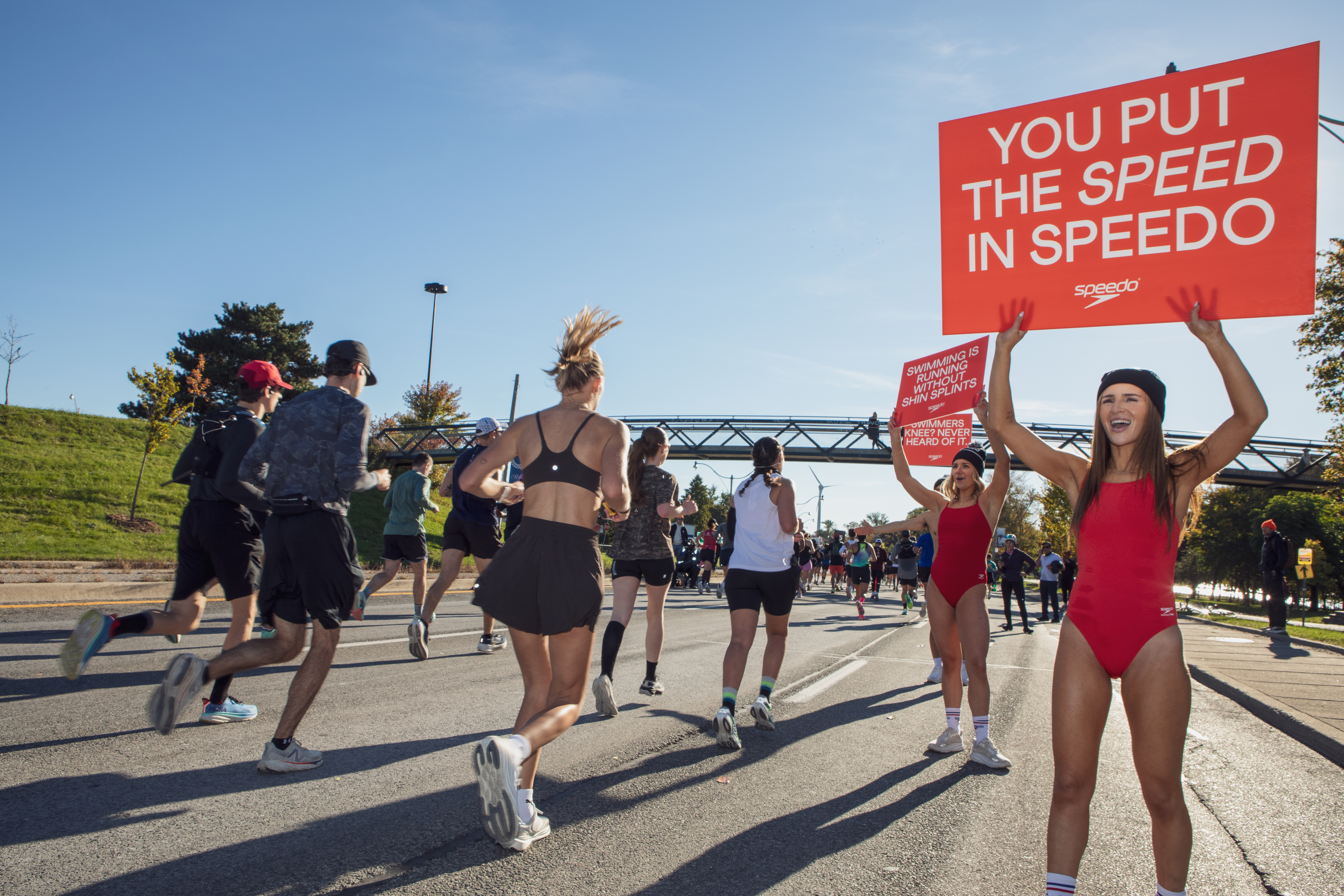
The Anti-Run Club appeared during Toronto marathon weekend. Image: LBB campaign gallery.
Tera Maloney, head of marketing at Speedo Canada and a former member of Canada’s Olympic swim team, summed up the idea: “The best exercise is the one you can do for a lifetime.”
This is a useful detail because the campaign does not claim that swimmers should replace runners. It speaks to people who already value endurance and asks them to consider another activity that may fit into the same routine. Maloney also described swimming as complementary to running, not a criticism of the sport.
The October 18 placement mattered more than a generic location buy. The marathon gave Speedo an existing audience and a specific cultural conversation. The brand’s campaign photo gallery documents the on-site creative, while the accompanying coverage describes the posters and billboard as part of Speedo’s wider push to highlight the benefits of swimming.
How Speedo reframes endurance culture
Speedo has spent decades selling swimwear and equipment. Parent company Pentland Brands describes the brand’s broader purpose as encouraging a lifelong love of swimming. In Toronto, that familiar idea became a timely argument about how active people train.

The activation used on-site visuals to connect swimming with endurance culture. Image: LBB campaign gallery.
The contrast with traditional marathon marketing is instructive. The official race package included an ASICS souvenir shirt, a natural fit for an event defined by running. Speedo instead used the environment to start a conversation about a different, complementary activity.
Neither approach is automatically better. A formal running partnership can fit naturally into the participant experience, while a carefully chosen challenger message can earn attention through surprise. What matters is whether the outsider has a credible reason to join the conversation. Speedo does, because swimming and running can both be parts of endurance training.
What marketers can learn from the Anti-Run Club
The Anti-Run Club is a relatively small creative idea, but it illustrates how a brand can enter an existing sporting ritual without claiming to own that event.
- Find the adjacent audience. Speedo did not need every marathon participant to switch sports. It needed runners to recognize swimming as a potentially useful addition to a training routine. The message reaches beyond an existing swimwear audience without abandoning the brand’s expertise.
- Use contrast without contempt. Showing up in swimwear at a road race creates an instantly readable joke. But the brand’s stated message respects runners. That distinction matters when a campaign borrows another community’s space: teasing an activity is not the same as mocking the people who care about it.
- Let the setting explain the idea. The race supplied the context. Clothing, signs and an outdoor placement made the contrast visible immediately, before viewers needed to learn anything about the larger brand platform. The setting effectively did part of the storytelling work.
A useful comparison is Vaseline’s runner-focused sponsorship at the 2026 London Marathon, which found relevance by addressing a practical discomfort runners face. Speedo’s contribution is more conversational than functional, but both campaigns look for a reason to appear in the cultural space around a race instead of simply displaying a logo.
No campaign-specific reach, sales or conversion figures were disclosed in the source material reviewed for this story. The lesson is about creative fit rather than proven effectiveness: a brand can arrive as an outsider if it brings something relevant to the people already there.
The memorable part is the restraint underneath the provocation. The name sounds anti-running, but the message supports active lives. Running and swimming can coexist, and Speedo found an unusually appropriate place to say so.
