
For Chobani, the attraction of Australian footballer Mary Fowler reaches beyond the ninety minutes she spends on a pitch. She is a Matildas forward with a public identity that also crosses into fashion and beauty. That makes her an interesting face for a food brand trying to make protein drinks feel less like specialised sports nutrition and more like an everyday choice.
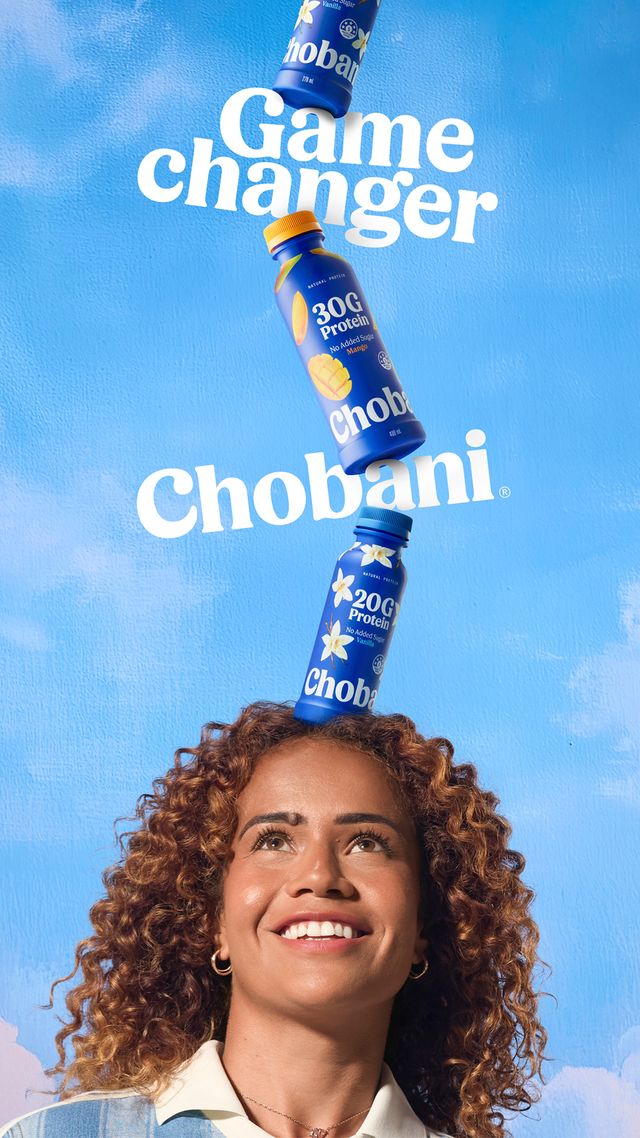
The Game Changer campaign puts Fowler at the centre of a national Australian push for Chobani High Protein Greek Yogurt Drinks. Created by Special Australia, it starts nationally on November 2, 2026, with outdoor advertising, digital and social placements, retail activity, sampling and public relations. Hatched Media handled media planning and buying.
This is not simply about attaching an athlete to a product. It is about connecting the habits associated with sport, such as preparation, energy and personal progress, to a wider audience that may want a convenient snack rather than a workout accessory. The question for Chobani is whether a familiar football personality can carry that connection into the supermarket aisle.
Table of contents
Jump to each section:
- Why Mary Fowler is the face of this campaign
- How Game Changer follows fans beyond the field
- What the protein drink expansion means for Chobani
- What marketers can learn from athlete identity
Why Mary Fowler is the face of this campaign
Fowler is a recognizable figure in Australian women’s football and plays for Manchester City. The club’s official player profile places her among its attacking players, while her appearances for the Matildas give her a connection to national sporting culture. Those are meaningful credentials for a brand entering a product category where protein is often discussed through athletic performance.
But the more interesting detail is that her public career does not stop at football. An October 29 Forbes Australia profile explored how Fowler’s commercial partnerships have ranged across sportswear, beauty and mainstream consumer brands. Its examples include adidas, L’Oréal Paris, Weet-Bix, Rebel Sport and Samsung. They are separate partnerships, not participants in this Chobani campaign.
That wider identity gives Chobani more to work with than a conventional training-ground endorsement. A customer does not need to play football to recognize a young athlete making choices about career, appearance and personal ambition. The creative platform uses the phrase ‘Game Changer’ to connect that sense of individuality with a new format for a familiar food brand.
Chobani Australia’s general manager of marketing, Ellie Vince, said Fowler was chosen for her “confidence to take her own path.” Fowler described the idea of being a game changer in terms of learning, finding an approach that works and making a difference in one’s own way. Both remarks focus on independence rather than promising athletic results from a drink.
The distinction matters. In celebrity campaigns, a recognizable name can attract initial attention, but an association works best when the message does not demand that audiences pretend a product created the talent’s success. Here the campaign’s stated theme is shared attitudes toward challenging expectations. Whether that translates into preference or sales is still an open question.

How Game Changer follows fans beyond the field
The campaign’s channel mix shows why an athlete-led idea cannot live only inside a stadium. Chobani has planned outdoor media, digital content, social placements, retail activity, sampling and PR. Someone may encounter Fowler in an advertisement on the way to work, then see the product again in a supermarket or convenience store. These different moments are designed to connect a personality with a shopping decision.
For supporters who already know Fowler from the Matildas, the football connection makes her presence immediately legible. For people who do not follow the sport closely, her positioning as someone who challenges expectations is intended to stand on its own. That is the advantage of a message built around a person’s identity rather than a particular match, score or tournament result.
The campaign also gives the brand a way to talk about nutrition without turning the advertisement into a technical lesson. Chobani can make the product visible while the celebrity and the creative idea do the work of making a new drink format familiar. The risk is that the person becomes more memorable than the product, which is why the retail and sampling elements matter.
This does not establish that Fowler’s followers are buying the drinks or posting about them. Neither Chobani nor the campaign coverage disclosed campaign-specific reach, social interaction or sales results. The relevant evidence is the planned creative and retail activity, not an inferred online response.
The campaign illustrates the difference between sponsorship and an integrated story. Merely placing an athlete on a package would leave the audience to supply its own meaning. Game Changer tries to make that meaning explicit: a player known for expressing herself is paired with a food company moving its own product range into a new format.
What the protein drink expansion means for Chobani
The commercial background is a shift in where and how Chobani wants its products consumed. The company already has a strong association with Greek yoghurt in Australia. Ready-to-drink variants give it a place in occasions when someone may want protein without a spoon, a bowl or a refrigerator-side breakfast routine.
On its Australian product page, Chobani lists drinks with 20 grams or 30 grams of protein, depending on the product. The range includes flavours such as vanilla, mixed berry vanilla, tropical, mango and strawberry. Those are product specifications from the company, not claims about how much better the drinks work than a competitor’s.
The national retail plan is as important as the advertising. Chobani says the drinks are available through Woolworths, Coles, IGA and convenience retailers including 7-Eleven and OTR, with selected petrol and convenience locations also stocking them. The brand had previously introduced the range at 7-Eleven and OTR stores in South Australia in September, before the wider November push.
Retail availability gives the celebrity story somewhere to go. An outdoor ad might make a shopper curious, but a recognizable package at the next store makes it possible to act on that curiosity. In a category with competing protein products and many everyday snack choices, that connection between creative memory and physical access is central to the campaign’s commercial logic.
81.5% versus 39.2% Chobani said the value of its high-protein yoghurt portfolio rose 81.5% in the quarter to September 6, 2026, compared with 39.2% growth for the wider segment. These company-reported historical figures, disclosed in the campaign coverage, are not sales results for the new drinks or evidence of campaign effectiveness.
Those historical figures help explain why Chobani might see room to extend the range. They do not show how the new drinks are performing, nor whether Fowler’s involvement changes buyer behaviour. The campaign’s real test will come after consumers have encountered the advertisements, tried the products and decided whether the format belongs in their routine.
There is a useful category contrast here. Many protein products rely on numbers, ingredients and training benefits to explain their purpose. Chobani is keeping nutritional information in the product story but using Fowler’s image to give the category a more human frame. That is a different advertising emphasis, even though the underlying product still has to compete on taste, convenience and value.
What marketers can learn from athlete identity
The interesting cultural shift is not that an athlete is appearing in another food advertisement. It is that a women’s football star can represent several overlapping identities at once: elite performer, fashion participant, public personality and ordinary consumer. Chobani’s campaign treats those layers as a bridge to people who might never think of themselves as sports-nutrition customers.
- Choose the person for more than their reach. Fowler’s relevance comes from both her football credentials and the independence Chobani wants to express. Brand teams should be able to describe that connection without reaching for an athlete’s follower count. A large audience matters less when the story does not fit the product.
- Make the everyday use case visible. The challenge is to help consumers imagine reaching for the drink at a supermarket or convenience store, not just after exercise. Advertising can make the choice feel familiar, while sampling and placement can give people a reason to discover whether the product suits them.
- Let the campaign travel across contexts. Outdoor, digital, social and retail placements each introduce the idea under different circumstances. An integrated plan gives the creative concept more than one chance to connect with an audience, but it also demands consistency between the ad, the product and the point of sale.
- Separate a compelling story from measured results. Neither the athlete’s previous partnerships nor Chobani’s historical yoghurt growth establish success for this new campaign. Marketers evaluating the program should look for drink trial, repeat purchase, distribution and brand measures when reliable data become available, rather than declaring victory from the launch alone.
Fowler’s appeal is partly that she does not have to be reduced to a single role. That is what makes the partnership culturally legible beyond football and what gives Chobani a more adaptable story than a straightforward endorsement about training hard.
Yet a good fit between athlete and brand is only the beginning. The advertising asks people to make a connection between a well-known player and a new habit in the grocery aisle. The product has to make that second connection worthwhile.
For consumer marketers, the lesson is less about finding the next famous athlete and more about understanding the identities audiences recognize in someone already famous. When that understanding is specific, the person can introduce a product into everyday culture without having to pretend that everyone watching is a devoted sports fan.
