
For a Pokémon fan, opening a McDonald’s Hong Kong burger to discover which character is printed on the bun adds a small surprise to an ordinary meal. The possible outcomes are familiar, but the customer cannot choose one in advance. It is the logic of a blind box, only this time the collectible reveal is edible.
The official Pokémon menu turns that idea into a Hong Kong collaboration for the franchise’s 30th anniversary. From November 12, three limited-time burgers come with one of five randomized character prints. The celebration goes beyond the wrapper: themed food packaging and a Pokémon GO promotion give fans reasons to look at the restaurant as part of the game, not just a place to eat.
The appeal makes more sense with the franchise’s history in view. Pokémon’s official anniversary celebration explicitly invites people to share their favorites across generations. Its world of creatures, games, trading cards and collecting rituals gives even a casual meal a recognizable set of characters and an element of discovery.
Table of contents
Jump to each section:
- Five character buns turn burgers into blind boxes
- Pokémon GO brings the game into restaurants
- How packaging extends the hunt
- What marketers can learn from this Pokémon crossover
Five character buns turn burgers into blind boxes
The center of the collaboration is simple. Customers choose among three Japanese-inspired burgers: a tartar demi double beef burger, a pepper garlic chicken burger and a roasted sesame pork cutlet burger. What they do not choose is the Pokémon design that appears on top of the bun.
There are five possible character prints. McDonald’s Hong Kong’s official terms say these designs are randomly assigned to the three specified burgers and cannot be selected or exchanged. So the meal combines a normal purchasing decision, which burger to eat, with a separate surprise that a fan may enjoy revealing.
5 randomized Pokémon bun designs appear across 3 specified burgers, according to McDonald’s Hong Kong’s official campaign terms.
That distinction matters. A fixed picture of a favorite character would make the item a themed menu product. Randomization turns the act of opening the box into part of the experience. It gives diners something to identify and compare, and potentially another reason to be curious about the next meal. Whether it actually leads to repeat purchases has not been disclosed.
The mechanic also borrows from a collectible culture that predates this menu. Pokémon fans are used to discovering, trading and assembling favorites across games and cards. The bun prints are not trading cards or permanent merchandise, but they imitate the moment of uncertainty that makes collectible releases interesting.
For marketers, the useful detail is not simply the licensed artwork. It is the product design: the surprise appears at the exact moment the customer reaches the food. The product is doing part of the storytelling without needing an extra promotional step.
Pokémon GO brings the game into restaurants
Not every Pokémon experience needs to live on a screen. The franchise’s mobile game has long connected virtual exploration to physical places, making a real-world stop part of play rather than a break from it.
In this campaign, McDonald’s Hong Kong says its restaurants become Pokémon GO PokéStops from November 12 through December 20, 2026. That connects a familiar location-based game mechanic with the chain’s existing physical footprint. A person visiting for the game can encounter the themed food, while someone visiting for a burger can see how the collaboration extends into play.
The distinction from a conventional licensed menu is important. The restaurant is not only displaying Pokémon imagery; it has a described role inside the game’s geography. The promotion links a physical product, an actual place and an activity that fans already understand.
There is no public evidence yet that this drove a specific volume of restaurant visits, new players or incremental sales. It is more accurate to describe the PokéStop feature as a designed invitation to visit than to declare it a traffic success.
The arrangement also sits alongside Pokémon’s larger anniversary push. The franchise has used Pokémon GO for a fan-facing “What’s Your Favorite?” snapshot feature during the 30th anniversary, so the local McDonald’s integration connects to a broader year of activities that encourages people to bring their favorite characters into everyday experiences.
How packaging extends the hunt
The recognizable characters do not stop at the bun. McDonald’s Hong Kong’s campaign includes Pokémon-themed packaging for burgers, drinks, desserts and tray liners. Instead of requiring everyone to order the same product, the restaurant makes multiple parts of the meal recognizable as elements of the same collaboration.
It also offers other limited-time menu items, including bite-sized potato pieces, Fuji apple soda with nata de coco, purple sweet potato balls and a banana-chocolate McFlurry. The packaging gives those items a visual connection to the anniversary, even when the food itself is not a collectible object.
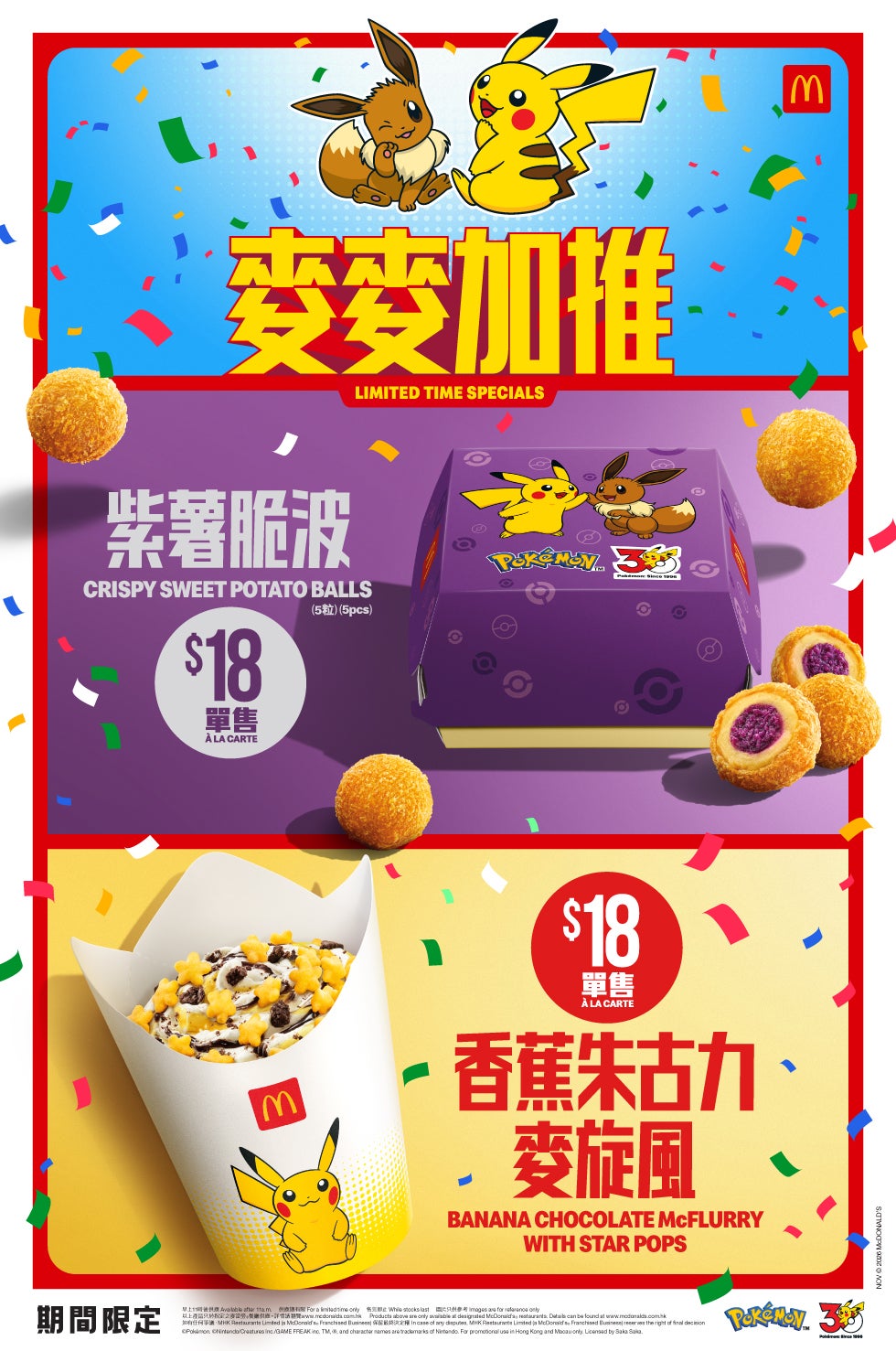
That matters because fans may encounter the campaign in different ways. One diner might notice the bun print, another the drink cup, while a third visits for the game. A common visual identity connects those separate moments without forcing every customer into the same purchasing path.
The brand also promotes the collaboration through its app, customer communications, in-store materials, social channels and mass media. Those channels can remind people about the menu, but the printed bun and packaging remain useful after the ad has disappeared from view. They are tangible prompts for a photo or conversation. This is a design possibility, not evidence that a particular post went viral.
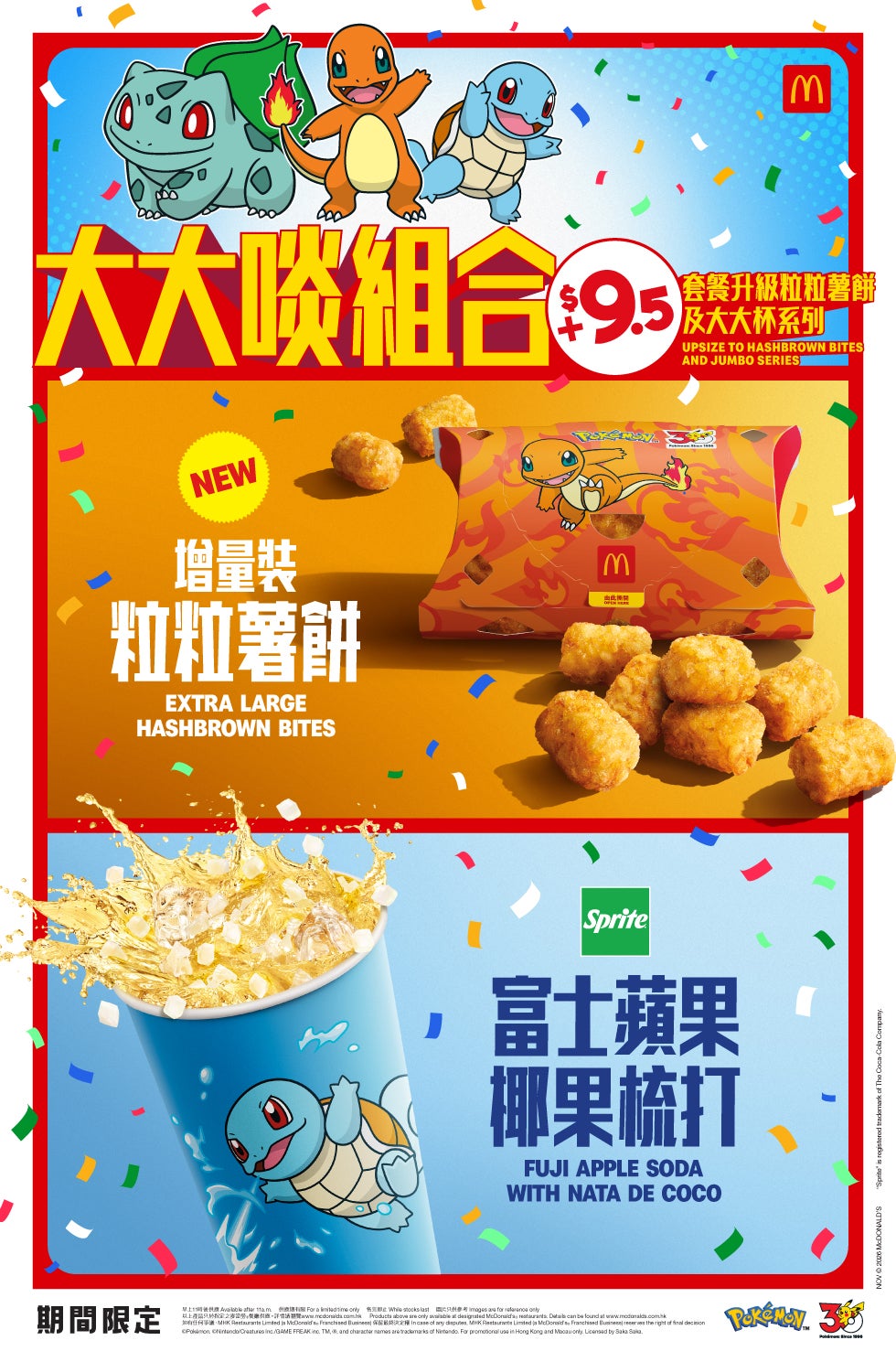
The Hong Kong burger campaign should not be confused with the separate international Pokémon Happy Meal promotion featuring toys and trading cards. Both tap the same franchise and its anniversary, but the Hong Kong story here is about randomized printed buns, a broader themed menu and a Pokémon GO integration.
What marketers can learn from this Pokémon crossover
The lesson is not that every restaurant needs a character license. It is that a familiar fan ritual can be turned into something people notice in the ordinary experience of buying a product.
- Make the reveal part of the product. The randomized bun prints create a moment of discovery right when the meal is opened. A promotional idea is stronger when customers can experience it without following an instruction in an ad.
- Know which rituals belong to the fandom. Pokémon’s collecting and favorite-character traditions make the blind-box mechanic legible. The collaboration works conceptually because the surprise resembles behavior that already exists around the franchise.
- Give the physical location a role. The Pokémon GO PokéStops make participating restaurants more than places displaying licensed art. They give the game a connection to where the food is sold.
- Connect the small details. Bun graphics, wraps, drinks and side-item packaging create several ways to recognize the collaboration. The repeated visual cues help separate products feel like parts of one experience.
The comparison with McDonald’s recent G-Dragon partnership in Asia is instructive. That collaboration paired a musician with Korean-inspired menu products and limited-edition fashion-related merchandise. The Pokémon campaign takes a different route: it uses discovery in the food itself and a mobile game’s location mechanics rather than relying primarily on a celebrity’s personal image.
The broader opportunity is to understand what fans already do with an entertainment property. A familiar character can help a product stand out, but recognizable fandom habits give people something to do with that character. With Pokémon, that can mean collecting favorites, making a chance discovery or visiting a place that now has a role in the game.
Whether McDonald’s Hong Kong gets measurable sales or engagement lift remains to be seen. What is visible today is the design of the experience: a burger becomes a reveal, packaging makes the whole meal part of the crossover and the restaurant gets a connection to play.
