
On Fifth Avenue, the best holiday window does not ask for a password, a reservation or a purchase. It asks someone walking past to stop and look. In a city full of competing festive lights, that brief interruption can be a shared piece of winter theater, whether the viewer plans to shop or is simply passing by.
That public ritual is the starting point for Bergdorf Goodman’s 2026 holiday campaign, A Winter’s Invitation. The New York luxury retailer has turned its famous windows into snowy scenes leading toward a party, then cast six figures from the fashion world as guests arriving for the occasion. The campaign joins a November 19 window unveiling, an imagined gathering at BG Restaurant and seasonal shopping experiences under one narrative.
What makes the idea interesting is not just the display’s scale. It is the way an invitation makes the people outside the store part of the plot. The viewer sees a winter journey from the street; the fashion campaign shows where that journey leads; the store offers a real place to step into afterward. Those connections provide the marketing logic without needing to claim that every spectator becomes a customer.
Table of contents
Jump to each section:
- Holiday windows become a winter party
- Six fashion figures play the invited guests
- Why Fifth Avenue still matters to the story
- Holiday storytelling moves between screens and sidewalks
- What marketers can learn from this invitation
Holiday windows become a winter party
The windows at Fifth Avenue and 57th Street are the most public part of Bergdorf Goodman’s holiday storytelling. Anyone passing the building can encounter them without buying a ticket, downloading an app or entering the store. That makes them different from a traditional fashion shoot: the audience shares a physical location with the scene, even when the story itself is imaginary. The sidewalk is effectively the viewing gallery.
For 2026, the retailer calls the story A Winter’s Invitation. Its November 20 announcement describes snow-covered New Yorkers making their way toward a festive gathering. Instead of using each window as an unrelated display of seasonal objects, Bergdorf connects the vignettes through a journey. The imagined destination gives viewers a reason to look from scene to scene rather than treating the display as a single holiday photograph.
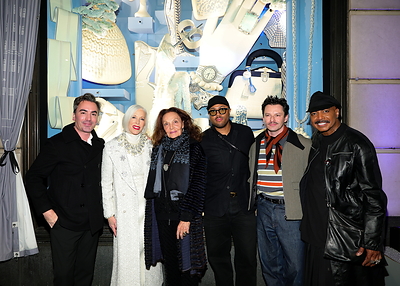
The November 19 unveiling made the scene more than a static installation. According to the retailer, guests could hear live music and take part in personalization activities while designers and fashion figures attended. Diane von Furstenberg, Henry Zankov, Christopher John Rogers, Fernando Garcia and CD Greene were among the designers the company named. That opening-night programming gave the window reveal an event of its own, while the displays remain visible beyond the evening.
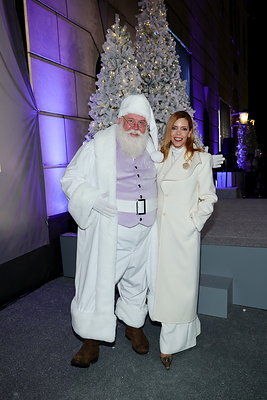
Bergdorf is also bringing back the 57th Street Star in its signature purple. That detail extends the celebration beyond one photograph of the windows and helps the surrounding corner read as part of the holiday setting. The effect is spatial: a shopper can look at the glass, see the illuminated building and then enter the store. Those are three different experiences, connected by the same story.
Six fashion figures play the invited guests
A holiday invitation feels more specific when there is someone on the guest list. Bergdorf’s accompanying fashion campaign features Sabine Getty, Wes Gordon, Tina Leung, Ike Ude, Linda Fargo and David Hoey. The retailer stages the group as guests arriving in winter layers and designer looks, eventually coming together around the BG Restaurant. It is a fictional gathering rather than a claim that this exact dinner was an open public event.
The names are meaningful in different ways. Getty, Gordon, Leung and Ude bring fashion and cultural associations to the imagery, while Fargo and Hoey bring the department store’s own creative identity into the cast. They are not interchangeable celebrity faces placed around a product. Together, they make the fantasy feel rooted in a particular New York fashion world and in the people associated with Bergdorf itself.
The setting also gives the clothes something to do. Coats become what a guest wears on the way to a party. Evening looks become outfits for arriving at the table. Instead of requiring a viewer to imagine an abstract luxury lifestyle, the imagery provides a familiar social sequence: getting ready, travelling through the cold and meeting other people. Even someone unfamiliar with the individual guests can understand that plot.
This is why the campaign’s social idea matters more than a list of expensive products. A dinner invitation is an everyday object, but it carries the promise of being included. Bergdorf uses that simple feeling as the bridge between aspirational fashion and a recognizable human occasion. The retailer has not published figures showing how many people bought something because of the cast, so the more defensible reading is about the creative proposition rather than proven commercial results.
Bergdorf president Lanessa Elrod describes the store as a place where the city gathers. She calls it a “destination where the city gathers” in the company’s announcement. That is a brand ambition, not a measured claim about participation, but it explains why the campaign spends so much visual energy on people arriving together instead of standing alone with gifts.
Why Fifth Avenue still matters to the story
Holiday windows work partly because the audience does not have to decide to watch an advertisement. They appear along an ordinary route through the city. The tradition has a history at Bergdorf Goodman, which dates its New York retail roots to 1901. An elaborate display outside a landmark luxury store offers something that can belong to both shoppers and passersby: a seasonal encounter with the city’s fashion culture.
The story is local in its details. The Fifth Avenue address, the winter street scenes, the BG Restaurant and the purple star locate the fantasy in New York. Those references would be harder to reproduce unchanged in a generic shopping mall or global digital ad. The campaign’s geographical specificity is part of the attraction, rather than something the brand needs to erase for wider distribution.
That place-based experience has a clear limit: not everyone can be in Manhattan. Bergdorf says it is extending A Winter’s Invitation through its website, shopping app and social channels, with online gifting edits and a seasonal calendar of in-store experiences. Digital content can show the looks and offer ways to shop from elsewhere. It cannot reproduce the scale of the displays or the experience of seeing a store corner transformed in person.
For visitors who do arrive, the retailer has an opportunity to connect the spectacle to services the windows cannot offer: curated gift discovery, personal assistance and the chance to see the clothing and accessories nearby. The company has announced those shopping experiences but has not supplied footfall, sales, redemption or conversion numbers. The windows’ value as a cultural landmark should not be mistaken for quantified campaign performance.
Holiday storytelling moves between screens and sidewalks
The holiday party is not entirely new territory for Bergdorf. Its 2025 campaign, The Bergdorf Soirée, also made gathering part of the seasonal story. This year’s winter invitation adds a more explicit route from snowy city scenes toward the people and occasion waiting inside. The continuity suggests the store is refining a recognizable seasonal world rather than discarding the past year for an unrelated creative premise.
Other fashion brands are using the same season to tell very different kinds of party stories. Kate Spade New York’s 2026 holiday film brings Bretman Rock and other creator personalities into a New York apartment gathering, with its story continuing in store windows. Its invitation is familiar through creators and a casual social setting. Bergdorf’s is rooted in an established luxury destination and a more theatrical sidewalk display.
The useful comparison is not which party looks more fun. It is where each brand begins its relationship with an audience. Kate Spade uses people viewers may already recognize from online culture, then lets the campaign appear in physical retail. Bergdorf starts with a place New Yorkers and visitors can recognize and brings its fashion community into that place. Both make the products part of a social occasion, but the routes into that occasion differ.
That distinction matters for holiday creative because seasonal advertising tends to compete with many similar visual cues: snow, gift boxes, warm lights and celebratory clothes. A setting or cast with a real connection to the brand is harder to swap into another campaign without noticing. Here, BG Restaurant and Fifth Avenue do some of the storytelling work that a generic festive backdrop could not.
Bergdorf has also tied the holiday program to Culture for One through its foundation, with plans for later in-store contributions in support of children in foster care. This is a separate community-facing component of the season, not evidence that the windows themselves have generated fundraising outcomes. Its inclusion shows how one holiday umbrella can carry a decorative spectacle, a shopping proposition and a charitable invitation without making them the same activity.
What marketers can learn from this invitation
Bergdorf’s winter party shows how a holiday campaign can have several entry points without losing its central idea. A person can notice the windows, recognize a face from the cast, explore a gift edit online or attend an in-store moment. Each entry point returns to the same invitation, but none requires the audience to behave exactly like the next.
- Start with a behavior people understand. Getting dressed for a gathering and walking through winter are familiar actions. They give luxury styling a readable story before the campaign asks the viewer to admire any specific product.
- Use the location rather than disguising it. Fifth Avenue, the restaurant and the illuminated star are assets Bergdorf can credibly claim. Place gives the creative an identity that a stock holiday scene cannot provide.
- Make the cast serve the story. The six named figures play guests in the same imagined world. That is more coherent than treating recognizable faces as a checklist of endorsements without explaining why they are together.
- Connect spectacle and shopping without confusing them. A public window display may create a memorable cultural encounter, while services and online gift edits handle discovery and purchasing. Actual commercial impact requires data the brand has not disclosed.
The strongest element is the permission to look. Luxury retail can feel deliberately exclusive, but a window faces the street. A passerby can enjoy the scene without crossing a threshold or paying for entry. That public quality makes the holiday display a different kind of brand expression from a private client event, even though both may exist under the same campaign.
There is also a useful tension in the idea of an invitation. The campaign imagines everyone heading to a beautifully dressed gathering, but the real audience consists of many different people with different reasons to stop. Some will be shoppers. Others may simply be curious about the decoration. Both experiences can make sense within the story, provided the brand does not assume attention automatically becomes a sale.
A Winter’s Invitation ultimately turns Bergdorf Goodman’s best-known physical asset into a narrative rather than merely a showcase. The fashion, characters and gifting assortment all have a place within the journey. For marketers, that is the durable lesson: a seasonal idea becomes more distinctive when it grows out of a place, ritual or community the brand can genuinely inhabit.
