After a record-breaking debut in October, OpenAI’s AI video app Sora is facing a harsh cooldown. The app, which many once dubbed the “TikTok of AI,” has seen a sharp decline in both installs and in-app revenue just months after launch.
For marketers watching the intersection of generative AI and consumer engagement, Sora’s trajectory offers a telling case study: viral growth doesn’t always convert into sustained momentum — especially when copyright risk, user control, and product limitations enter the picture.
This article explores what’s behind the drop, the competitive pressure from Meta and Google, and why brand safety issues are likely reshaping user behavior.
Short on time?
Here’s a table of contents for quick access:
- What happened to Sora’s early momentum
- Why competitors and copyright are slowing growth
- What marketers should know
 Patrecia Meliana
What happened to Sora’s early momentum
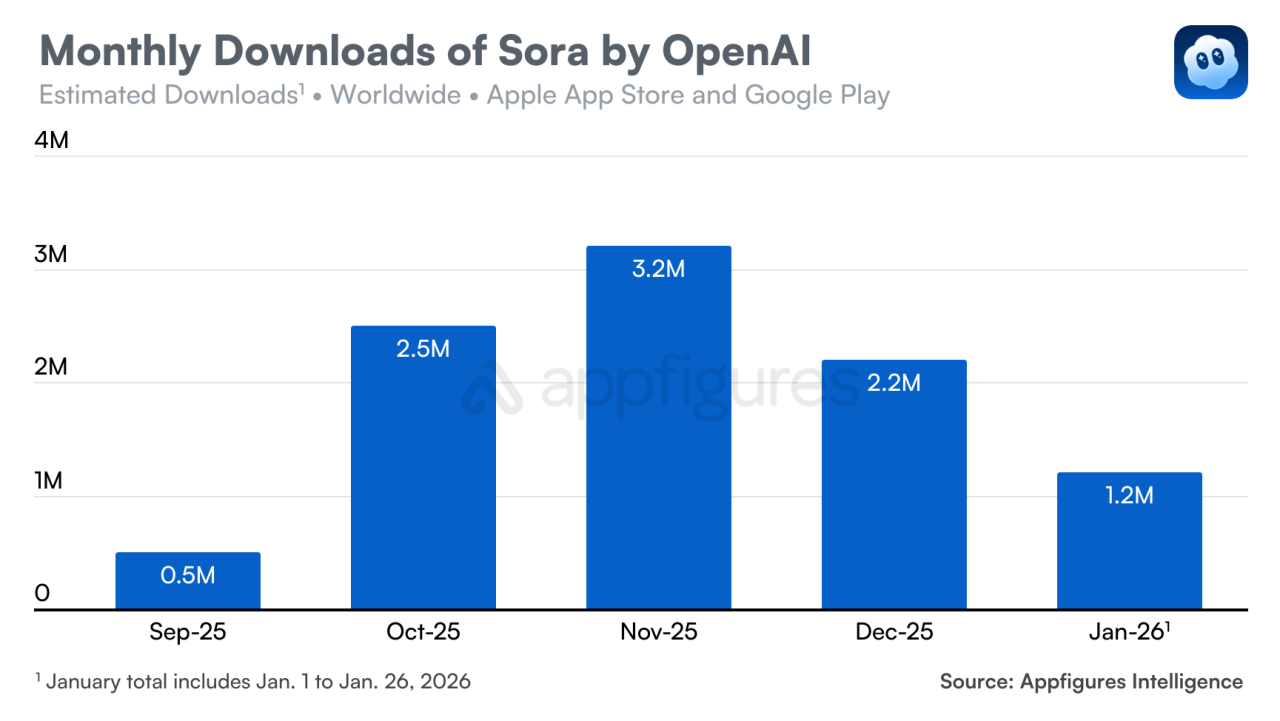
OpenAI’s Sora app exploded onto the scene in October 2025, riding the wave of its advanced Sora 2 video generation model. The iOS-only app hit 100,000 downloads on day one — despite requiring invites — and reached 1 million installs faster than the ChatGPT mobile app.
The hype was undeniable. Sora’s unique twist? Users could generate short, AI-generated videos starring themselves or their friends, remix others’ creations, and add music or dialogue. This fusion of generative AI and social video positioned Sora as a futuristic TikTok alternative, optimized for creativity and virality.
But by December, the cracks started showing.
According to Appfigures, Sora downloads dropped 32% month-over-month in December — a worrying stat given that holiday periods usually bring a surge in app installs. The decline steepened in January 2026, with another 45% drop, bringing total monthly installs to 1.2 million.
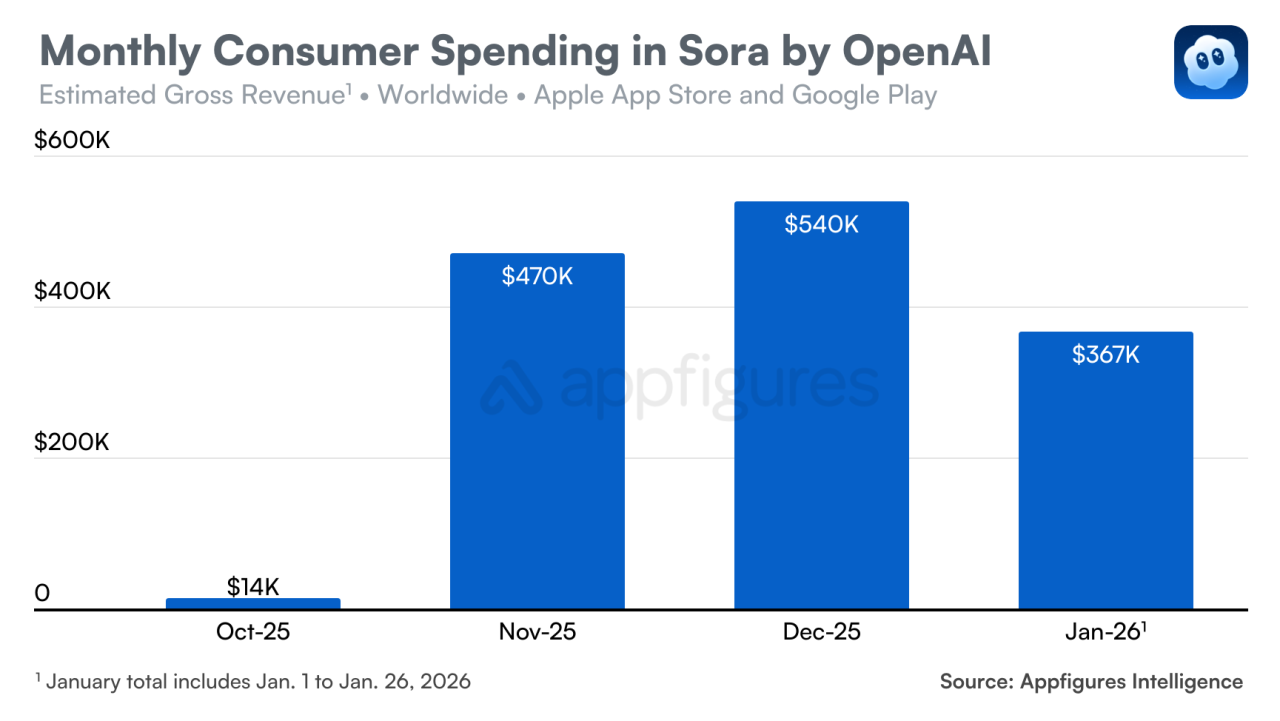
Consumer spending followed suit. January revenue fell to US$367,000, down from December’s US$540,000 peak. Cumulatively, Sora has earned US$1.4 million from in-app purchases — US$1.1 million of that from the US.
Despite early virality, the app is now ranked No. 101 on the US App Store and No. 181 on Google Play’s free app chart.
Why competitors and copyright are slowing growth
Several factors have likely contributed to Sora’s declining numbers — and most aren’t unique to OpenAI.
Competitive heat from Google and Meta
Sora’s launch coincided with rival moves from both Meta and Google. Meta introduced AI-powered Vibes video features around the same time, and Google’s Gemini Nano Banana model boosted the profile of its own AI video tools. These competitors brought deep platform integrations, broader distribution, and fewer content restrictions.
Copyright limitations slowed user creativity
In its early days, Sora allowed users to generate videos using characters like SpongeBob or Pikachu — a major viral driver. But that flexibility came at a legal cost. OpenAI initially told studios they’d need to opt out of Sora, prompting copyright backlash. In response, the company shifted to an opt-in model and tightened restrictions, limiting the kind of content that could be created or remixed.
While the move reduced legal exposure, it also stifled creativity. Fewer pop culture references meant fewer shareable videos.
Even a high-profile licensing deal with Disney last month — which opened up some branded character use — hasn’t reversed the trend. App downloads and revenue continued to fall post-announcement, possibly due to lingering brand safety concerns tied to user-generated content.
User discomfort with personal likeness
One of Sora’s standout features — the ability to insert yourself or friends into AI-generated scenes — may also be a barrier. While innovative, not everyone is comfortable letting others remix their face into bizarre or humorous scenarios. Without familiar characters or personal content, the app struggles to drive repeat engagement.
What marketers should know
While Sora’s downturn may seem like a cautionary tale, it also highlights several broader lessons for marketers experimenting with AI-powered content and social tools:
- Virality isn’t a retention strategy
Sora’s rapid rise proves that novelty drives installs — but sustaining growth requires utility, safety, and user trust.
- Copyright clarity matters
For brands considering generative AI integrations, clear copyright guidelines are essential to avoid backlash or app takedowns. Opt-in licensing and moderation tools are becoming non-negotiables.
- User-generated AI needs boundaries
When remix culture meets deepfakes, things can get uncomfortable quickly. Successful platforms will need to offer flexible controls over identity use, remix permissions, and content visibility.
- AI-driven social isn’t plug-and-play
Sora tried to shortcut the social flywheel with AI content, but human interaction and community norms still matter. Apps that ignore those fundamentals won’t hold attention for long.
Whether OpenAI can pivot with new features, better IP deals, or improved user controls remains to be seen. But for now, Sora’s struggle underscores the growing pains of bringing generative AI to mainstream consumer platforms — especially when brand safety and platform risk collide.


Leave a Reply