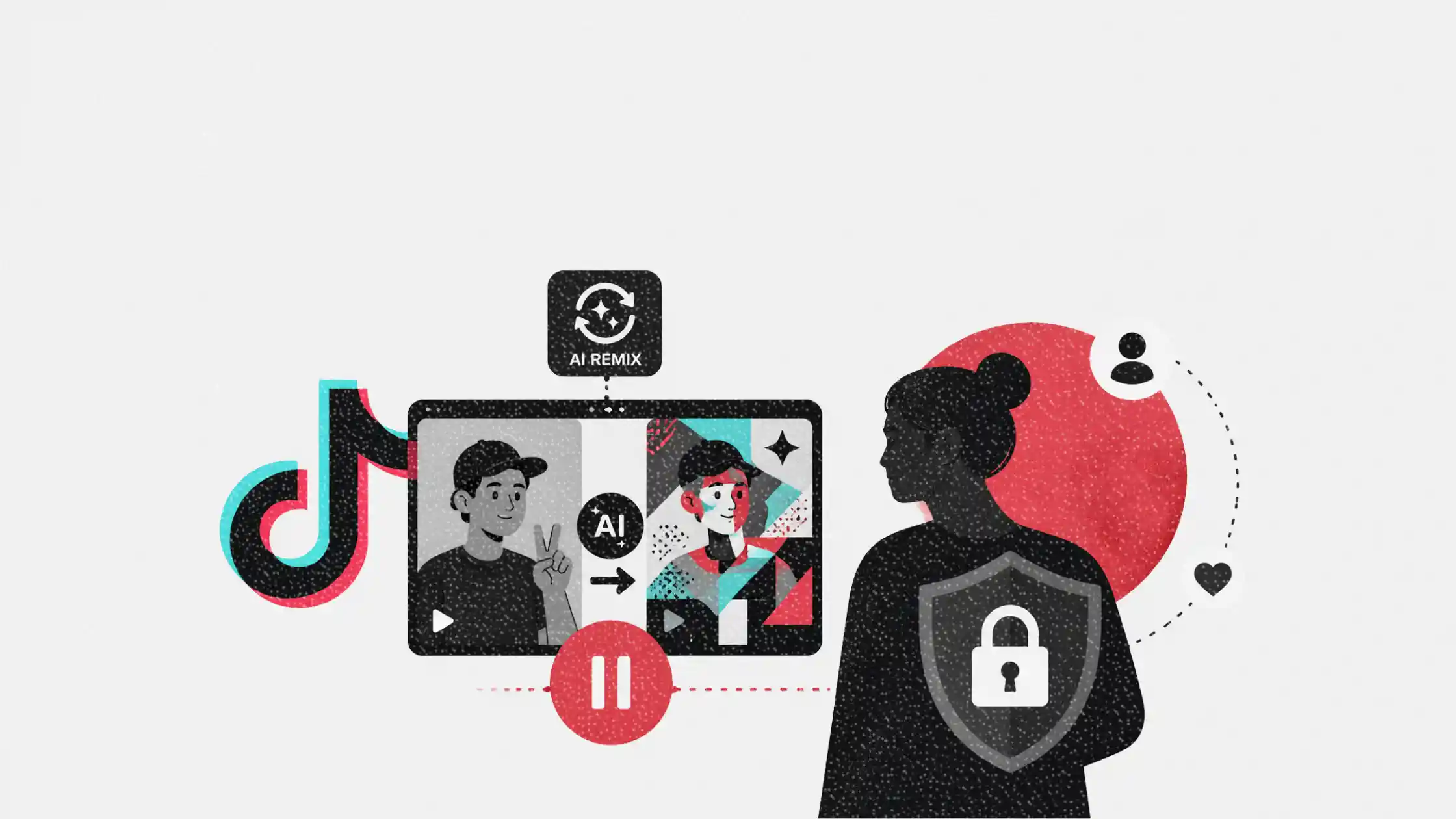
TikTok’s latest AI experiment did not last long. After quietly rolling out a feature that allowed AI-generated “remixes” of user videos, the platform has now paused the test following widespread creator concern around privacy and control.
@carterpcs What does “Allow AI to remix content” even mean?? And why is it on by default. #carterpcs #tech #ai #tiktok
This article explores what TikTok’s AI-remixing feature actually did, why it triggered backlash, and what it signals for marketers navigating AI-powered content ecosystems where user trust is becoming a fragile asset.
Short on time?
Here’s a table of contents for quick access:
- What was TikTok’s AI-remixing feature and why did it cause confusion?
- Why creators pushed back on AI remixing
- What TikTok says about data usage and AI-generated content
- What marketers should know about AI features and platform risk
 Patrecia Meliana
What was TikTok’s AI-remixing feature and why did it cause confusion?
TikTok’s AI-remixing feature was tied to an experimental tool called “Meme Remixer,” which allowed users to generate AI images from still frames of videos. In simple terms, someone could take a frame from a video, enter a prompt, and generate a meme-like image based on that content.
The confusion started because the permission to allow AI remixing appeared across user accounts, even for those who were not part of the test. Many users saw the setting without understanding its purpose, raising concerns about whether their likeness or content could be manipulated into new formats without consent.
Compounding the issue, users had to disable the feature manually on a per-video basis, rather than through a single account-level toggle. That friction alone was enough to trigger skepticism among creators who are already cautious about how platforms use their content.
@seansvv TikTok is facing backlash after opting every user who has posted content into their “allow AI to remix content” tool. #generativeai #ai #tiktoknews #termsandconditions #privacypolicy
TikTok has since paused the feature and removed the permission toggle while it evaluates feedback.
Why creators pushed back on AI remixing
The backlash was less about what the tool actually did and more about how it was introduced.
By default, users were opted into allowing AI remixing unless they turned it off. That raised immediate red flags for creators who felt their content was being opened up to AI manipulation without explicit consent.
Even though TikTok clarified that the tool did not generate full videos or train AI models on user content, the perception problem was already set. Creators worried about:
- Unauthorized use of their likeness in AI-generated content
- The potential for deepfake-style misuse
- Lack of transparency in how AI features evolve on the platform
There is also a broader trust issue at play. Social platforms already operate under licensing agreements that allow them to use uploaded content to improve their services. While standard, layering AI capabilities on top of that agreement introduces new ethical questions that are harder to explain in a simple toggle.
Patrecia Meliana
What TikTok says about data usage and AI-generated content
TikTok has been clear on a few points. The Meme Remixer feature:
- Did not allow full video manipulation
- Did not feed user content into generative AI training models
- Was limited to creating AI-generated images within platform guidelines
Separately, TikTok’s “AI Self” and “AI Cast” features allow users to create AI versions of themselves, but only with explicit participation. Users must record themselves to authenticate their identity and can control who uses their AI likeness.
However, the fine print still matters. TikTok confirms that some data may be shared with “trusted third-party service providers” to enable these features.
For marketers, this highlights a recurring pattern: platforms are moving fast on AI capabilities, while governance and user understanding lag behind.
Patrecia Meliana
What marketers should know about AI features and platform risk
This episode is not just a TikTok story. It is a preview of how AI will continue to reshape content ownership, platform trust, and brand safety.
Here are the key takeaways for marketers:
1. Transparency is now part of brand safety
If creators feel uneasy about how their content is used, it affects the entire ecosystem. Brands relying on user-generated content need to consider how platform policies impact creator trust.
2. Opt-in vs opt-out design matters
Features that default to opt-in can trigger backlash, even if the functionality is limited. Marketers should pay attention to how platforms introduce AI tools, especially when campaigns involve creator partnerships.
3. AI content control will become a competitive differentiator
Platforms that offer clear, user-friendly controls over AI usage will likely win more creator loyalty. This directly impacts where brands should invest their social budgets.
4. Expect more experimentation and reversals
TikTok pausing this feature shows that AI rollout will be iterative. Marketers should avoid overcommitting to experimental features until policies and user sentiment stabilize.
5. Monitor how AI affects content authenticity
As AI-generated content becomes easier to produce, distinguishing original from synthetic content will become harder. This has implications for influencer marketing, trust signals, and audience engagement.
Patrecia Meliana
TikTok’s AI-remixing test is a small but telling moment in a much larger shift. Platforms are racing to embed AI into every layer of content creation, but user trust is not keeping pace.
For marketers, the takeaway is clear. AI features are not just tools. They reshape the rules of content ownership, creator relationships, and brand safety. Staying informed is no longer optional. It is a core part of platform strategy.