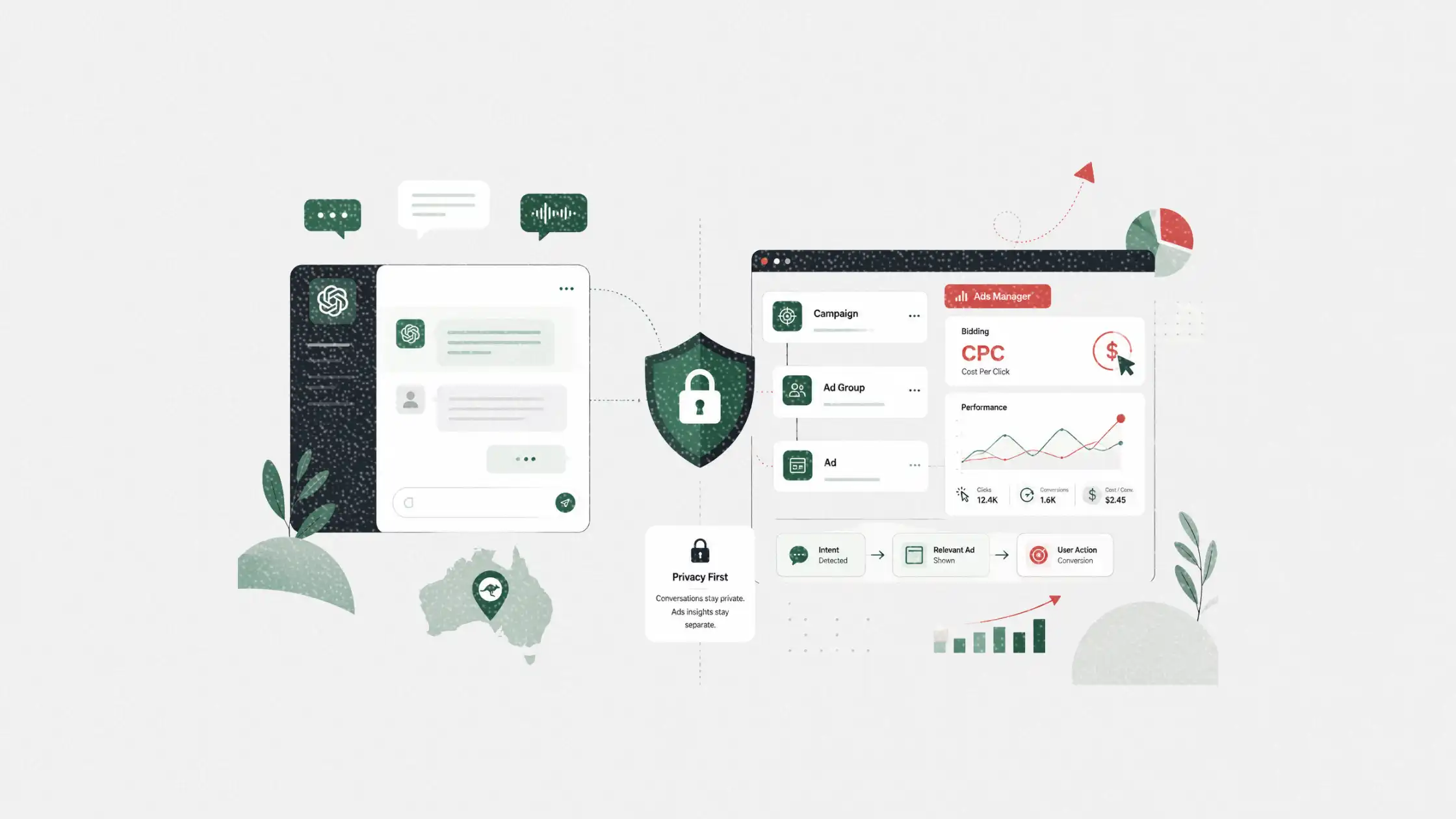
OpenAI is expanding its ChatGPT advertising tools in Australia, adding partner buying and a beta self-serve Ads Manager alongside new bidding and measurement options.
For marketers, the practical shift is less about a new ad format and more about whether conversational placements can be planned, measured, and optimized using familiar levers like CPC, conversion tracking, and structured campaign hierarchies.
Table of contents
Jump to each section:
- What changed in ChatGPT ads in Australia
- How Ads Manager Beta is structured and what it enables
- CPC bidding and measurement: what OpenAI is standardizing
- Privacy boundaries: what advertisers can and cannot access
- What marketers should do next
 Patrecia Meliana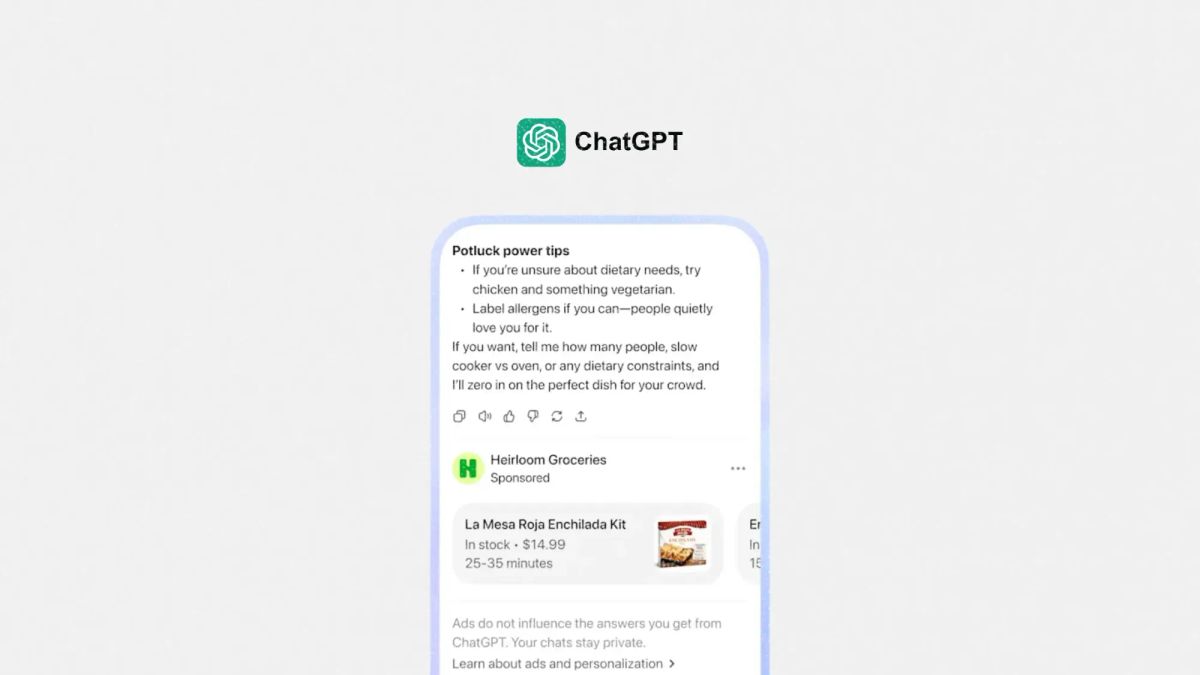
What changed in ChatGPT ads in Australia
The expansion represents the next phase of ChatGPT ads in Australia, following an earlier rollout in the US. Advertisers can now access ChatGPT ads through agency and technology partners, or via a new beta self-serve Ads Manager.
In parallel, OpenAI is rolling out cost-per-click (CPC) bidding and broader measurement capabilities across markets where ChatGPT ads run, including Australia. The measurement stack includes Conversions API and pixel-based measurement, aimed at showing what happens after an ad engagement.
How Ads Manager Beta is structured and what it enables
Ads Manager Beta is designed to make buying and managing ChatGPT ads look more like established digital campaign workflows. It supports core steps such as account creation, campaign setup, ad group creation, creative uploads, and performance monitoring.
Campaigns follow a three-level structure:
- Campaign: objectives, budgets, dates, and targeting.
- Ad group: organized around themes or intent areas, with “context hints” used to describe relevant conversation types.
- Ad: title, copy, image, and landing page.
Campaigns go through a review process before they can run. Once live, Ads Manager reporting includes impressions, clicks, spend, click-through rate, average CPC, average CPM, and conversions (where conversion measurement is configured). Reporting can be reviewed in tables, analyzed through charts, or exported via CSV.
CPC bidding and measurement: what OpenAI is standardizing
CPC bidding adds a second buying model alongside CPM, shifting part of optimization from exposure toward action. OpenAI frames this as useful for “active and decision-oriented” conversations, where a click can be treated as a stronger signal of relevance than an impression.
On measurement, Conversions API and pixel-based measurement extend the ability to connect ad engagement to downstream outcomes such as a purchase, lead, or sign-up. OpenAI positions this as aggregated performance insight intended to help advertisers understand impact without revealing personal conversation details.
Operationally, this combination (CPC + conversions tooling + exportable reporting) makes it easier for teams to apply familiar testing patterns, for example comparing click-through rate vs. conversion rate tradeoffs across ad groups built around different intent themes.
Privacy boundaries: what advertisers can and cannot access
OpenAI states its ad principles remain the same as the ads pilot expands:
- Ads do not influence ChatGPT’s answers.
- Advertisers do not get access to conversations or personal data.
- Users remain in control of their experience.
The measurement approach is positioned as privacy-oriented, with conversion tools designed to provide performance understanding without exposing individual conversations to brands. For marketers, this implies measurement will likely emphasize aggregated outcomes and platform-defined boundaries rather than user-level conversational transcripts.
What marketers should do next
This release signals a shift from experimentation toward repeatable execution, but success will depend on how well intent-based targeting and privacy-safe measurement translate into stable performance.
Practical next steps:
- Plan for two buying motions: separate tests for CPM reach-style campaigns vs. CPC action-style campaigns, with distinct success metrics.
- Align ad groups to intent themes: use the platform’s context hints to create clear hypotheses about which conversation types should convert.
- Set measurement early: implement Conversions API or pixel-based measurement before scaling spend, so “conversion” is consistent across campaigns.
- Audit reporting requirements: confirm the metrics you need (CPC, CPM, CTR, conversions) can be exported and mapped into your internal dashboards.
- Document privacy constraints: ensure stakeholders understand what data is not available, especially around conversation access and personal details.