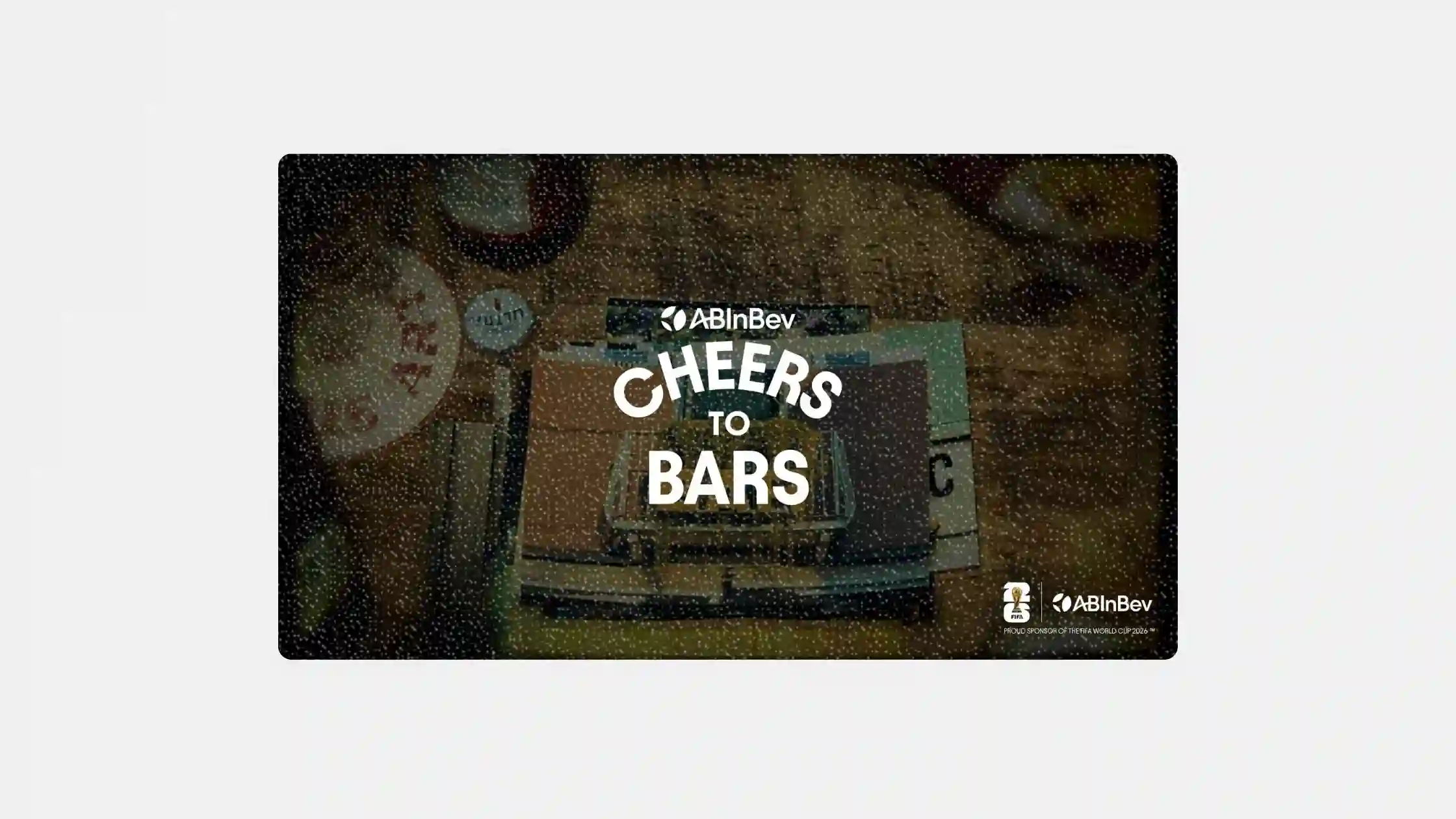
AB InBev is betting that the real FIFA World Cup 2026 experience will not just happen inside stadiums. It will happen in neighborhood bars, pubs, and local gathering spots around the world.
The brewer has launched its global “Cheers to Bars” platform, positioning bars as the social heart of the tournament and rolling out large-scale programs designed to bring football fans together throughout the biggest FIFA World Cup in history.
As the official beer sponsor through Michelob ULTRA and Budweiser, AB InBev is combining sponsorship rights with community-focused activations aimed at turning local venues into match-day destinations.
Table of contents
Jump to each section:
- How AB InBev is turning bars into the center of FIFA World Cup 2026
- Why bars have become a strategic marketing channel
- What marketers should know about the “Cheers to Bars” strategy
- What this means for sports marketing and experiential campaigns
How AB InBev is turning bars into the center of FIFA World Cup 2026
AB InBev’s new platform celebrates bars as places where communities gather, friendships are formed, and shared experiences are created.
According to the company, the initiative is built around the idea that football and beer have long played a role in bringing people together. The campaign arrives ahead of FIFA World Cup 2026, which will be the largest tournament in the competition’s history with 48 teams competing across the United States, Canada, and Mexico.
As part of the program, AB InBev is:
- Hosting 200,000 watch parties across more than 40 countries
- Transforming participating bars into match-day destinations
- Supporting bar owners through trade programs and business initiatives
- Launching a global “Cheers to Bars” anthem film created with agency GUT
- Promoting responsible consumption through no- and low-alcohol options and server training
The company is also introducing localized activations.
In the United States, Stella Artois is launching its “Work From Bar” initiative, reimbursing up to US$100,000 for eligible fans who watch weekday matches from participating local bars. In Brazil, Ambev plans to invest more than R$100 million in mentoring and financial support programs for entrepreneurs operating up to 250,000 points of sale.
Michel Doukeris, CEO of AB InBev, described bars as the places where “strangers become friends” and where collective memories are built during major sporting moments.
Why bars have become a strategic marketing channel
The campaign reflects a broader shift happening across sports sponsorship and experiential marketing.
While sponsorship visibility remains important, marketers increasingly want to create environments where consumers actively participate rather than simply watch advertisements. The FIFA World Cup remains one of the few global events capable of attracting billions of viewers and generating simultaneous attention across markets. Brands are increasingly investing in fan experiences, local activations, and cultural moments that extend beyond traditional advertising.
For beverage brands specifically, bars represent a direct connection between marketing and consumption. Industry observers have noted that on-premise venues such as bars, restaurants, and watch-party locations are expected to play a major role in converting World Cup excitement into actual sales and brand engagement.
AB InBev’s strategy focuses on owning the social occasion rather than simply promoting products. Instead of centering campaigns around beer itself, the company is emphasizing belonging, celebration, and shared experiences.
That approach aligns with a wider trend in World Cup advertising, where brands are increasingly using emotional storytelling and fan-first experiences to create deeper audience connections.
What marketers should know about the “Cheers to Bars” strategy
There are several lessons marketers can take from this campaign:
1. Own the occasion, not just the media buy
AB InBev is building its campaign around where fans naturally gather. Rather than treating sponsorship as a branding exercise, it is creating physical environments that reinforce the brand experience.
2. Invest in local activation
The global platform is supported by country-specific initiatives such as Stella Artois’ U.S. reimbursement program and Ambev’s Brazilian business support efforts.
Global events often perform best when campaigns feel locally relevant.
3. Community can be a stronger message than product
The campaign rarely focuses on beer features or product benefits. Instead, it emphasizes community, belonging, and shared moments.
That emotional positioning may resonate more strongly than traditional product-led advertising.
4. Responsible marketing matters
AB InBev is pairing its activations with moderation messaging and no- and low-alcohol offerings. As scrutiny around alcohol marketing continues, balancing brand engagement with responsible consumption is becoming increasingly important.
What this means for sports marketing and experiential campaigns
The “Cheers to Bars” initiative highlights how sponsorship strategy is evolving.
For major brands, visibility alone is no longer enough. The focus is increasingly shifting toward creating experiences that feel authentic, participatory, and culturally relevant.
As FIFA World Cup 2026 becomes one of the largest marketing stages in the world, brands that successfully connect with fan behavior and real-world gathering spaces may generate stronger engagement than those relying solely on traditional advertising. Industry analysts expect the tournament to become one of the biggest commercial opportunities of the decade, making experiential activations a key battleground for attention.
AB InBev’s “Cheers to Bars” platform demonstrates how brands can use sponsorship rights as a starting point, then build community-focused experiences that extend far beyond the match itself.
AB InBev is positioning bars as the unofficial stadiums of FIFA World Cup 2026.
Through watch parties, local business support programs, and fan-focused experiences, the brewer is expanding its sponsorship strategy beyond logos and advertisements. The campaign reflects a growing trend in sports marketing where community participation and real-world experiences become the primary drivers of brand engagement.
For marketers, the takeaway is clear: the most effective World Cup campaigns may not happen inside the stadium. They may happen wherever fans gather to celebrate together.