
The public relations industry is not short on software. What changed over the past two years is that AI stopped being a headline feature and started being the actual product.
According to Muck Rack’s State of AI in PR 2026 report, 75% of PR professionals now use at least one paid AI tool, up from 57% the previous year. That jump happened without a dramatic shift in overall adoption numbers: 76% of PR pros say they use generative AI in their workflows, barely changed from 75% the year before. The growth is moving from free experimentation into paid, embedded tooling. That tells you something important about where the category is heading.
The global PR tools market was valued at US$13.8 billion in 2025 and is projected to reach US$30.1 billion by 2034, according to Research and Markets. A big portion of that growth runs through AI-integrated platforms. Whether you are running a lean agency team or managing communications for an enterprise brand, the tools in this list represent the current landscape, from media monitoring and journalist outreach to AI-native pitch generation and answer engine visibility.
Table of contents
Jump to each section:
- Muck Rack
- Cision
- Meltwater
- Prowly
- Brand24
- Signal AI
- Onclusive
- Brandwatch
- Press Ranger
- Agility PR Solutions
- Goodie
- Propel PRM
- Shadow
- How to choose
1. Muck Rack
Muck Rack sits at the intersection of journalist relationship management and AI-powered research. Its media database connects PR teams to reporters by beat, publication, social activity, and recent coverage, which matters because 88% of journalists say they immediately discard pitches that miss their beat, per Muck Rack’s own 2026 State of Journalism report.
The platform has embedded AI into pitch refinement and journalist targeting, helping users find the right contacts based on what they are actually covering rather than just their job title. Its monitoring tools track brand mentions and campaign coverage. For agencies managing multiple clients, the CRM layer helps track relationship history across contacts. Pricing starts around $10,000 per year, which positions it toward mid-market agencies and enterprise teams.
Best for: PR teams that prioritize journalist relationship quality and need a structured media database with built-in AI guidance.
2. Cision
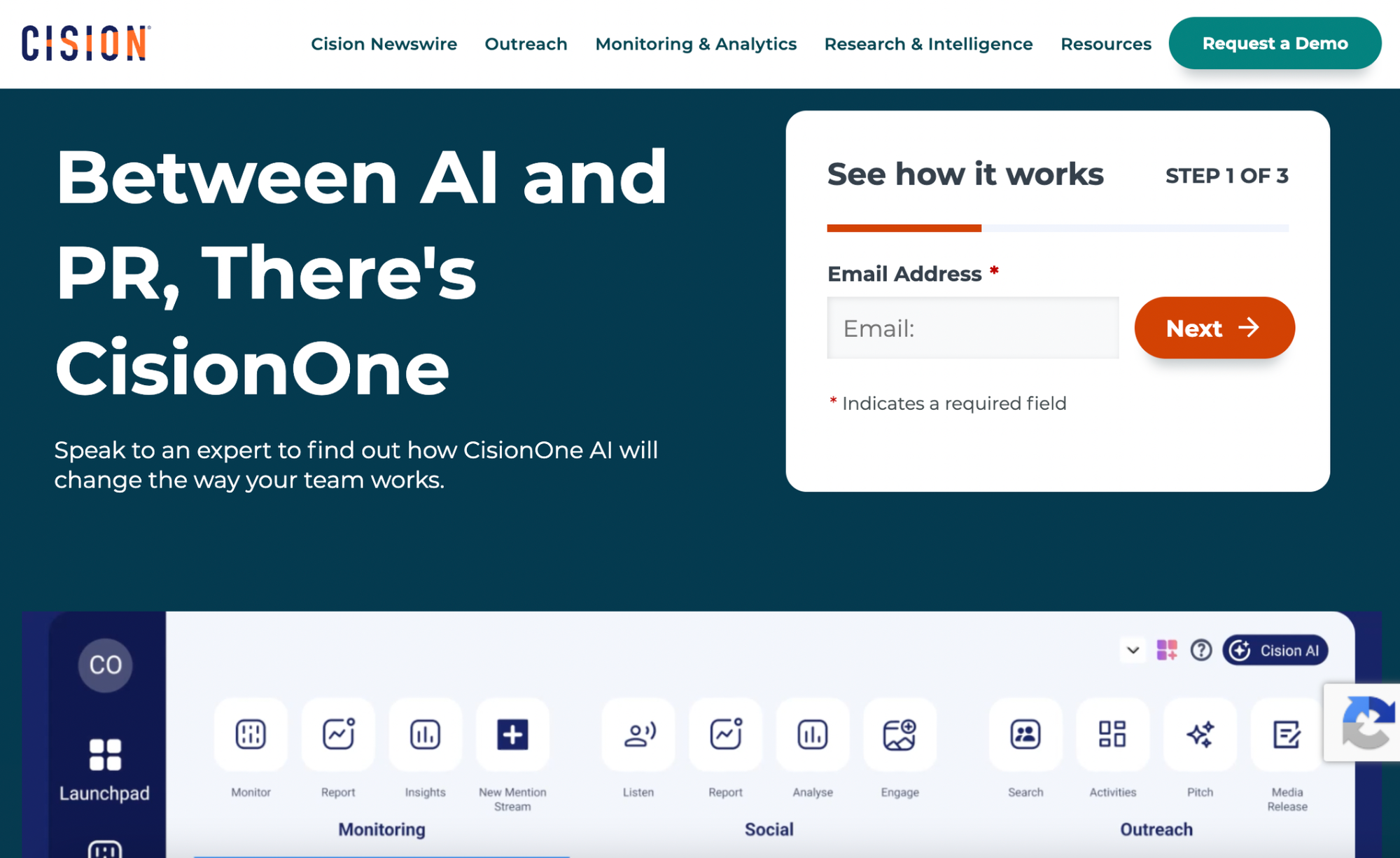
Cision remains one of the most recognized names in PR software, partly because it powers PR Newswire and partly because it holds one of the largest journalist databases available. The platform serves the Fortune 500 heavily, with the company itself reporting that 84% of Fortune 500 companies use it.
CisionOne, its more recent interface, layers AI-driven issue detection and sentiment analysis over traditional monitoring. The database runs into the hundreds of thousands of journalist contacts.
The trade-off is pricing, which typically lands between $10,000 and $15,000 annually depending on features, and an interface that requires meaningful onboarding for new users. For large enterprise communications teams running high-volume press release distribution alongside ongoing media monitoring, the combination is hard to replicate at this scale.
Best for: Enterprise communications teams that need mass press release distribution combined with a broad journalist database.
3. Meltwater
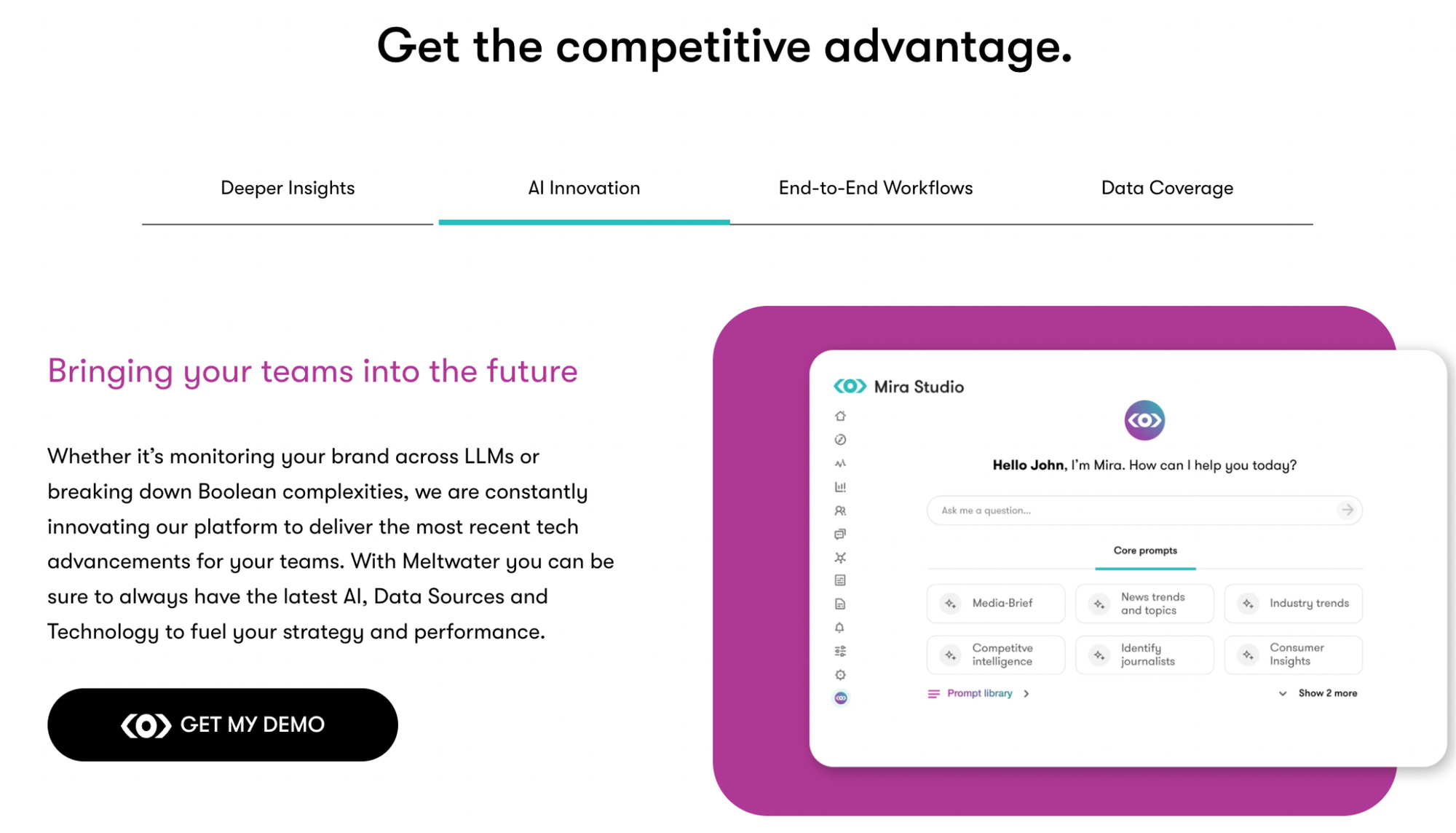
Meltwater‘s primary strength is monitoring volume and the depth of its analytics layer. The platform processes over 1.3 billion documents daily across more than 270,000 global news sources and 15 social media channels, including major Asian platforms, according to third-party research aggregated by Prowly. That breadth makes it a strong fit for brands tracking global media coverage, especially those operating across multiple languages and markets.
Its late 2025 product release added predictive analytics that forecast whether mention spikes are likely to grow or dissipate, which is a meaningful step beyond standard volume tracking. Its GenAI Lens product monitors how brands appear inside AI systems like ChatGPT, Gemini, and Perplexity, responding to a growing reality that brand discovery increasingly happens through AI-generated answers rather than search results.
Best for: Enterprise brands that need wide-scale media monitoring across international markets with advanced AI analytics.
4. Prowly
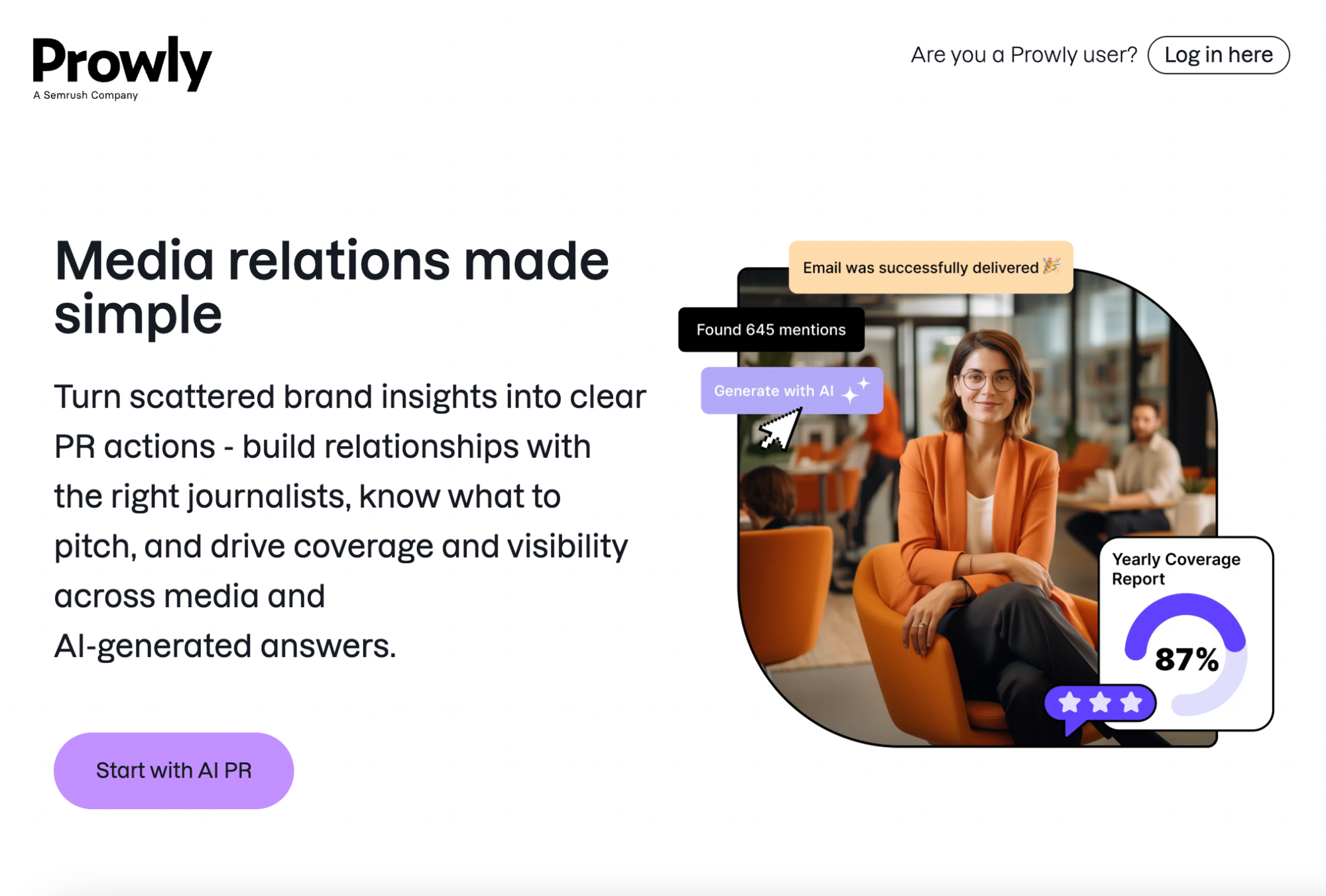
Prowly is the most accessible full-stack PR platform on this list. It combines a press release creator, media database, outreach tools, online newsroom hosting, and monitoring dashboards under one subscription. Its AI-powered pitch and press release generator is built into the workflow rather than bolted on, and its AI media matching suggests journalist contacts based on the content of the release itself.
Users have estimated 30% efficiency gains from the platform. Prowly’s AI assistant also generates potential interview questions journalists might ask, which is an underrated feature for client prep. Pricing starts around $500 per month, which makes it one of the most realistic options for growing agencies.
Best for: PR agencies and in-house teams that want a single platform covering outreach, monitoring, and reporting without enterprise pricing.
5. Brand24
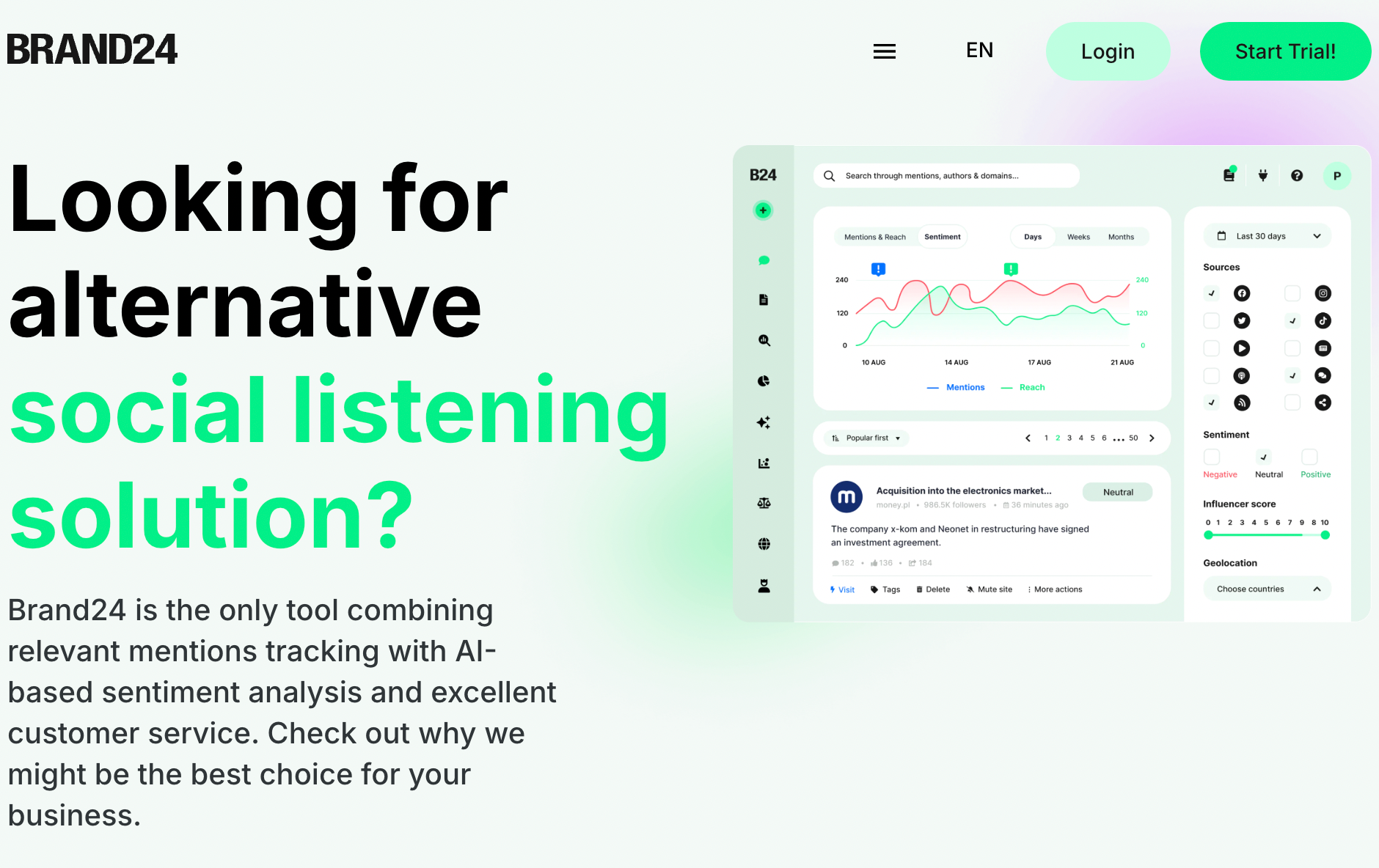
Brand24 is an AI-powered media monitoring tool focused on tracking public mentions across social and non-social channels in real time. Its NLP layer identifies not just sentiment but more specific emotional signals behind mentions, categorizing reactions as joy, frustration, or anger rather than just positive or negative.
Its Brand Assistant feature works like a ChatGPT-style conversational interface built on top of your own monitoring data, allowing users to ask questions about trends, coverage patterns, and audience sentiment without running manual queries. For PR teams doing ongoing reputation management or tracking campaign impact, the combination of real-time alerts and conversational analysis reduces the reporting workload.
Best for: Lean PR teams and in-house comms professionals who need real-time brand monitoring with AI-summarized insights.
6. Signal AI
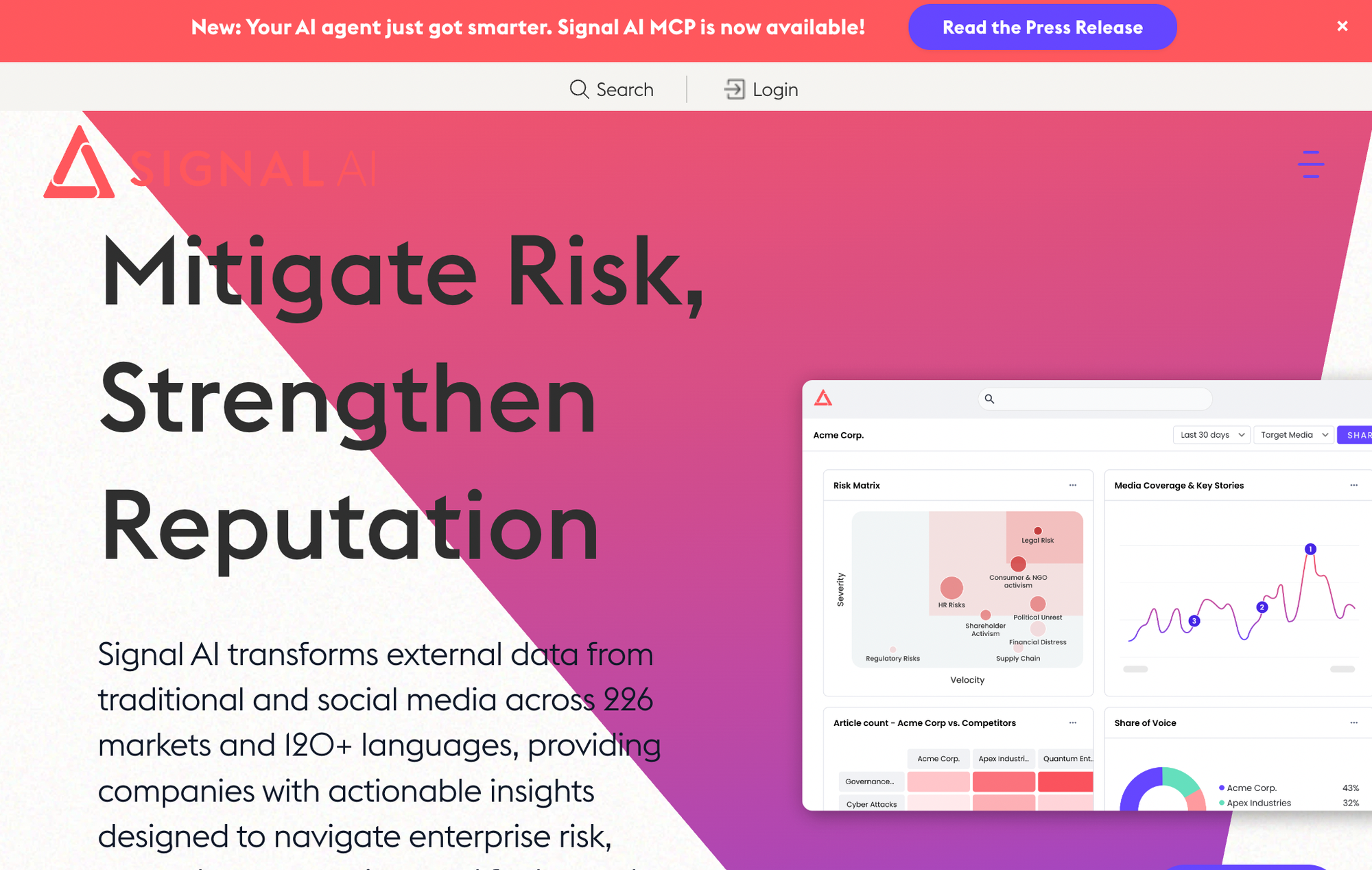
Signal AI positions itself as a media intelligence platform with a particular focus on helping communications teams identify emerging risks and opportunities before they become headline news. Its AI models process unstructured data across news, regulatory filings, and social content to surface signals that traditional media monitoring would surface too late.
The platform is particularly relevant for financial services PR, where regulatory developments, company filings, and competitive intelligence interact with media coverage in complex ways. Enterprise teams managing issues management or executive reputation tracking find Signal AI’s early-warning orientation useful.
Best for: Enterprise and financial PR teams that need intelligence on emerging risks, not just tracking of existing coverage.
7. Onclusive
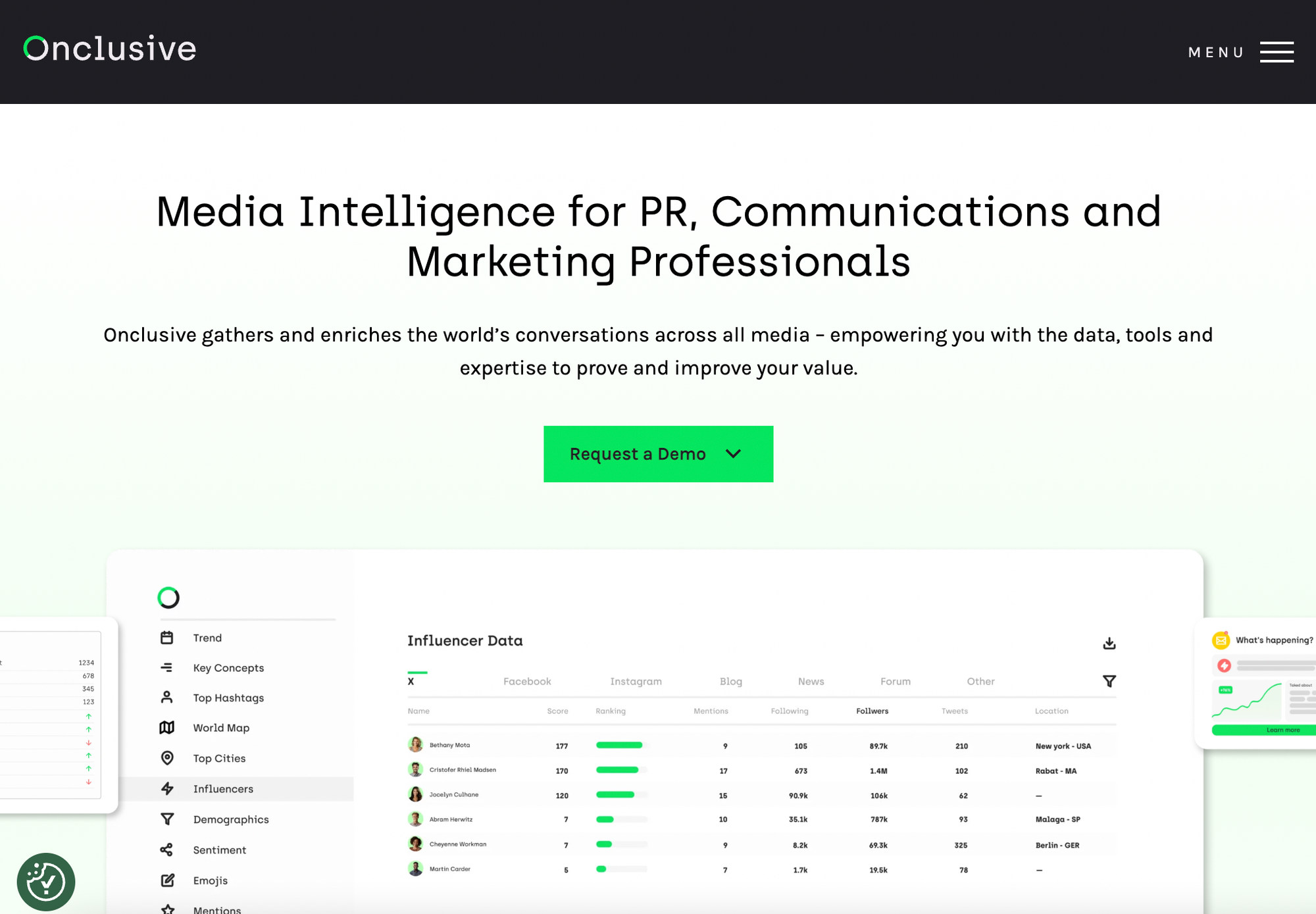
Onclusive (formerly AirPR) focuses specifically on measuring PR outcomes in a way that connects to business results rather than just counting clips. Its analytics platform tracks earned media performance and attempts to tie coverage to downstream business metrics like web traffic, leads, and conversions.
For PR teams under pressure to justify ROI to leadership, Onclusive’s measurement layer provides data that goes beyond share of voice and sentiment scores. The platform also includes a media database and monitoring tools, but its differentiation is in the analytics depth, particularly for teams that need to present PR performance in the language of marketing attribution.
Best for: Communications teams reporting to CMOs or CFOs who require business-outcome metrics tied to media coverage.
8. Brandwatch
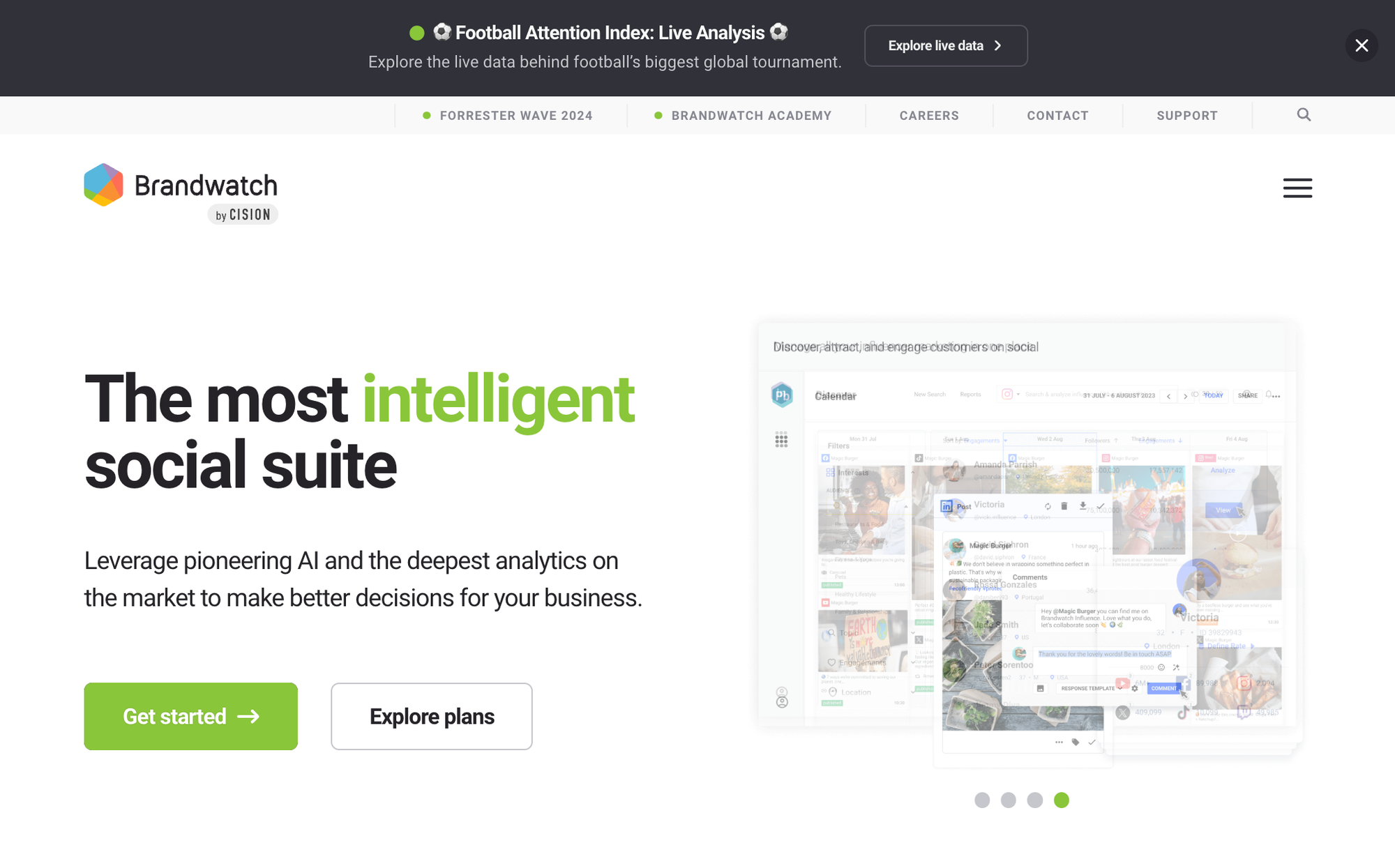
Brandwatch is primarily a social intelligence platform, not a PR-native tool, but it sits close enough to communications work that many PR teams run it alongside their core stack. Its AI models process large volumes of social conversation and news content to surface themes, trends, and audience opinion shifts, with a depth that pure PR monitoring tools rarely match on the social side.
For PR teams running launch campaigns or working through brand crises, Brandwatch’s real-time social listening helps track how narratives evolve across channels.
It is most useful when PR and social media strategy are managed by the same team, since the platform is built for that overlap rather than for media relations workflows in isolation. It integrates with tools like Hootsuite and Salesforce, which makes it easier to connect social intelligence to CRM and campaign management.
Best for: Brands where PR and social media strategy sit within the same team and audience sentiment research across social channels is a primary input to campaign planning.
9. Press Ranger
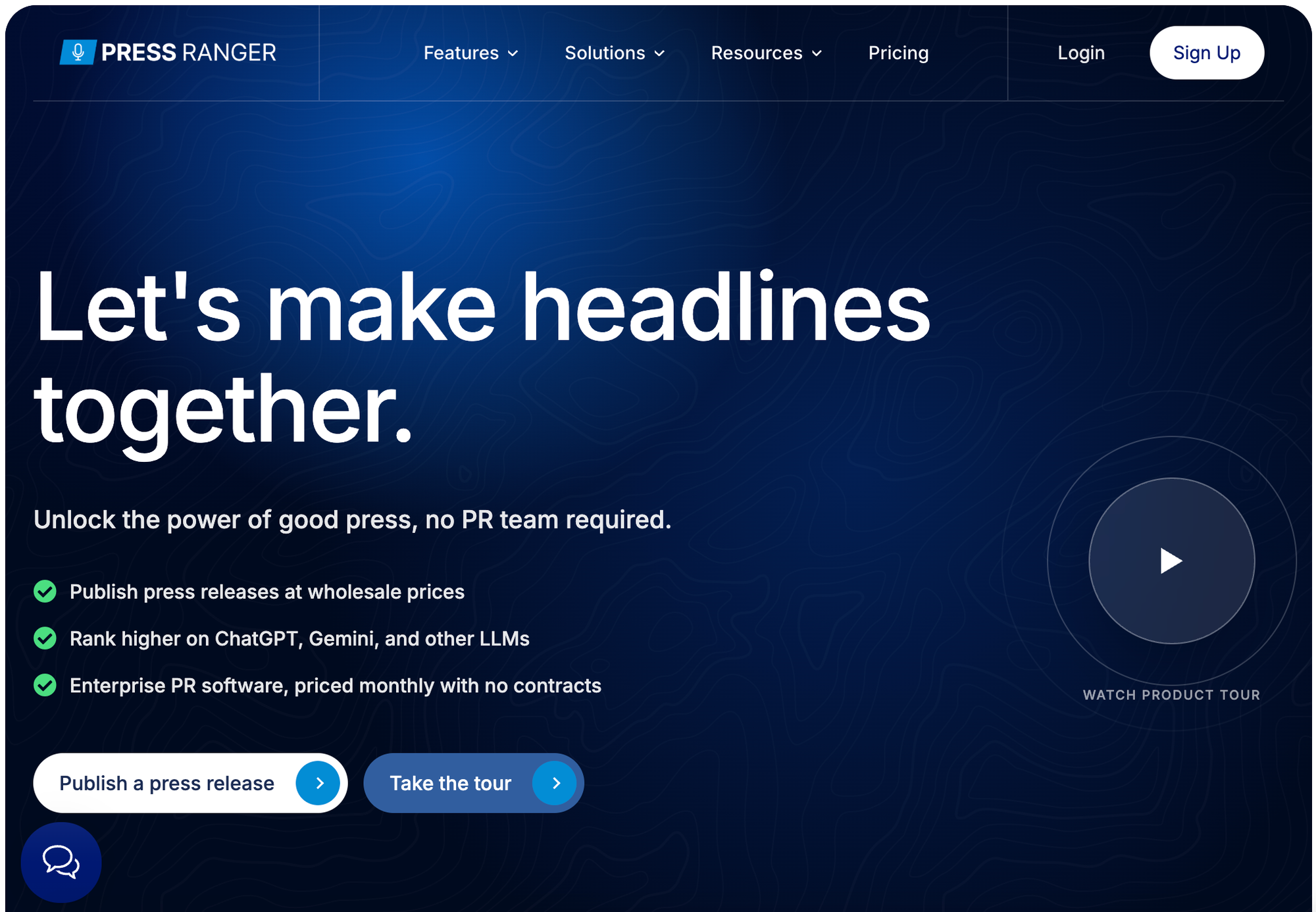
Press Ranger is a more focused tool built specifically around journalist research and outreach. It helps PR professionals identify relevant journalists by filtering across publications, beats, and coverage history, then manage outreach directly from the platform.
For agencies handling a high volume of pitching across multiple clients, Press Ranger reduces the time spent manually researching contacts and personalizing at scale.
The platform skews toward practicality over breadth: it is not a full monitoring or analytics suite, but for the specific job of building targeted media lists and executing personalized outreach, it does the task well without the overhead of enterprise platforms.
Best for: PR teams and agencies that run frequent media outreach campaigns and need an efficient tool for journalist discovery and pitch management.
10. Agility PR Solutions
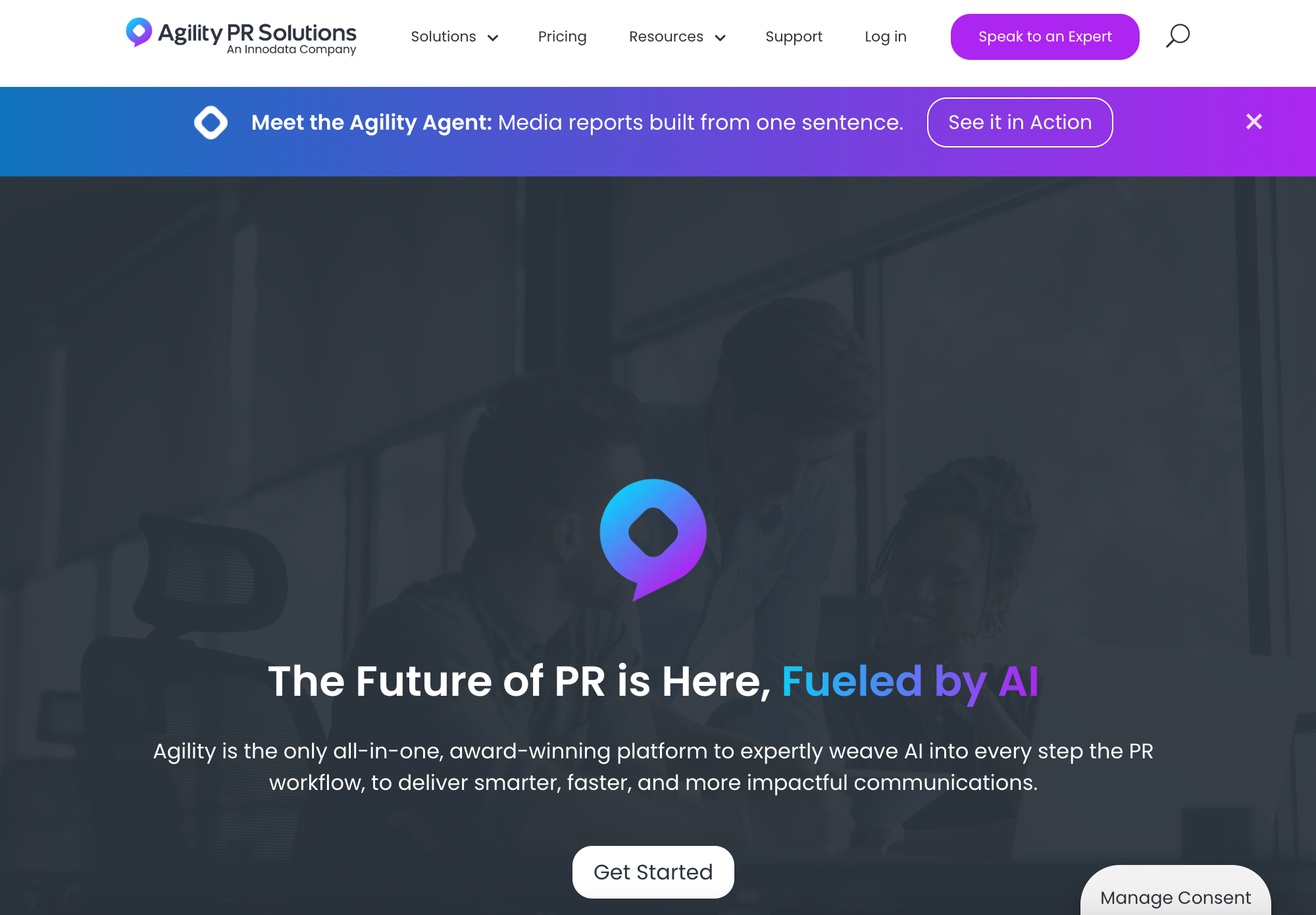
Agility PR Solutions is a media intelligence platform that centralizes outreach, monitoring, and analytics into a single workflow. Its database covers over 1.1 million journalists and outlets, maintained by a dedicated in-house research team rather than automated scraping alone, which helps with contact accuracy. Its Influencer Streams feature tracks journalist activity in real time, surfacing social mentions, recent articles, and incoming PR requests so outreach is timed to what a journalist is actively covering.
Its AI layer, PR CoPilot, handles pitch personalization, subject line optimization, and press release writing directly within the platform. The monitoring side covers online, broadcast, and social channels with real-time alerts and sentiment analysis, and reporting tools are designed to produce client-ready outputs without manual assembly.
Agility is consistently rated by G2 users in categories including media targeting, press release distribution, and PR analytics, with over 397 verified reviews. Pricing is custom-quoted rather than published.
Best for: Mid-market PR agencies and corporate communications teams that need a verified database, AI-assisted outreach, and monitoring in one platform without Cision-level pricing.
11. Goodie
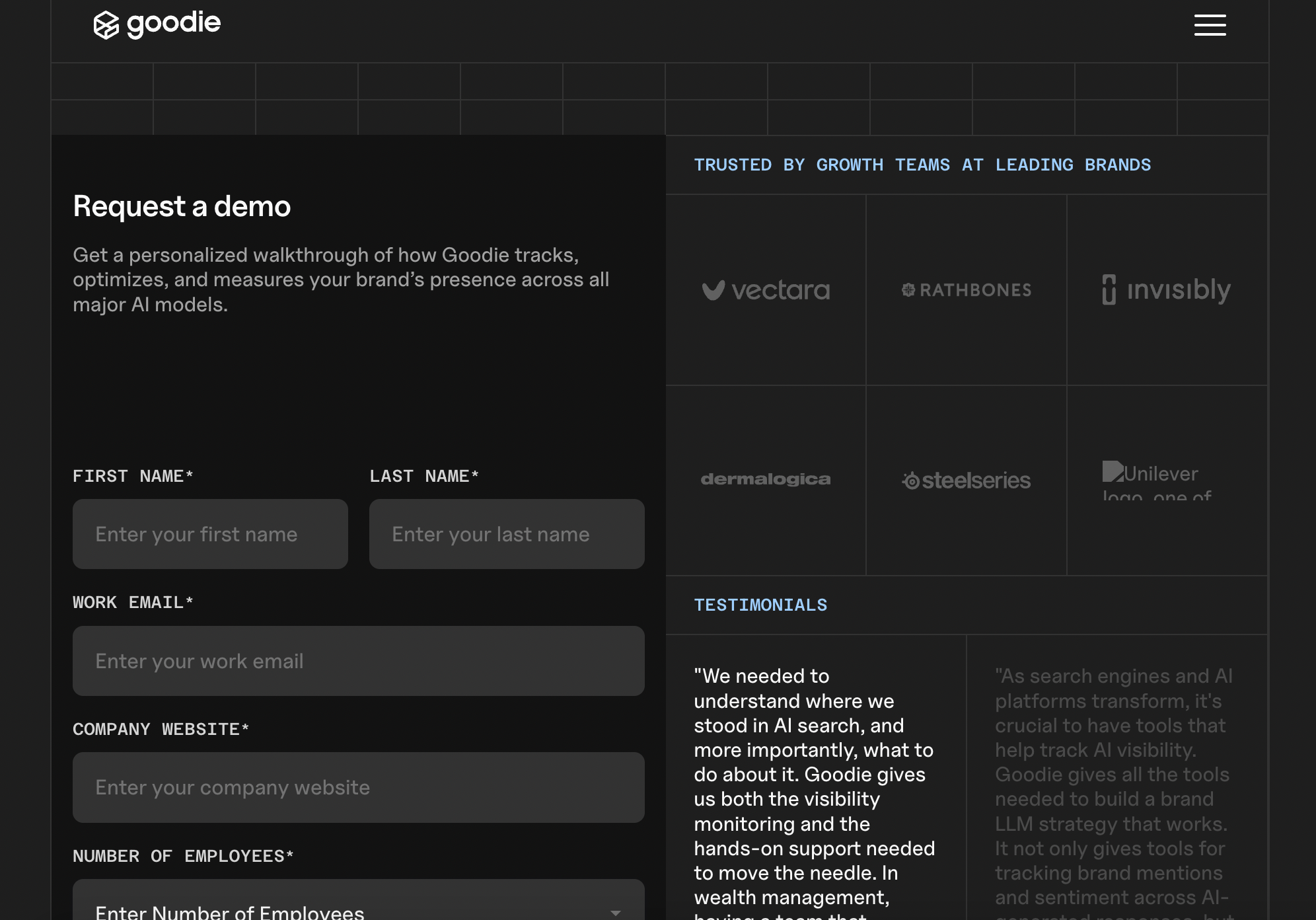
Goodie is not a PR tool in the traditional sense. It is an Answer Engine Optimization platform, meaning its primary function is tracking and improving how brands appear inside AI-generated answers across LLMs like ChatGPT, Perplexity, Gemini, and Claude. Its features include AI visibility monitoring, an optimization hub with actionable content recommendations, and an AEO content writer.
It belongs in a PR tools conversation because brand discovery is increasingly happening through AI-generated responses rather than traditional search, and that is a PR and communications problem as much as an SEO one. PR teams that manage thought leadership, executive visibility, and brand narrative now need to know what these platforms say about their clients, not just what journalists publish.
Goodie addresses that gap directly. Teams that only need traditional media monitoring will not get much from it, but for those thinking about AI search presence as part of a broader brand strategy, it fills a gap that almost nothing else on this list covers.
Best for: B2B brands and PR teams managing thought leadership or executive visibility who want to track and influence how their brand appears in AI-generated answers.
12. Propel PRM
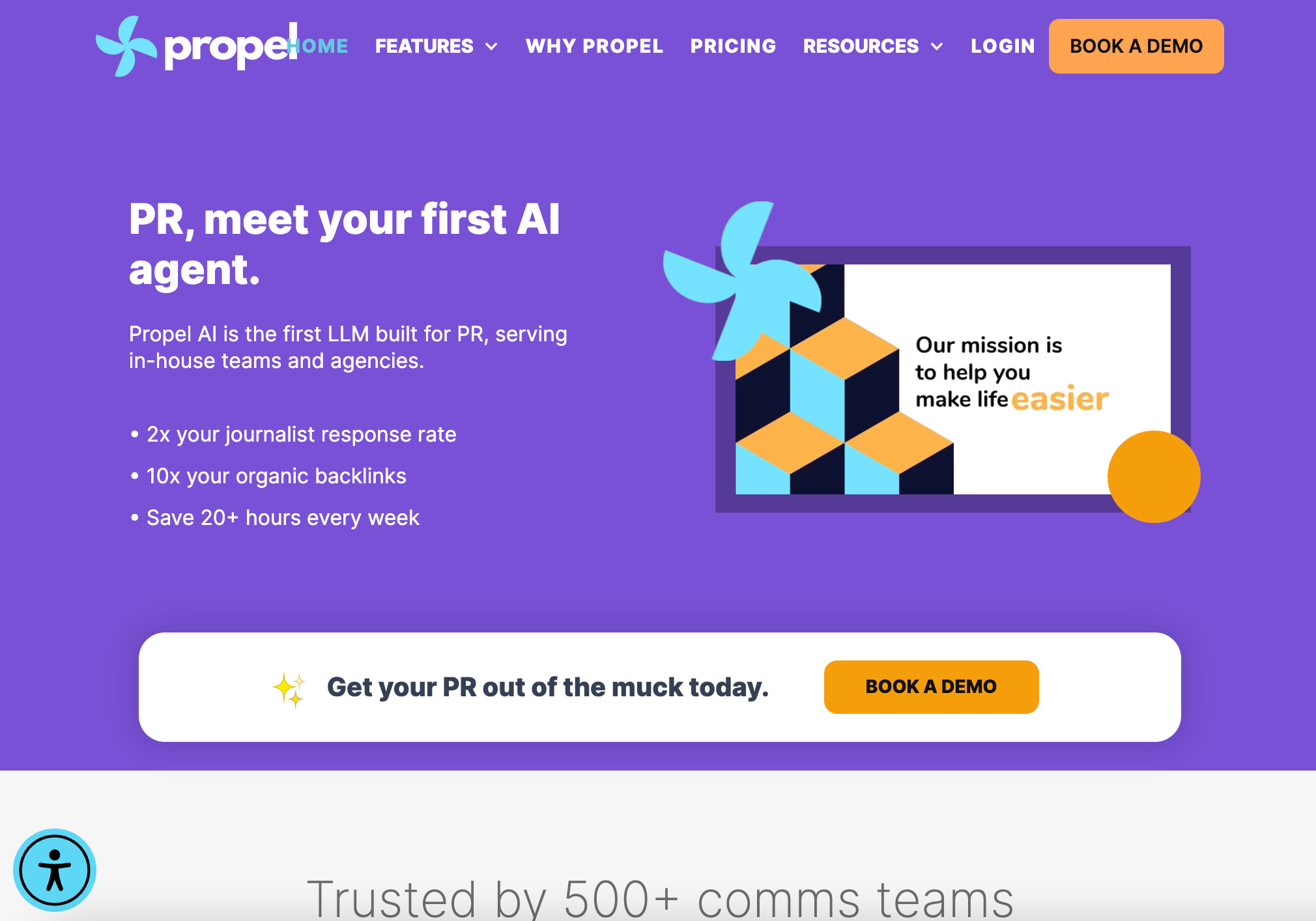
Propel describes itself as the first CRM built specifically for PR, founded in 2019 by a former PR agency owner who could not find software that matched how PR teams actually work. The platform combines a media database of over one million journalists with Gmail and Outlook integrations that let users pitch directly from their native email client and track opens in real time, without switching between tools.
Its AI layer is called Artificial Media Intelligence (AMI), trained on a proprietary dataset of over five million pitches and press releases. That training base gives it a more PR-specific foundation than general-purpose AI writing tools. AMI drafts pitches and press releases, suggests relevant journalists for a given story, and tracks journalist engagement scores over time to help teams prioritize relationships.
Clients include Microsoft, NPR, and Real Chemistry. Propel 2.0, released in early 2024, added deeper AI capabilities across the pitch-to-publish workflow. For agencies managing multiple client programs simultaneously, the CRM layer keeps correspondence history, outreach status, and campaign performance organized in one place.
Best for: PR agencies and in-house communications teams that want a CRM-first approach to journalist relationship management, with AI-assisted pitching built on PR-specific training data.
13. Shadow
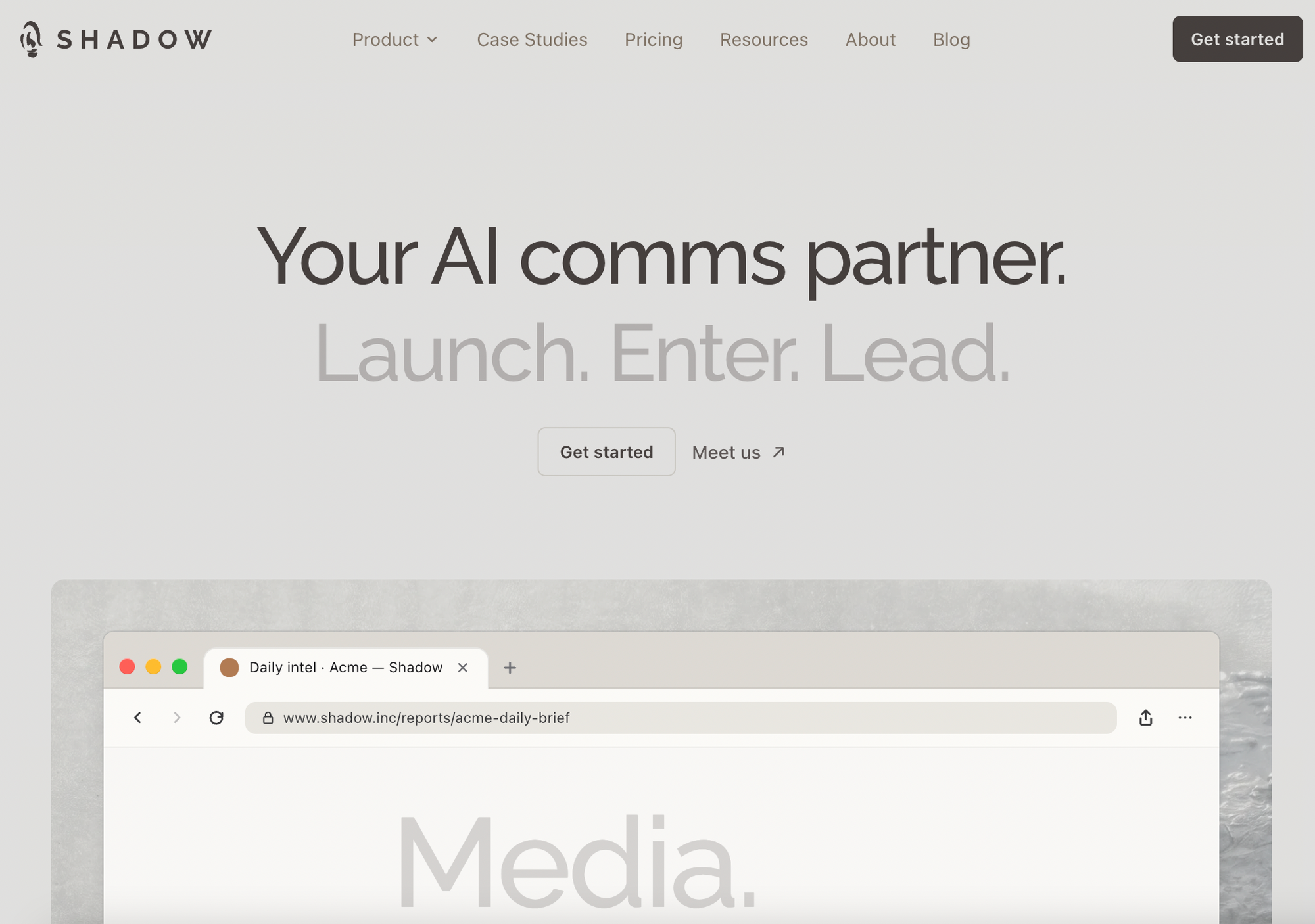
Shadow operates in two modes that are worth distinguishing. It runs as an AI-native PR agency serving growth-stage tech companies directly, with clients including OpenAI, Roblox, and Amazon, using AI agents to handle the operational layer end to end. It also sells that same infrastructure to other PR agencies as a platform, positioning itself as a replacement for the fragmented tool stack rather than another tool to add to it.
The consolidation argument is grounded in a real cost problem. The average PR agency runs 8 to 12 disconnected platforms, according to PR Council 2025 data cited by Shadow, at a total cost of $2,000 to $5,000 per employee per month when accounting for licenses and integration overhead.
Shadow’s agents cover journalist research, pitch writing, media monitoring, press release drafting, and reporting within a single system with persistent client context across all of it. Whether you engage Shadow as an agency or license its infrastructure, the underlying product is the same. That dual model is still relatively uncommon in this category.
Best for: PR agencies managing multiple clients who want to consolidate their tool stack around AI agents, or growth-stage tech companies that want AI-native PR execution without building an in-house team.
How to choose
The most useful way to frame this decision is by what your team actually spends time on.
If media monitoring and brand intelligence are your core need, Meltwater and Brandwatch offer the greatest depth. If journalist outreach and database access are the priority, Muck Rack, Cision, and Prowly are the most established. For agencies running high-volume pitching on smaller budgets, Press Ranger, Respona, and HeyJared are more practical. If you are trying to move away from a fragmented stack, Shadow makes a serious case for consolidation.
The one area that remains underdeveloped across almost every tool on this list is AI agent use. Muck Rack’s own report found that only 12% of PR professionals who use AI are currently using AI agents, despite most being aware of them. That gap is likely to close over the next 12 to 18 months as platforms push agent-based features beyond beta.
For now, the tools above represent the range of what is available, from the enterprise monitoring suites that have been running for a decade to the AI-native platforms that did not exist two years ago.