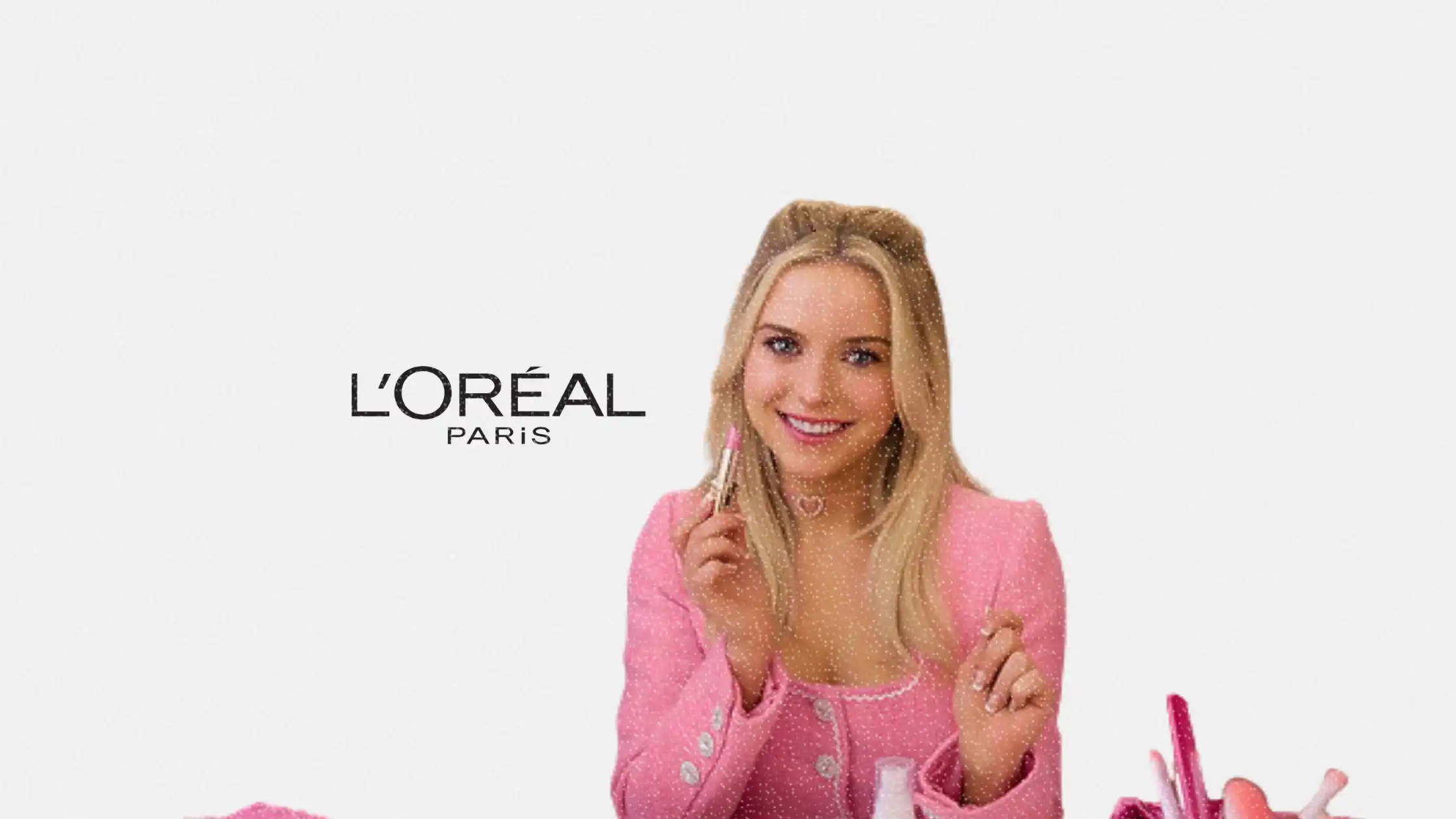
L’Oréal Paris is partnering with Prime Video’s upcoming “Elle,” a prequel series to the “Legally Blonde” franchise that debuts July 1, with its products integrated into the show’s 1995 setting and story.
The brand’s broader plan extends beyond on-screen integration into social content, consumer pop-ups, and premiere-adjacent activations, with details outlined in an official announcement.
Table of contents
Jump to each section:
- How the “Elle” tie-up is structured across content and experiences
- Why narrative integration is different from standard product placement
- What this means for marketers
How the “Elle” tie-up is structured across content and experiences
The partnership is built around a specific creative constraint: the show is set in 1995, so L’Oréal Paris is using period-appropriate versions of products including Voluminous Mascara, Colour Riche Lipstick, and True Match Foundation inside the series.
At the same time, the brand plans to promote modern-day versions of those products through “Elle”-themed social spots, aligning the on-screen narrative with shoppable, present-day packaging and routines.
Beyond paid and organic social, the plan includes pop-ups and large-scale event activations, including a presence at the premiere and an “Elle World” immersive experience. The campaign was created by Maximum Effort.
Why narrative integration is different from standard product placement
This collaboration leans into deeper story adjacency rather than quick, easily missed cameos. The brand described the sponsorship as one of its most impactful entertainment collaborations to date, and framed the integration as part of Elle Woods’ “origin story” around self-worth and empowerment.
Creatively, the campaign also uses a platform-native format: it reimagines “Get Ready With Me” as if a younger Elle Woods (played by Lexi Minetree) were the original creator of the format, using era-appropriate “video diaries” rather than modern influencer-style posts.
For marketers, the strategic bet is that fandom-driven IP can do more than deliver reach. If executed carefully, it can supply a ready-made narrative container where the product’s role feels like a plot-relevant prop, not an interruption. That said, the same dynamic can heighten risk: overt brand presence in streaming has not always been welcomed by viewers, and the tolerance threshold varies by franchise, audience expectations, and how “in-world” the integration feels.
What this means for marketers
L’Oréal Paris’ “Elle” partnership shows how entertainment tie-ins are increasingly being treated as full-funnel programs, not just awareness sponsorships.
- Treat IP partnerships as a creative system, not a single placement
Here, on-screen integration, social creative, and experiential components are designed to reinforce each other. The more components you add, the more important it becomes to keep one consistent idea that travels across channels.
- Nostalgia works best when it is operationalized, not referenced
Using products that were “on shelf” in 1995 is a tangible way to make the era feel real. For brands considering nostalgia, the question is what concrete proof points you can bring, such as packaging, product lineage, or archival creative cues.
- Platform-native formats can bridge entertainment to social without feeling like a cutdown
Reframing GRWM through an in-universe mechanism (video diaries) is a reminder that social extensions do not need to mirror the show. They can translate the show’s world into the language of the platform.
- Experiential layers can extend a series moment, but only if they are story-aligned
Pop-ups and immersive experiences can deepen fan participation, but they need a clear role: photo moment, sampling engine, community event, or something else measurable. Otherwise, they become expensive “activity” without a defined marketing job.
- Streaming integrations require tighter brand-safety expectations
When a product appears in narrative, it inherits the tone of the scenes and characters around it. That makes briefing, approvals, and measurement planning more complex than traditional media buys.
Over time, marketers will likely keep pushing toward deeper integrations as streamers expand ad businesses and brands look for culturally sticky placements. The trade-off is that deeper integrations raise the bar for craft and audience sensitivity.
The stronger programs will be the ones that start with a simple question: what role would this product realistically play in this story world, and what should a viewer feel at that moment. When that is answered well, the campaign can travel from screen to social to real-world activations without losing coherence.