Blue Moon has rolled out a new national campaign that returns to a familiar brand cue: the Valencia orange garnish, brought to life as talking characters alongside comedian Colin Jost.
The brand’s latest :30 spot, “Father-Son Talk,” is positioned as the centerpiece of a broader flight across digital, social, and OTT, continuing the “Orange & Son” idea that debuted in 2025. The campaign was also outlined in a campaign announcement.
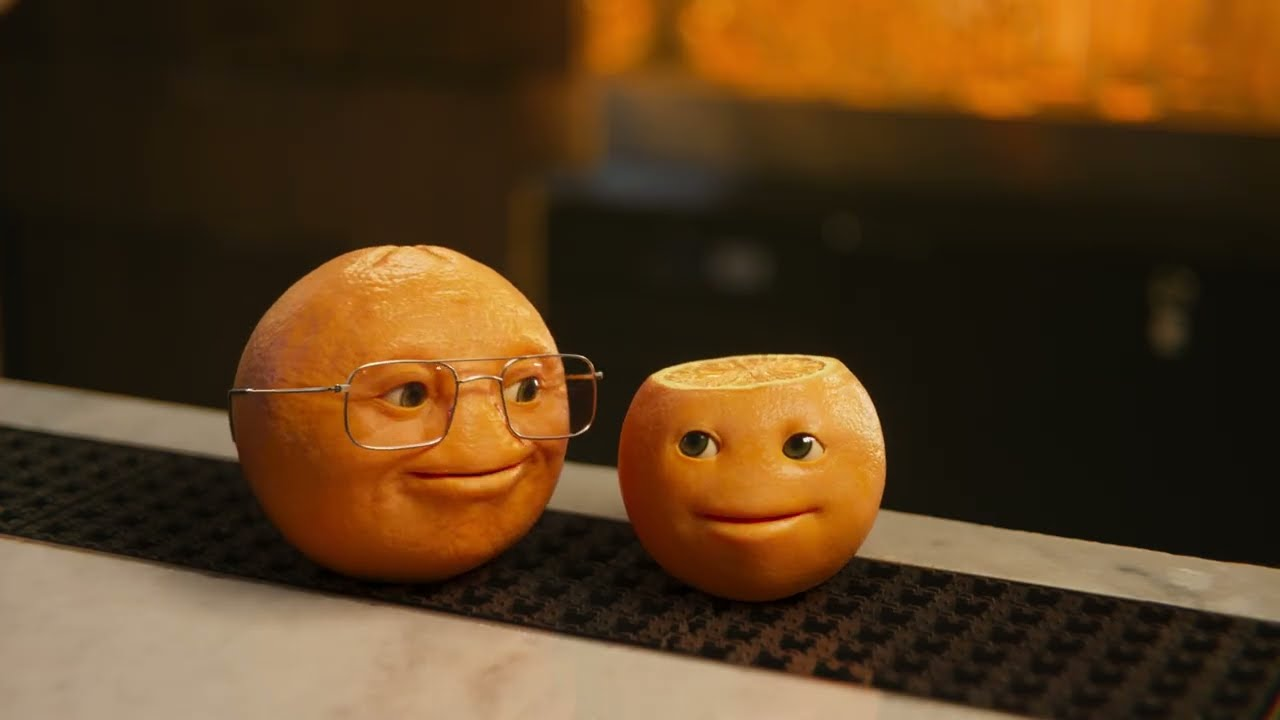
Table of contents
Jump to each section:
- The creative idea, and what the spot actually does
- Distribution, formats, and how the campaign is being scaled
- Why the “orange as protagonist” matters for brand memory
- What this means for marketers
The creative idea, and what the spot actually does
The “Father-Son Talk” ad opens in a bar, where Jost is served a Blue Moon and calls out that it is made with Valencia orange peel. The narrative then shifts to two animated oranges, framed as a father and young son, with the son asking the father how he was made.
The joke lands when the story cuts back to the bar and reveals Jost rubbing the two oranges together as if they were kissing, followed by his attempt to normalize the moment to the bartender: “It’s okay, they’re married.” The spot closes on three beers and the line “Blue Moon, Made Brighter.”
From a creative strategy standpoint, the work uses a deliberately odd, conversational setup to make a product truth (the orange garnish and orange peel) feel like the story engine rather than a supporting detail.
Distribution, formats, and how the campaign is being scaled
Blue Moon’s campaign is described as live nationally across digital, social, and OTT, with additional social assets. That matters because the creative concept is built for iteration: talking characters and a celebrity anchor can flex into multiple short-form scenarios without requiring a new “brand world” each time.
The supporting details also indicate the brand is pairing the new spot with broader 2026 activity, including social videos featuring Jost in different setups (for example, an unboxing-style video around a properly poured and garnished Blue Moon, and a mini-golf concept involving an orange).
The media plan described for the year leans heavily into sports broadcast moments, with the new ad debuting during the college basketball tournament and appearing in additional sports programming across the year. Practically, this creates repeated reach opportunities for a running storyline, not just a one-off hit.
Why the “orange as protagonist” matters for brand memory
A recurring challenge in beverage advertising is that distinctive product cues often get relegated to set dressing. In this concept, the orange garnish is treated as a character with a relationship arc, which gives the garnish a narrative role and increases the chance it is remembered as a brand identifier.
The campaign also leans into tonal contrast: the product is positioned through a straightforward bar serve, while the humor moves into absurdity. That contrast can make a simple point (this beer’s orange element is core) feel less like a claim and more like an observation embedded in entertainment.
The brand is also explicitly aiming to move “further into culture with younger audiences” using personality-driven and comedic work. In execution terms, the choice of surreal humor is less about being random and more about building a repeatable device that can travel across social formats where attention is scarce.
What this means for marketers
A character-led product truth is one of the more durable ways to build distinctive memory in crowded categories. Blue Moon’s approach shows how that can be done without relying on heavy messaging.
- Make the product cue do the work, not the tagline
The orange garnish and Valencia orange peel are not treated as a footnote. The narrative is structured so the cue creates the situation, which can strengthen brand linkage when the creative is shared or clipped. - Design for episodic creative, not single-spot perfection
Talking characters plus a recognizable on-screen partner creates a format that can spin into multiple social-first variations. That is useful when distribution spans OTT, social, and sports programming across months. - Use humor to reduce “ad reading,” but keep the brand anchor stable
The humor is surreal, but the setting is familiar (a bar order) and the brand identifier is consistent (orange with Blue Moon). For marketers, that balance is often what prevents comedy from overwhelming recall. - Treat “younger audiences” as a format problem, not just a message problem
The campaign leans into culturally attuned, personality-driven assets across social, implying the creative system is built to travel in the channels where younger viewers spend time, not just in traditional placements.
If this campaign performs, the lesson is not that every brand needs animated mascots or a celebrity partner. It is that a single product truth can be scaled further when it is turned into a repeatable creative device.
For brand teams, the more strategic takeaway is about building modular creative that can keep the same brand cue intact across broadcast, OTT, and social executions. Over time, that can lower the cost of “re-explaining” what makes a product distinct.
It also reinforces a practical creative principle: when a brand has a recognizable ritual (like the orange garnish), treating that ritual as the main character can be a more efficient path to salience than adding new claims or new brand lines each year.