Molly Tea is the kind of fast-growing tea brand that people spot in malls, post in group chats, and treat like a small lifestyle flex, right up until the internet decides its logo looks a little too familiar.
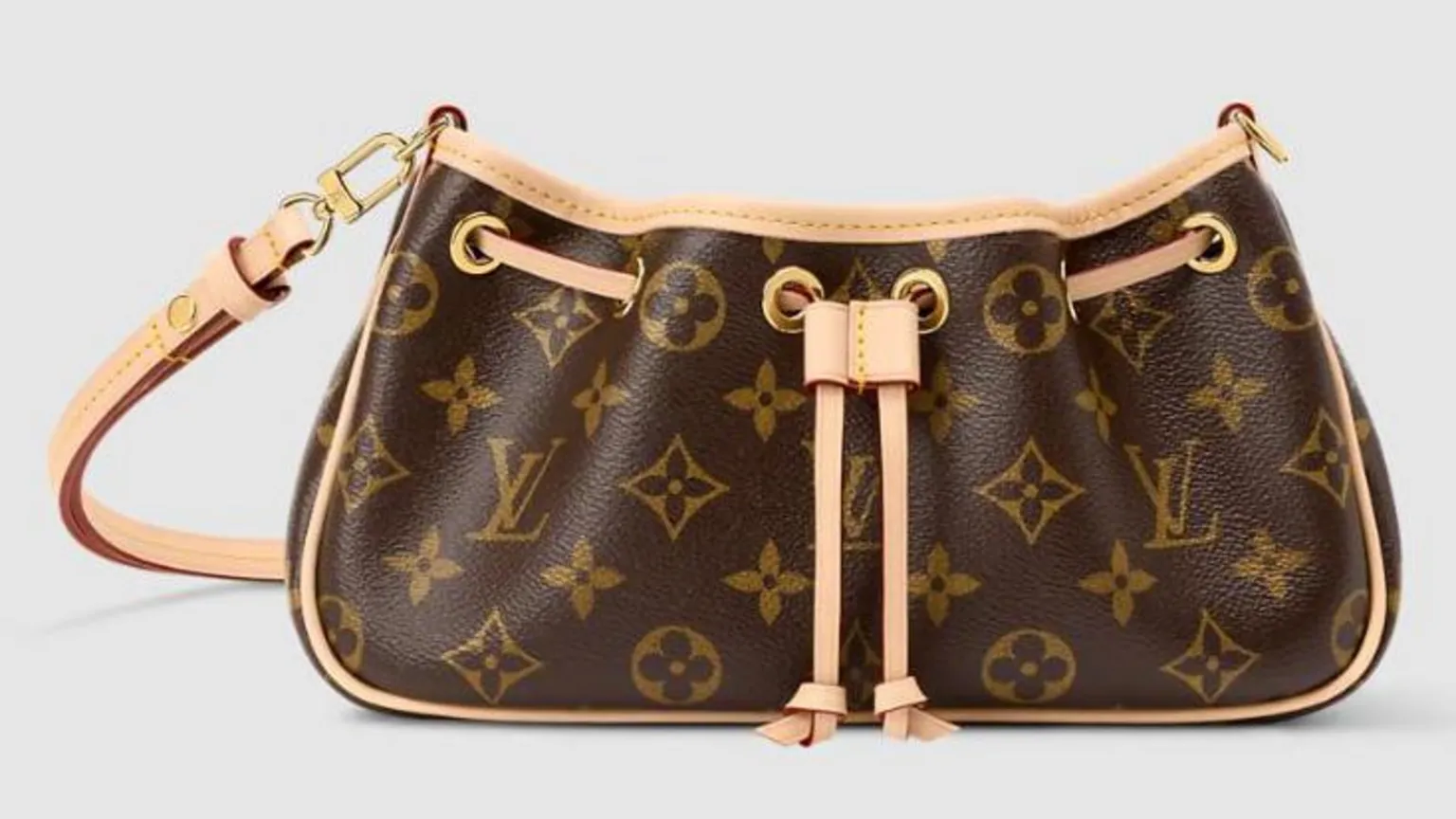
Now, Molly Tea is changing its branding after a Chinese court ordered it to pay 10.3 million yuan (about $1.5 million) over trademark infringement tied to a four-petal floral emblem the court said was too close to Louis Vuitton’s monogram.
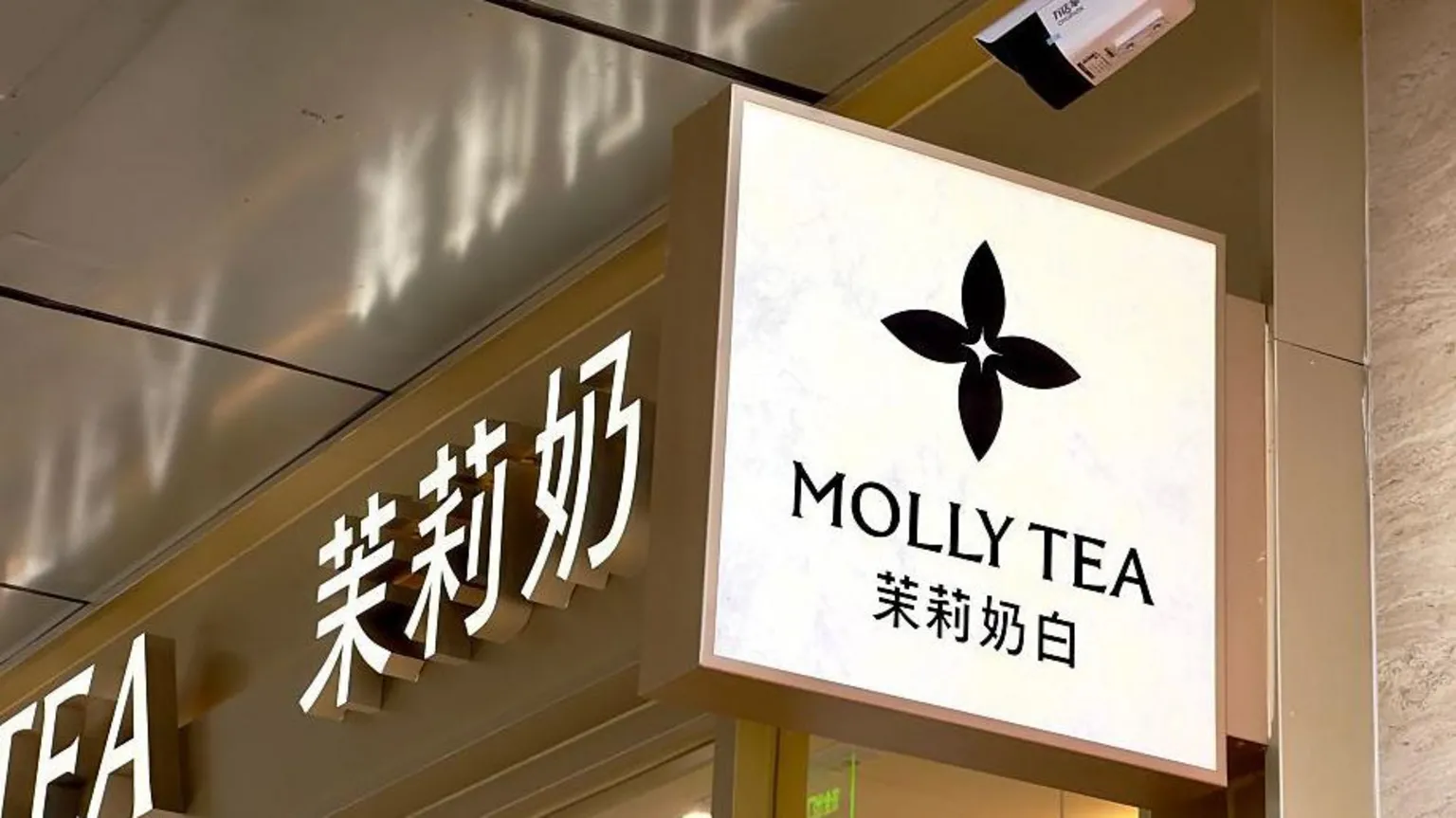
Table of contents
Jump to each section:
- What the court ordered Molly Tea to do
- Why this became a social media debate, not just a legal case
- What the logo refresh signals about brand design in a collab era
- What marketers should know about trademark risk in visual identity
What the court ordered Molly Tea to do
A court in Jiangsu province found that Molly Tea and a local franchise store violated the exclusive rights of seven registered Louis Vuitton trademarks by using a floral emblem that closely resembled Louis Vuitton’s four-petal floral monogram.
The penalty totals 10 million yuan (about $1.4 million) for economic losses and 300,000 yuan (about $42,000) for reasonable litigation expenses, for a combined 10.3 million yuan (about $1.5 million).
Beyond damages, the remedy is also reputational and operational. Molly Tea must publish a corrective statement across the homepages of six primary digital channels, including its official website, mobile mini-programme, and accounts on Weibo, WeChat, Xiaohongshu and Douyin.
Molly Tea has already started changing its visual identity. Its logo reportedly shifted from a black-and-white design to a purple colour scheme, with a gold logo at the bottom of the interface, and a more three-dimensional look meant to create more distance from the Louis Vuitton motif.
Why this became a social media debate, not just a legal case
This dispute did not stay confined to legal circles. It became a mass-audience argument about originality, inspiration, and who gets to “own” a shape.
On Chinese social media, discussion around the case drew hundreds of millions of views on Weibo. Some people argued a luxury fashion house and a mass-market beverage chain are in completely different lanes, so confusion should be unlikely. Others pointed out that four-petal floral motifs exist in historical Chinese design, and that basic geometric motifs have been used broadly across cultures.
But the ruling ultimately turned on how trademark protection works in practice, not on whether a motif is culturally common. Legal specialists highlighted that under Chinese trademark law, Louis Vuitton’s earlier registration can grant cross-class protections. The court accepted the idea that in an era where cross-industry collaborations are common, visual similarity can create consumer confusion about affiliation, licensing, or partnership.
That “could this be a collab?” instinct is exactly the modern context that makes these cases feel so relevant to everyday people. Consumers have been trained to expect surprise brand pairings, so they are quicker to assume connection when they see familiar symbols.
What the logo refresh signals about brand design in a collab era
The practical outcome here is a logo refresh, but the deeper signal is that visual identity has become more legally sensitive as collaboration culture expands.
If consumers are primed to interpret design similarity as a hint, a wink, or an “official partnership,” then brands face higher risk when they borrow recognizable shapes, motifs, or layouts that live in the public’s visual memory, especially if those elements are strongly associated with a famous mark.
Molly Tea’s reported approach, shifting to a purple and gold palette and a more dimensional design, suggests an attempt to keep a recognizable emblem style while making the overall look more distinct. This matters because brands rarely want to fully abandon an identity system once it is scaled across store signage, packaging, apps, and social profiles.
The company’s recruiting for an IP-focused legal manager also suggests this is not being treated as a one-off cleanup. The role’s scope includes managing a trademark system, handling administrative disputes, and overseeing a global IP layout, which aligns with the realities of scaling a brand across multiple countries and retail contexts.
Molly Tea, founded in Shenzhen in 2021, has expanded quickly and says it operates more than 2,000 stores globally, including locations in the US, Canada, Australia, the UK, Thailand, Indonesia and Singapore. As footprint expands, brand assets get exposed to more legal regimes, more scrutiny, and more comparisons.
What marketers should know about trademark risk in visual identity
Trademark disputes can feel like a legal-only problem until they become a brand problem. This case shows how quickly “design talk” turns into customer conversation, newsroom headlines, and forced changes across every owned channel.
1) Cross-category confusion is now a realistic assumption
Courts can take consumer expectations seriously when collaborations are common. If the public is used to fashion x food or luxury x mass partnerships, similarity can look like affiliation even when categories differ.
2) Owned channels are part of the remedy, not just the distribution
The requirement to publish a corrective statement across multiple digital homepages is a reminder that a brand’s app, mini-programme, and social profiles are treated as primary public-facing assets, not secondary.
3) A logo change is not just design work, it is systems work
A refreshed emblem affects packaging, store signage, UI, social avatars, brand guidelines, and franchise compliance. Marketers should expect sudden downstream workload when a core asset is challenged.
4) “Operational adjustments” messaging can create its own tension
If customer-facing teams frame visible changes as routine operations while public debate is circulating, it can create a perception gap. Even when a brand avoids commenting, audiences often fill in the narrative themselves.
5) Scaling globally increases IP surface area
As a brand expands across markets, its marks become more valuable and more vulnerable. Investing in trademark strategy, monitoring, and review processes becomes part of growth operations, not a box-ticking exercise.
In a world where consumers read design cues like collab hints, visual identity is not just aesthetics, it is a promise about who you are and who you are connected to. This case highlights how that promise can be challenged legally, and how quickly the resulting changes spill into marketing execution across every channel.
It also shows why legal and brand teams cannot be separated at the “final review” stage only. When a motif becomes central to recognition, changing it later is expensive, public, and operationally messy.
For marketers, the lesson is less about playing it safe and more about building faster alignment: design ambition, brand distinctiveness, and trademark diligence need to move together, especially for brands scaling at Molly Tea’s pace.