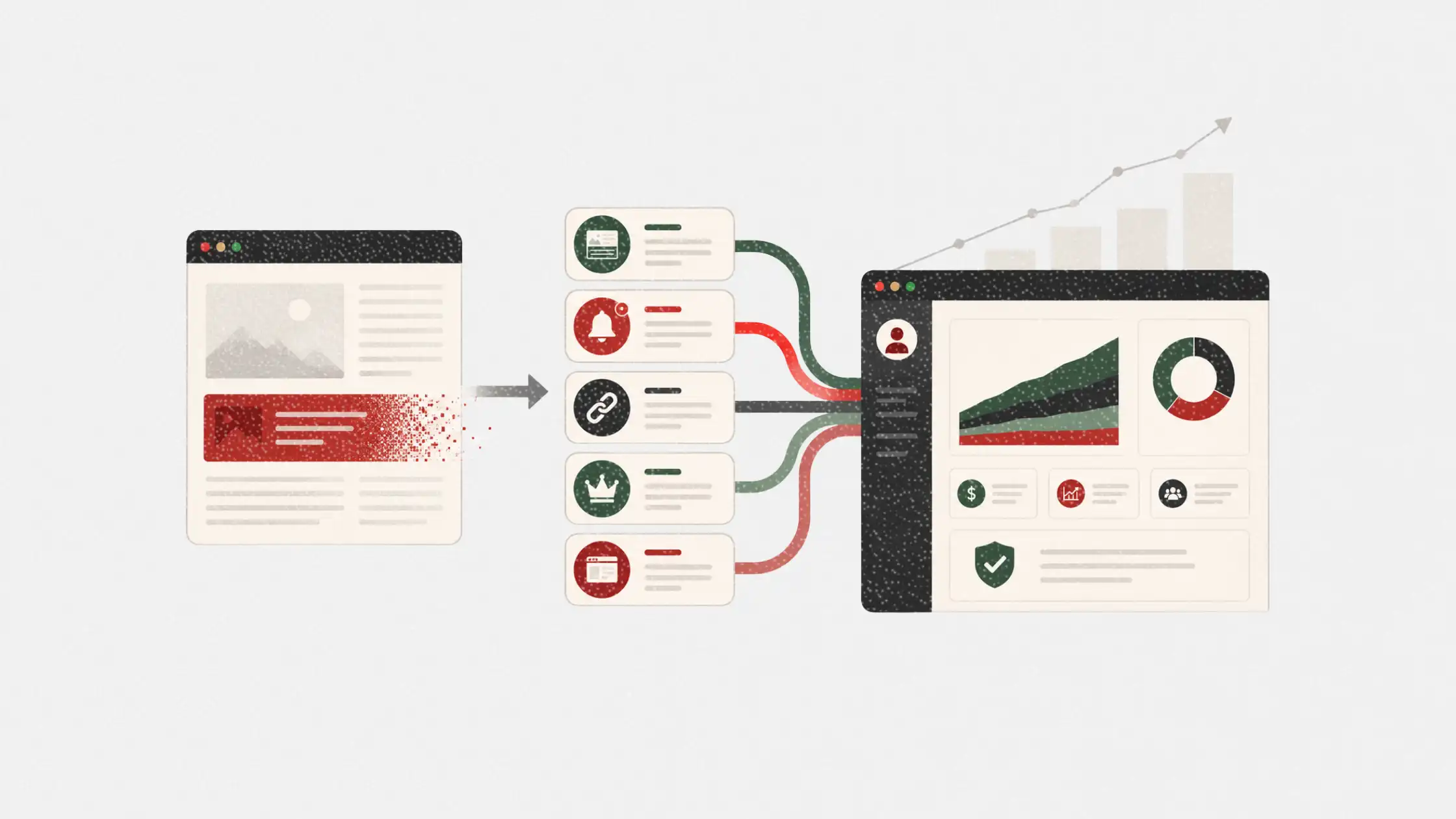
Banner ads were, for a long time, the default answer to “how do I make money from my website.” Slap a 728×90 at the top, a 300×250 in the sidebar, call it a day. That approach still generates revenue for plenty of sites, but banner performance has been quietly declining for years — banner blindness is real, ad blockers have gutted a meaningful chunk of impressions, and CPMs on standard display formats have gotten thinner as more publishers compete for the same demand. None of that means monetization has gotten harder overall. It means the publishers doing well have simply stopped relying on banners as their only tool.
Why banners alone aren’t enough anymore
The core problem with banner-only strategies is that they put all the revenue risk in one basket. If ad-blocker adoption ticks up in your audience, or if a particular ad network’s fill rate drops, your entire income takes the hit at once. Diversifying formats isn’t just about squeezing out extra revenue — it’s about building a monetization stack that doesn’t collapse if one channel underperforms.
There’s also a simpler reason to look beyond banners: different ad formats fit different types of content and audience behavior. A recipe blog and a tech news site have very different visitor patterns, and treating them identically with the same banner-heavy setup usually means leaving money on the table for at least one of them.
Native advertising
Native ads are designed to match the look and feel of the surrounding content rather than standing out as an obvious ad unit. Done well, this format tends to outperform standard banners because it doesn’t trigger the instinctive “ignore this” reflex that banner blindness has trained into most internet users. A native ad recommending a related article or product feels like part of the browsing experience rather than an interruption to it.
The trade-off is that native ads require more careful implementation — they need to be clearly labeled as sponsored content to stay compliant with advertising standards and maintain reader trust, and they perform best when the content being promoted is genuinely relevant to what the visitor is already reading.
Push Notifications

Push notification advertising has grown into a serious revenue category of its own, particularly for publishers with a returning audience. Once a visitor opts in, publishers can send notifications directly to their device even when they’re not actively on the site, which creates a re-engagement channel that display ads simply can’t replicate. The format works especially well for time-sensitive content — breaking news, deals, or updates — where a notification genuinely adds value rather than just interrupting.
The key to doing this well is restraint. Publishers who send too many notifications, or ones that feel irrelevant, burn through opt-in goodwill quickly and end up with high unsubscribe rates. Used thoughtfully, though, push remains one of the more resilient formats against ad-blocker interference, since it operates outside the browser’s ad-blocking layer entirely.
Interstitial and click-based formats
Interstitials — full-screen ads that appear between page transitions — and click-based formats like popunders and clickunders have earned a mixed reputation over the years, mostly because of early, poorly implemented versions that annoyed visitors more than they should have. Modern implementations have gotten considerably smarter about frequency capping, timing, and targeting, which has improved both the user experience and the underlying performance for publishers who use them well.
A well-configured popunder ad network can be a genuinely useful addition to a monetization stack, particularly for publishers with high-traffic, low-engagement pages where a standard banner might otherwise go largely unnoticed. The format works by opening a new tab or window behind the current one, which the visitor sees only after closing their active tab — meaning it doesn’t interrupt whatever they were doing at the time, while still generating an impression. Combined with sensible frequency caps, this format tends to deliver solid RPMs without the same fatigue effect that comes from repeatedly showing the same banner ad on every page load.
Affiliate and performance-based revenue
Affiliate marketing sits in a different category entirely, since revenue is tied to actual conversions rather than impressions or clicks. For publishers producing content with a natural product or service angle — reviews, comparisons, how-to guides — affiliate links can generate meaningfully higher revenue per visitor than display ads, simply because the payout reflects an actual transaction rather than a fraction of a cent per view.
A few things tend to separate publishers who do well with affiliate revenue from those who don’t:
- Genuine relevance — affiliate links embedded in content that actually matches reader intent convert far better than ones bolted on for the sake of monetization
- Disclosure and trust — being upfront about affiliate relationships tends to improve rather than hurt conversion rates, since readers respond well to transparency
- Diversified partnerships — relying on a single affiliate program creates the same concentration risk as relying on a single ad network
- Content-first structure — the strongest-performing affiliate content reads as genuinely useful first, with monetization as a secondary layer rather than the obvious point of the piece
Subscription and membership models
For publishers with a loyal, returning audience, subscription models offer a way to generate predictable revenue that isn’t tied to ad impressions at all. This doesn’t have to mean a full paywall — many publishers have found success with a hybrid model, offering ad-supported free content alongside a premium tier with extra features, an ad-free experience, or exclusive material. The appeal here is diversification again: subscription revenue tends to be more stable than ad revenue, which fluctuates with traffic volume and market demand.
Building a layered monetization stack
The publishers who consistently outperform banner-only setups are rarely relying on a single silver-bullet format. They’re combining several of these approaches — native ads for in-content placements, push notifications for re-engagement, click-based formats for high-traffic low-engagement pages, affiliate links where content naturally supports them, and possibly a subscription tier for the most loyal segment of their audience.
This layered approach spreads risk across formats and demand sources, so a dip in one channel doesn’t sink total revenue. It also tends to match different formats to the parts of a site where they genuinely perform best, rather than forcing one format to carry the entire monetization load. Banner ads still have a place in that mix, but they work best as one tool among several rather than the whole strategy.