
If you have spent even five minutes scrolling lately, you know the vibe: one sports clip becomes a full-on argument, and a random comment thread turns into a stress test for everyone’s emotional regulation.
That ambient tension is exactly what Snickers Ice Cream is tapping into, with a two-week paid role aimed at inserting a little humor (and a little sugar) into heated moments online. The brand shared the details in an official announcement.
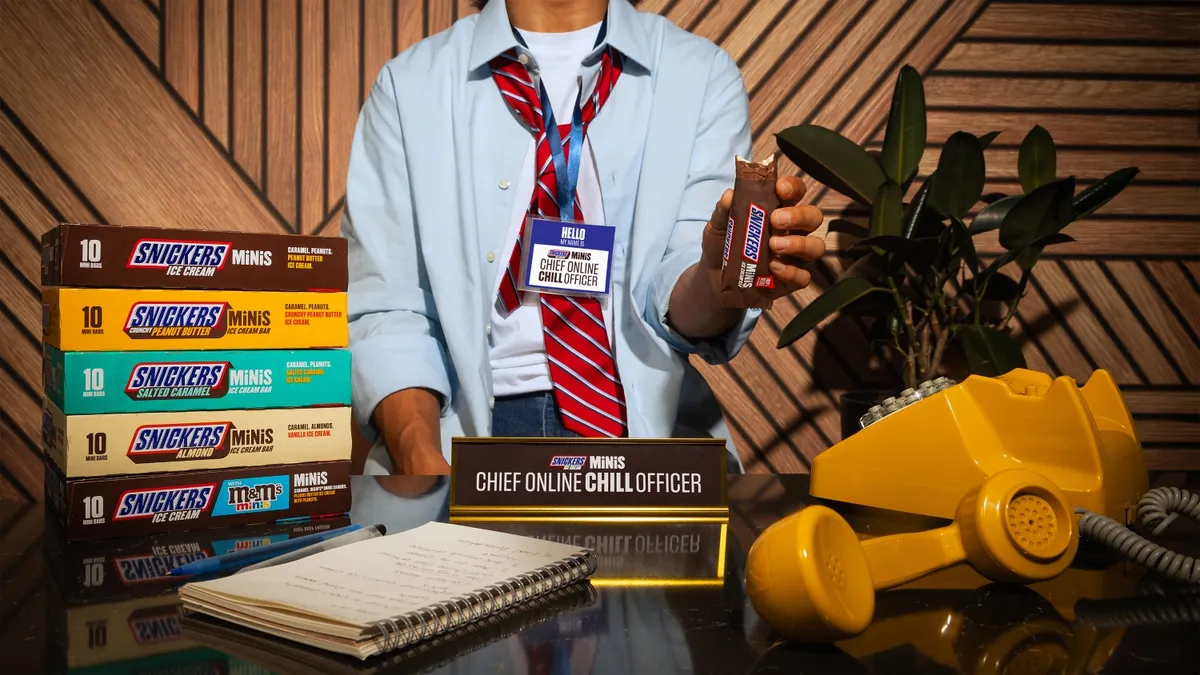
Table of contents
Jump to each section:
- Why “no chill” is a real summer internet mood
- What Snickers Ice Cream is actually doing
- Why minis fit Gen Z’s “little treat” logic
- What this means for marketers
Why “no chill” is a real summer internet mood
The smartest part of “the internet has absolutely no chill” as a premise is that it does not need explaining. People already feel it: social feeds that are equal parts entertainment and confrontation, where even low-stakes topics can turn into a pile-on.
Snickers Ice Cream is essentially treating that tension as a context signal. Instead of trying to interrupt the feed with a polished brand message, it is stepping into the exact places where people’s emotions are already running hot.
What Snickers Ice Cream is actually doing
Snickers Ice Cream is temporarily hiring one person as its “chief online chill officer.” Over two weeks, that person is expected to find heated internet moments (sports debates are one example) and respond with witty comments plus coupons for Snickers Ice Cream.
The role runs Aug. 24 to Sept. 3, is hybrid, and is based in the Chicago area. Applications (including a short video) are open through Aug. 4.
Product-wise, the campaign spotlights Snickers Ice Cream Minis, which launched in January, and highlights that there are five available flavors.
Why minis fit Gen Z’s “little treat” logic
This campaign is not only about tone, it is also about format. Minis map neatly to the “little treat” economy: the idea that consumers (especially millennials and Gen Z) keep room in their budgets for small indulgences, even when bigger goals feel less attainable.
Bite-sized products also align with how younger shoppers often describe their trade-offs: wanting something fun and satisfying, but also keeping an eye on portion size and price. Minis make that decision feel easier because the “treat” is already pre-sized.
What this means for marketers
Hiring a person to comment online can sound like a gimmick. But the underlying play is more practical: meet audiences inside the emotional reality of the platform, then connect that moment to a product benefit people already understand.
- Treat comment sections like culture, not inventory
Snickers Ice Cream is going where the mood is most intense: the replies. For brands, this is a reminder that the most “alive” part of social is often not the post, it is the conversation underneath it. - Make the brand role legible in one sentence
“Chief online chill officer” is clear: find tense moments, cool them down. It is a job title that translates instantly, which matters when audiences are skimming and scrolling. - Tie the vibe back to a product truth
Snickers has long used the idea that hunger can make people cranky. This role extends that logic into an online setting without needing a heavy explanation. The product benefit becomes a social behavior metaphor. - Use value (coupons) as a permission slip, not a bribe
The coupon is part of the punchline, but it also gives the interaction utility. That matters when people are tired of brands trying to be funny without offering anything in return. - Connect “little treat” behavior to distribution, not just messaging
Minis are inherently compatible with snackable, low-commitment buying. The campaign’s tone is the hook, but the format is what can carry repeat purchase.
The bigger signal here is that brands are increasingly acting like participants in online micro-moments, not just broadcasters of seasonal campaigns. When the internet feels tense, audiences do not necessarily want another PSA about wellness. They want something that matches the moment, acknowledges the mood, and gives them a small off-ramp back to normal scrolling.
For marketing teams, the lesson is less “be funny online” and more “be emotionally accurate.” If the platform feels heated, a campaign that understands that temperature has a better shot at earning attention than one that pretends the feed is calm.