
If you’ve watched movies long enough, you know the old trick: logos turned away, labels blurred, packaging made fake. Seeing real brands clearly on screen used to feel like an accident.
Spider-Man: Brand New Day flips that vibe. Sony’s promotional partner campaign spans 165 brands and is pegged at US$309 million in worldwide media value, with several brands not just sponsoring the hype, but showing up inside the film’s world.
Table of contents
Jump to each section:
- Why Spider-Man “brand cameos” suddenly feel normal
- What Sony and partners are actually doing across 165 brands
- Why on-screen integration is the real flex
- What marketers should know about blockbuster-era brand deals
Why Spider-Man “brand cameos” suddenly feel normal
Spider-Man is one of the rare franchises that can genuinely hit “8 to 80,” and that broad fandom is the point. The character is big enough that brands are not just buying awareness, they are buying proximity to a moment people want to be part of, talk about, and remix online.
That matters because the campaign is not being framed like traditional advertising. The pitch is cultural participation at scale, with Sony positioning partners as a way to speak to different audience pockets at the same time, rather than hammering one demographic.
On the attention side, social media analytics firm RelishMix pegs the film’s social media universe reach at 2.86 billion across TikTok, YouTube, Facebook, X, and Instagram, and the cast’s combined followings are part of the distribution engine.
What Sony and partners are actually doing across 165 brands
Sony’s promo partner campaign totals 165 brands and US$309 million in worldwide media value, exceeding the studio’s prior benchmark of US$288 million tied to Spider-Man: Far From Home.
A few partner examples show how wide the playbook gets when a franchise is treated like a global “event layer” brands can plug into:
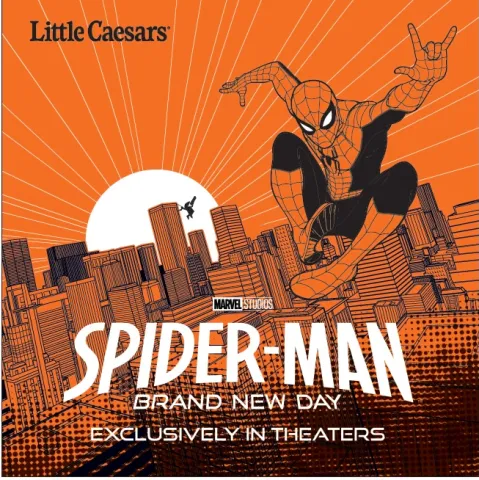
- Little Caesars: A Webberoni Pizza in Spider-Man-inspired packaging, with used boxes reportedly turning into collector items. The brand also recreated Peter Parker’s apartment as a fan moment that pulled 20,000 RSVPs.
- Samsung Galaxy: Promotion tied to Galaxy Z foldables and Galaxy Watches, plus a “Spidey Tracker” device used by Jacob Batalon’s Ned Leeds, supported by digital, social, out-of-home, and live fan activations.
- BMW: Vehicle integration featuring the Neue Klasse BMW iX3 and BMW 5 Series Sedan, plus a custom creative piece called “Big Screen.”
- Liquid I.V.: Limited-edition co-branded packaging with nationwide retail distribution, influencer content, an experiential climbing wall in NYC, and a commercial featuring Batalon as Ned Leeds.
- Gaming crossovers: Fortnite brings Spider-Man back with an outfit and in-game moments, including a never-before-seen clip introduced by Tom Holland. PUBG Mobile runs an integration with in-game props and a livestream tournament, plus premium billboards including Times Square and placements across multiple territories.
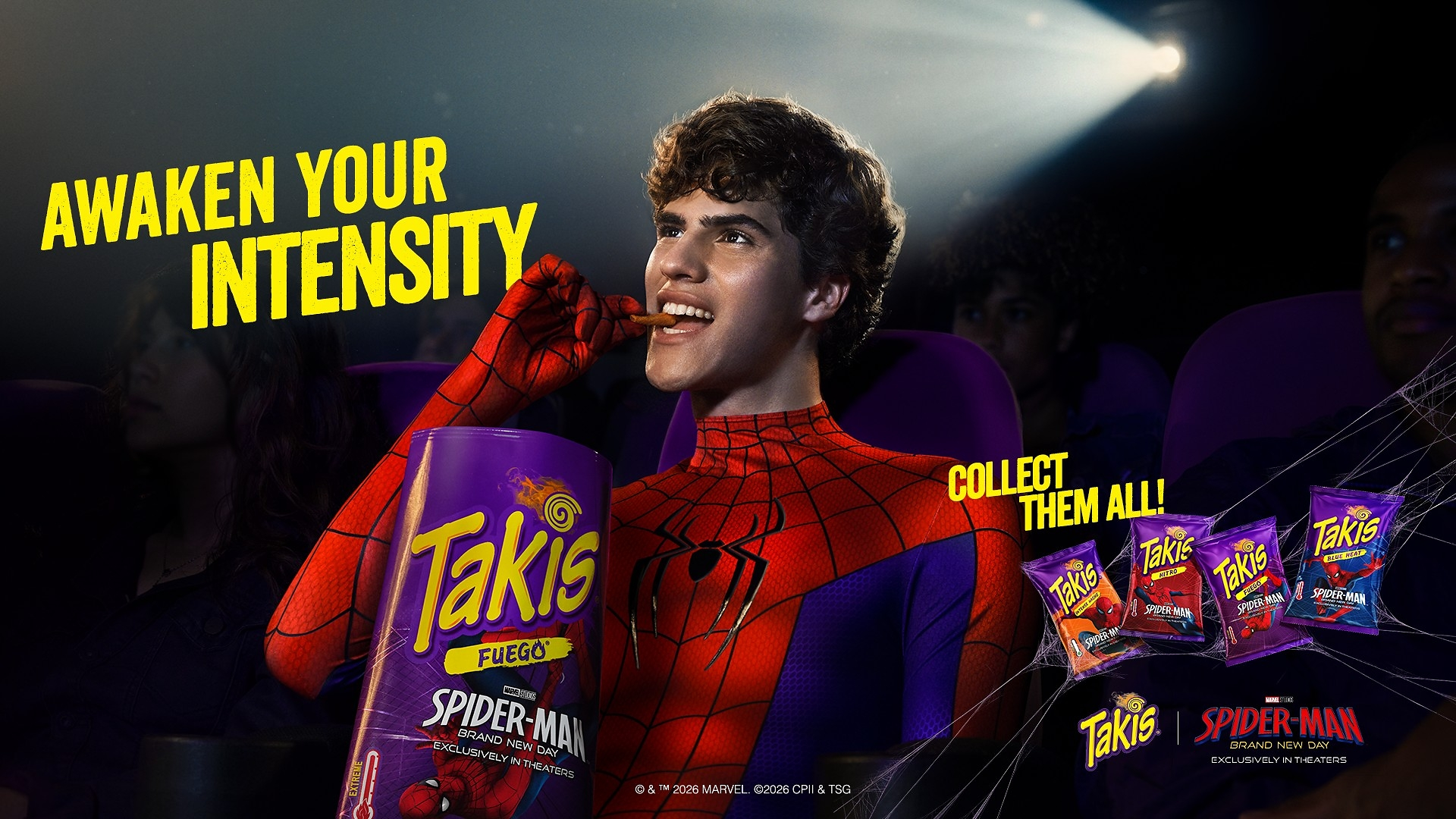
- Takis: A New York City stunt with snack bags attached to walls by cobwebs, supported by limited-edition packaging across 57 countries and movie ticket incentives.
- ASUS ROG: On-screen presence plus a “Brand New Power” campaign spanning billboards, transit, print, online, e-commerce, and retail across 20 markets.
- McDonald’s (international): Happy Meal mini-backpack keychains across 80 markets, with “Great Power Awaits” messaging across advertising, social, and retail.
Why on-screen integration is the real flex
The most interesting part is not that brands partnered. It’s that some brands appear inside the film in a way audiences can clearly identify, which signals intention, permissions, and planning.
Per the campaign details, four brands make cameos via product placement: Spider-Man eats Little Caesars pizza, uses a Samsung phone and ASUS computers, and the film’s cityscape includes BMWs, with Liquid I.V. appearing in a bodega.
This is the post “skip button” logic, applied to cinema. When audiences avoid interruptions, brands chase formats where the brand is part of what you are watching, not something that cuts into it. Blockbusters offer a rare concentration of attention, plus downstream social conversation, plus the ability to extend the moment into retail, gaming, and experiential.
Sony also explicitly separates promo partner media value from licensing and merchandise rights, noting that Disney holds licensing and merchandise rights for Spider-Man.
What marketers should know about blockbuster-era brand deals
The campaign’s scale signals that “media” is increasingly being built out of culture, not scheduled around it.
- On-screen visibility is becoming a premium media unit
When a logo is readable and the product is integrated into story-world behavior, the placement is not background. It’s a deliberate decision that can outperform fleeting ad impressions. - Collector behavior is now part of the funnel
Limited packaging and physical items can become social proof and resale artifacts, as seen with the Little Caesars box turning into a collectible. That kind of “I was there” object extends a film moment into everyday life. - Gaming integrations are not add-ons, they’re parallel premieres
Fortnite and PUBG Mobile show how franchises treat games as simultaneous distribution, not post-release merch. Letting players watch clips in-game reframes marketing as access. - Global campaigns win when they localize the experience, not just the media buy
McDonald’s runs international, Little Caesars is the U.S. fast-food partner, and activations span territories from Times Square to multiple regions via PUBG Mobile. The consistency is the IP, but the experience changes by channel and market. - Celebrity reach still matters, but it’s now packaged as built-in distribution
The cast’s followings are part of the campaign’s amplification layer, which helps explain why partners want “viral moments” more than a traditional sales spike.
When brands show up inside a blockbuster, it also reshapes how audiences read “authenticity.” It’s no longer just “does this partnership make sense,” but “does this product feel like it belongs in the character’s life.” That’s a culture question before it’s a media question.
The bigger shift is that blockbusters are increasingly treated like temporary platforms: part film, part retail event, part social conversation, part in-game experience. For marketers, the lesson is simple: attention is moving toward places where ads do not look like ads, and fandom does the distribution.