
KPop Demon Hunters is the kind of animated IP that lives way beyond the screen, the songs, the characters, and the “I need that on a T-shirt” energy travels fast in fandom spaces.
That fandom behavior is exactly what makes collabs like this work. People do not just like the film. They collect it, wear it, and use it as a signal to other fans that they are in on the same world and the same references.
Vans is leaning into that collector logic with a new “Golden” collection tied to KPop Demon Hunters’ one-year anniversary, including an Old Skool sneaker in a golden colorway that nods to the film’s Oscar-winning original song “Golden.” The company outlined the new styles in its official update.
This is also not a one-off: it is the second KPop Demon Hunters collaboration with Vans, following a previous drop that featured visuals tied to the film’s girl group HUNTR/X, characters like Derpy Tiger and Sussie Bird, and the rival boy-band Saja Boys.
Table of contents
Jump to each section:
- Why this collab fits how fandoms shop
- What Vans is actually selling: characters, colorways, and “tour merch” energy
- The bigger anniversary commerce play around KPop Demon Hunters
- What this means for marketers
Why this collab fits how fandoms shop
Franchise merch works best when it feels like an extension of the story, not a logo slapped on a product. For KPop Demon Hunters, the “K-pop group” framing (HUNTR/X, rival groups, anthem-style music) naturally maps to how people already buy culture: like concert merch, like a collectible drop, like something you wear to say “this is my lane.”
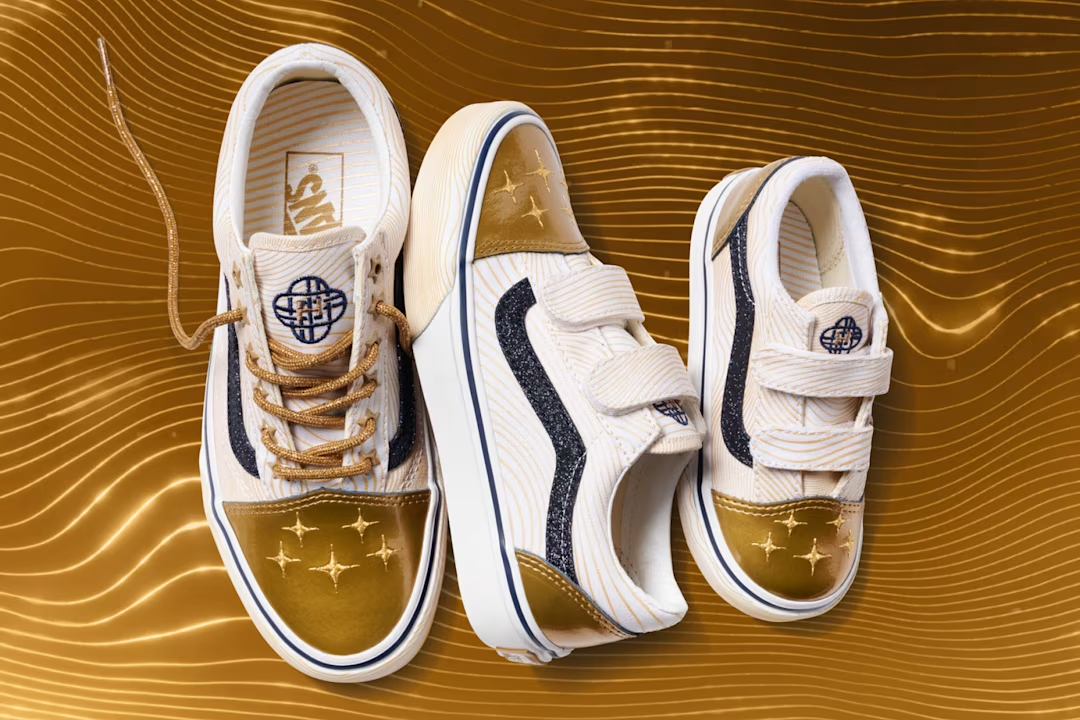
Vans is tapping into that by framing the capsule around “glow” and “Golden,” which translates the film’s music moment into something you can actually put on your feet. It is less about a generic movie tie-in and more about packaging a specific fan reference into a wearable cue.
What Vans is actually selling: characters, colorways, and “tour merch” energy
On the product side, the details matter because fandoms notice details. Vans describes an Old Skool tied to the trio (Rumi, Mira, Zoey) with specific color accents, plus character-driven styles like a texture-rich Classic Slip-On with a soft, furry blue upper inspired by Derpy Tiger.
There is also a “tour merch” angle in the apparel: tees designed to feel like tour merchandise, with checkerboard woven through the styles. That matters because fans tend to respond to merch that feels like it came from inside the universe (or inside the fandom’s rituals) rather than from a marketing department.
And then there is the “first-ever” product hook: Vans says the third collection includes its first light-up design, the Knu Skool Light Up, offered in “For the Fans” colorways. Even without broader product context, that kind of feature gives fans a clearer reason to talk about the item beyond “it exists.”
The bigger anniversary commerce play around KPop Demon Hunters
The Vans drop is landing inside a wider anniversary wave. Other one-year releases mentioned alongside the anniversary include Lego sets inspired by characters, fashion and singing dolls from Mattel, Saja Boys and Derpy Tiger Furblets from Hasbro, and plush and Squishmallows from Jazwares.
There is also a physical fandom layer: Bemyfriends is doing a second official merchandise pop-up tied to the anniversary, with stops across multiple cities globally. And the Korean skincare line Annua is expanding its KPop Demon Hunters collaboration with a new skincare line and a “Gonna Be Glowin’” campaign.
Taken together, this looks less like “more merch” and more like a coordinated attempt to keep the IP present in daily life across categories: toys, fashion, footwear, beauty, and in-person retail moments.
What this means for marketers
Entertainment merch works when it respects the way fans already behave, not when it tries to create new behavior from scratch.
- Sell a reference, not just a product
The “Golden” shoe is positioned around a specific cultural artifact inside the IP (the song and its awards moment). That gives fans a reason to feel like they are buying a piece of the story, not just a colorway. - Make it wearable in the way the fandom already shops
“Tour merch” design cues are doing a lot of work here. They mirror how music fans already justify purchases: you buy it to remember a moment, to signal taste, and to show up in public as part of a community. - Character-specific design signals raise the floor on authenticity
Calling out which character inspires which silhouette, color, and texture makes the drop legible to fans. It also reduces the sense that the collab is generic, because the product itself carries the “proof.” - Anniversary windows are retention moments, not just launch moments
The one-year anniversary framing turns the drop into a calendar event. That matters because fandom commerce thrives on moments: anniversaries, tours, seasons, and “everyone is talking about it again” cycles. - Category expansion keeps the IP in more daily routines
When footwear, toys, plush, and skincare all show up around the same time, you are not only selling to collectors. You are giving different types of fans different entry points, and more ways to keep the IP present in their lives.
The bigger signal is that fandom-first commerce increasingly looks like community maintenance. Brands that want to play in entertainment collabs need to understand what fans treat as meaningful, what they treat as collectible, and what they treat as “I can wear this and someone will get it.”
When the product translates a specific in-universe detail into something tangible, the marketing becomes less visible. It feels like participation.