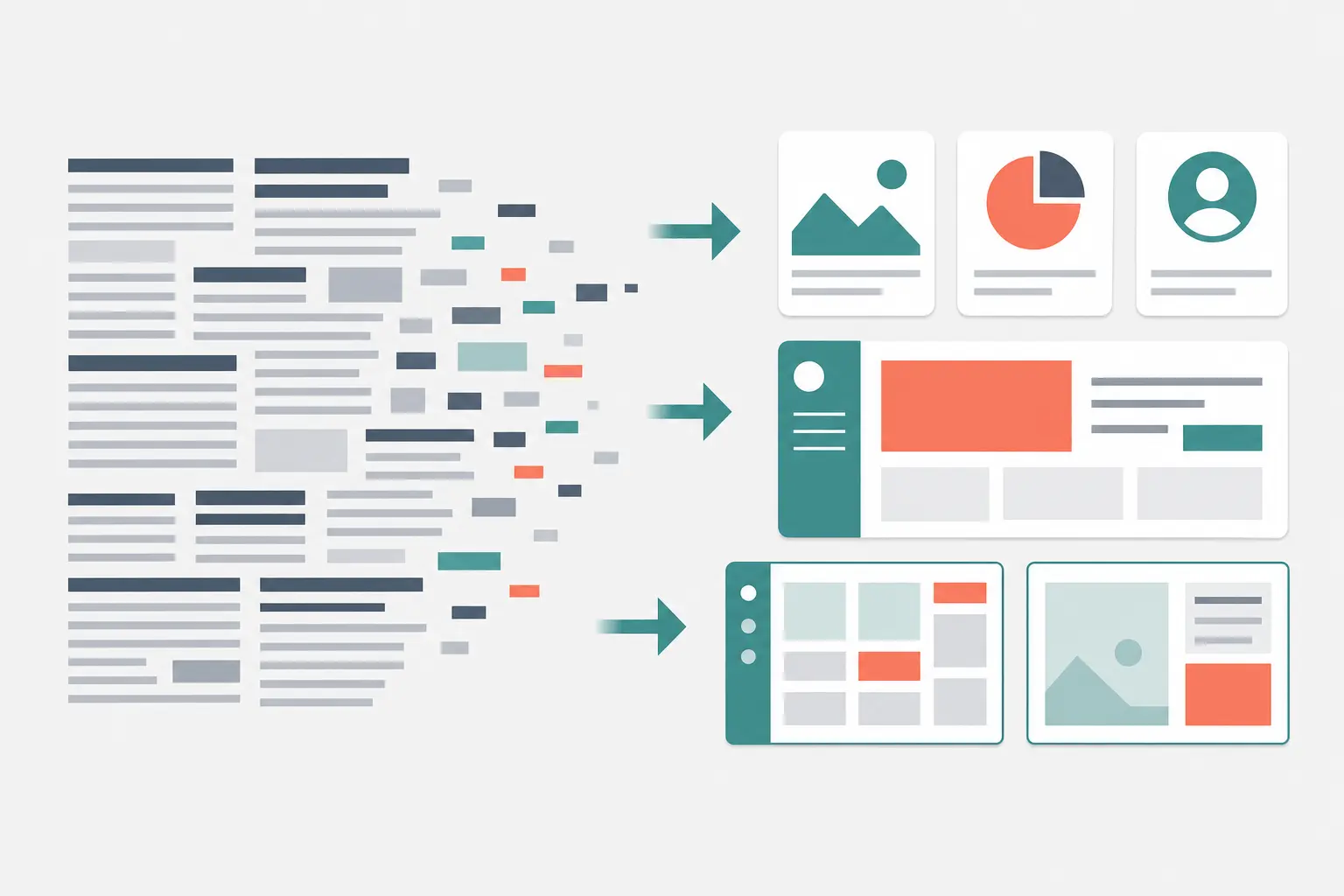
Canva is arguing that Gen Z is reshaping workplace communication around visual language, and that many organisations are still running on text-heavy workflows that slow teams down. The company outlined its findings in an official newsroom post, tied to its State of Visual Communication Report.
The useful signal for marketers is not “Gen Z likes visuals.” It is that internal communication norms are starting to look more like external channels: fast, template-driven, and designed for comprehension at a glance. When the workplace becomes more visual, brand systems, review cycles, and content operations start to matter far beyond the marketing department.
Table of contents
Jump to each section:
- Why “visual-first work” is becoming the default language
- The hidden cost of text-heavy workflows and fragmented tools
- AI as creative infrastructure, not just productivity software
- What this means for marketers building for a visual workplace
Why “visual-first work” is becoming the default language
Canva’s research claims 91% of Gen Z believe visuals communicate ideas better than text. That number matters less as a statistic and more as a hint about future “default formats” inside companies: mockups instead of memos, short video updates instead of long written recaps, whiteboards instead of multi-page briefs.
A strategic tension is already visible. Many leaders still treat visual communication as polish that happens at the end. Gen Z tends to treat visuals as the thinking process itself. The implication is that the organisations who win speed will not just write clearer briefs. They will reduce how much briefing is required in the first place.
A few observations worth keeping:
- Visual fluency is turning into a career skill, not a design skill.
- Templates are becoming a coordination layer: they standardise decisions, not just layouts.
- The fastest teams will communicate in “glanceable artifacts” that survive handoffs across functions.
For marketers, this is familiar territory. Marketing has long optimised for scannability and story. The change is that internal work is beginning to demand the same discipline.
The hidden cost of text-heavy workflows and fragmented tools
Canva frames the problem as “outdated, text-heavy systems” and fragmented tools that create friction, misunderstandings, and slower decision-making. It also cites a cost signal: in the US, companies spend US$65,000 per creative team member per year on visual content creation, with costs driven by outdated processes rather than lack of creative ability.
Even if you set the exact number aside, the pattern is clear: when teams have to translate ideas repeatedly (brief to deck to mockup to email summary), the organisation pays in cycle time and misalignment.
One practical detail in the research is that younger employees increasingly rely on their own tools to work more effectively. That is often described as shadow IT, but it is also a diagnostic: it shows where formal systems are failing to match the speed and clarity people need.
A concise way to think about it:
- If a workflow requires more explanation than the work itself, the workflow is the bottleneck.
- Misalignment is usually framed as a people problem. Often it is a format problem.
- Standardising tools matters, but standardising “how ideas look” matters more.
This is why visual systems become strategic. They reduce the number of interpretations a message can take on as it moves through an organisation.
AI as creative infrastructure, not just productivity software
Canva positions Gen Z as “ready to create with AI,” describing a mindset where AI is a natural extension of creative exploration, not a threat to creative identity. It also notes that many Gen Z professionals see AI literacy as essential for staying competitive.
The deeper shift is that AI is starting to function like infrastructure for expression. When AI makes drafting, visualising, and iterating cheaper, organisations can move from “make fewer, higher-stakes assets” to “make more, lower-friction artifacts” that accelerate decisions.
That creates a second tension marketers should notice: if everyone can generate passable visuals quickly, taste and governance become differentiators, not access to production.
Canva also cites neuroscience findings that visually rich materials can drive higher emotional intensity and faster memory encoding, and that thoughtful visual design can hold attention longer and improve recall. Marketers already optimise for these outcomes externally. The opportunity is to apply the same principles internally, where attention is increasingly scarce and cross-functional comprehension is a competitive advantage.
What this means for marketers building for a visual workplace
If Gen Z is pulling work toward visual formats, marketing leaders have a chance to treat this as an operating model shift, not a culture note.
1. Brand systems will increasingly govern internal work, not just campaigns
When teams share quick mockups, templates, and visual updates, brand consistency becomes a coordination mechanism. The more templates travel across functions, the more “brand” becomes the language of alignment.
2. Speed will come from fewer translations, not faster approvals
The temptation is to optimise review stages. A bigger win is reducing how often work must be rewritten from one format to another. Visual-first artifacts can compress understanding and make fewer meetings necessary.
3. Your competitive advantage may be visual fluency across non-design roles
Canva’s point about visual fluency as a career lever suggests a workforce where marketers, product teams, sales, and HR all create and share visual stories. Marketing can lead by setting standards for clarity, narrative, and responsible reuse.
4. AI literacy will become a marketing risk issue as much as a marketing skill
As experimentation increases, so does variance in quality and compliance. If AI-powered creation becomes “normal work,” governance needs to be lightweight enough to support speed but clear enough to prevent brand drift.
5. Internal communication is turning into a brand channel
The more employees operate through visuals and short-form updates, the more internal messages start to feel like public-facing content. That is not just aesthetics. It shapes trust, comprehension, and how confident people feel contributing.
Over time, the organisations that look “most modern” will not be the ones with the most creative output. They will be the ones where ideas move with the least loss of meaning.
And that is a marketing lesson as much as a workplace one: clarity scales better than charisma.