
Crocs has spent months letting a weird little mystery simmer: hints of a giant egg popping up in marketing, including TikTok Shop livestreams, and a slow tease that something character-led was coming.
Now the brand has made it official in an announcement: Niles, a six-foot-tall, non-speaking, bipedal crocodile who wears clogs and is being treated less like a one-off mascot and more like an ongoing character built for social-first episodes, bits, and repeat appearances.
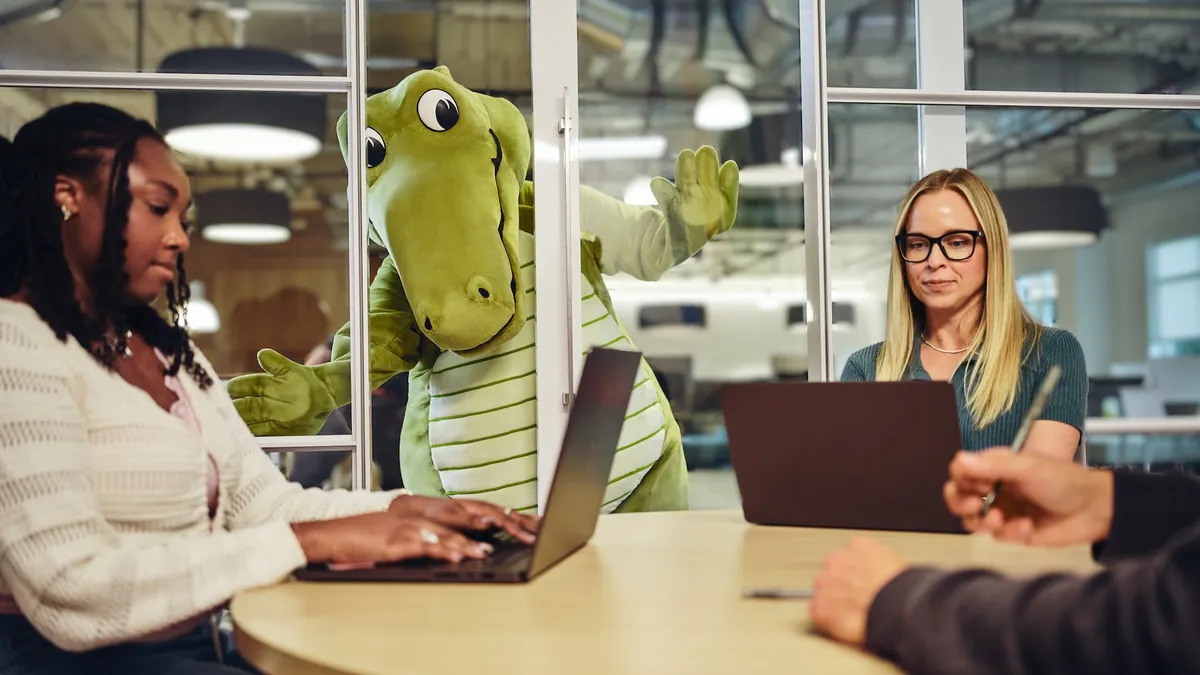
Table of contents
Jump to each section:
- Why a “character” matters more than a mascot right now
- What Crocs actually launched with Niles
- The business signal behind Crocs’ social-first IP bet
- What brand teams can learn from Niles
Why a “character” matters more than a mascot right now
In 2026, mascots that win are the ones that behave like they belong online. People do not just want a logo brought to life. They want a personality they can instantly “get” in three seconds, then keep watching for the next gag, cameo, or storyline.
Crocs is trying to meet that expectation by framing Niles like a sitcom character with interests, flaws, and ambitions, instead of a static brand ambassador. The company has also been leaning into branded social content this year, including microdrama-style series, so Niles functions as a consistent face that can thread through episodes and formats.
What Crocs actually launched with Niles
The debut centers on a microseries shot at Crocs’ headquarters that follows Niles hatching and interacting with real employees. One video moment shows Niles bursting from his egg, celebrating, then realizing he hatched before an official 24-hour countdown timer reached zero and scrambling to put the egg back together.
Niles does not speak, which is a practical creative choice for scalable content. It keeps the character flexible across regions, platforms, and short-form edits where physical comedy, reactions, and awkward office timing can do the work.
Crocs also gave the character a dedicated social presence, @nilesthecroc, reinforcing that this is designed to live as an ongoing account-led character, not just appear in ads.
The business signal behind Crocs’ social-first IP bet
Crocs is positioning Niles as long-term, scalable intellectual property, especially as it approaches its 25th anniversary next year. The company is explicitly aiming for a “signature” asset that can evolve across content, experiences, entertainment, and future brand extensions, rather than being built for a single campaign window.
There is also a commercial context underneath the story. Crocs recently surpassed $1 billion in quarterly revenue for the first time, with Q2 sales up 4.3%. The company attributed momentum partly to TikTok Shop, including participation in the first global Super Brand Day deals in July, and it has experimented with shoppable entertainment formats like “Déjà Shoe,” described as the first shoppable series on TikTok Shop.
In that light, a recurring character is not only about vibes. It is a way to keep audiences returning to the brand’s content, which matters more when social platforms are doubling as storefronts and entertainment feeds at the same time.
What brand teams can learn from Niles
A character-led brand move only works if it feels like it belongs in people’s feeds, not just on a billboard. Crocs is betting that Niles can become recognizable enough to carry ongoing storytelling without needing a new concept every week.
- Build for repeat viewing, not just reach
A mascot that shows up once is a campaign asset. A character that can carry a microseries is a reason for people to come back, follow, and share recurring bits. - Design the character for the platform’s “native comedy”
Niles being silent makes the content easier to remix into short clips and reaction edits, and it reduces the friction of voice, language, and continuity. - Use “teasing” as a content strategy, not a pre-launch formality
The egg hints across marketing and livestreams created a breadcrumb trail. That kind of slow reveal can turn an announcement into a payoff, which is how social narratives sustain attention. - Connect storytelling to commerce without making it feel like an ad
Crocs is already leaning into TikTok Shop and shoppable content. A character gives the brand a way to keep content entertaining while still making the path to purchase feel like part of the show. - Treat brand IP like a long-term product, not a seasonal idea
Crocs framed Niles as scalable IP meant to evolve. That mindset forces teams to think about consistency, character rules, and durability across formats.
If Niles works, it is not because “a mascot drives engagement.” It will be because Crocs can keep the character interesting enough that people accept him as part of the brand’s universe.
And that is the broader shift: in social-first retail, brands increasingly need their own cast, not just their own campaigns. When entertainment and shopping collapse into the same scroll, the winning brands are the ones that can keep the story going long after the drop.
This article is created by humans with AI assistance, powered by ContentGrow. Ready to automate your content marketing?