
Jo Malone London is showing up where you would not expect a fragrance launch to live: inside a creator-made Fortnite island that already has its own built-in player habits. Instead of asking people to click out to a brand film or “discover” a new scent via a glossy ad, the idea is to let players wander a coastal world and absorb the vibe while they play.
For fans of Fortnite’s creator ecosystem, this kind of drop lands differently than a traditional brand takeover. Players are used to island codes, limited-time twists, and environments that feel like mini fandom spaces. That makes the brand presence feel closer to “part of the map” than “an ad,” which is exactly why this format is becoming attractive to marketers trying to reach younger audiences who do not always hang out on the usual social feeds.
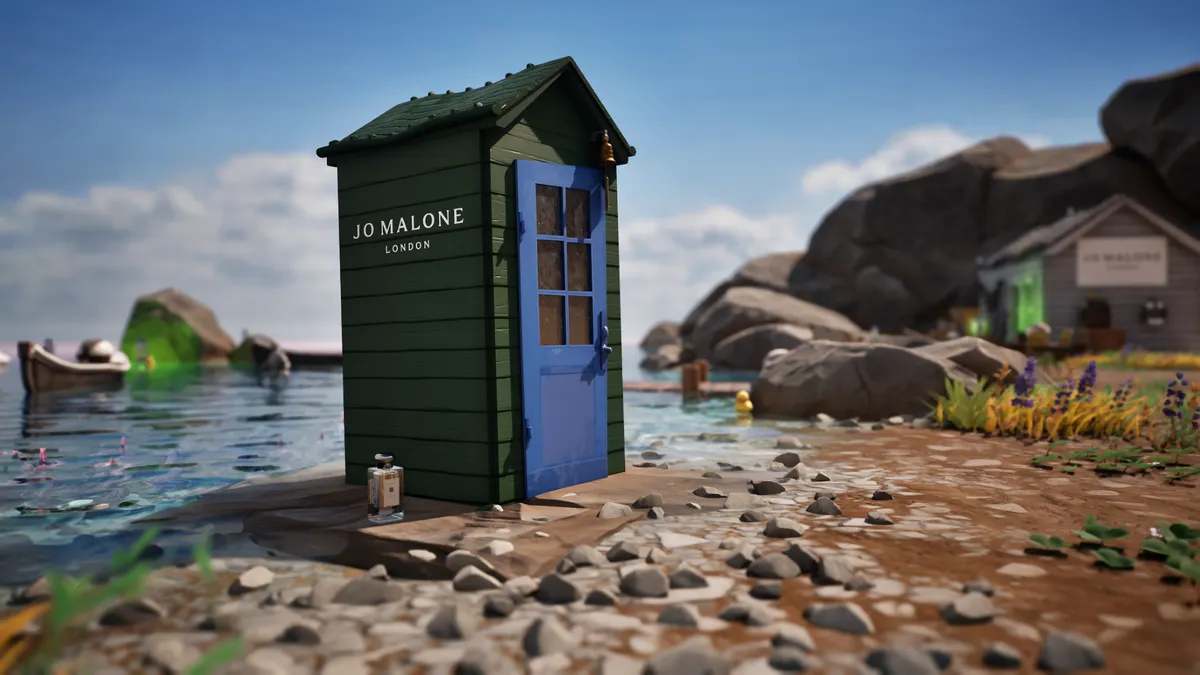
Table of contents
Jump to each section:
- Why Jo Malone is using a creator-made Fortnite island
- How the Sea Salt & Bergamot experience works in-game
- What this says about beauty marketing inside sandbox games
- What marketers should know about culture-first gaming activations
Why Jo Malone is using a creator-made Fortnite island
Jo Malone London is leveraging an existing Fortnite map rather than building a brand-new island from scratch, using Minigame Box PvP, a creator-made experience developed by Birdo and Dagwummy with Unreal Editor for Fortnite. That choice matters because the map already has a proven audience: 3.6 million favorites and 7.6 billion minutes played.
The cultural logic is simple: players return to familiar creator islands the way people return to favorite YouTube channels. When a brand shows up inside a place the community already “knows,” the brand has a better chance of being experienced as part of play, not as an interruption.
This activation runs until Aug. 24 and supports Jo Malone London’s Sea Salt & Bergamot Cologne. Players can access the island using code 8532-9413-6963.
How the Sea Salt & Bergamot experience works in-game
The limited-time game is designed around a British coast-inspired world meant to portray the “spirit” of the Sea Salt & Bergamot scent in a digital environment. In practical terms, that means the brand is translating fragrance marketing (which usually leans heavily on mood and place) into something players can move through, explore, and remember visually.
Jo Malone London worked with Chartis, a user-generated games and media company, to develop the experience. Alongside the in-game component, the campaign also includes gaming creators, livestreams, and a social content series spanning Instagram, TikTok, and Fortnite.
The strategic bet here is not that players will “learn notes” like they would in a product description. It is that the atmosphere becomes the message, and that the message spreads through creator-led content formats that young audiences already trust.
What this says about beauty marketing inside sandbox games
Beauty brands have been pushing deeper into sandbox games like Roblox and Fortnite because these platforms are not just media channels. They are social spaces where identity, aesthetics, and status are performed in real time.
The appeal is also structural. Sandbox platforms make it easier for brands to collaborate directly with creators and plug into existing worlds, rather than trying to force audiences into a brand-owned environment. That said, the category comes with operational and compliance pressure. Roblox, for example, recently introduced Brand Link, a directory of creator-made experiences intended to streamline brand integrations and ensure activations meet compliance and measurement standards, as the platform continues to face scrutiny around advertising practices and child safety.
For Estée Lauder Companies, this sits inside a broader business context where fragrance is a growth engine. The company reported net sales up 5% year over year for the quarter ended March 31, with fragrance up 10% over the same period.
What marketers should know about culture-first gaming activations
Gaming activations work best when they respect how players already behave inside the platform, rather than trying to recreate a traditional launch plan inside a game.
- Borrowing an existing community can beat building a new one
Using a proven creator island shifts risk away from “will anyone show up?” and toward “does this feel like it belongs here?” - Mood is the product in virtual fragrance storytelling
A scent cannot be sampled in-game, so the work becomes translating place, vibe, and emotional association into an environment people remember. - Creators are not just distribution, they are the format
When the campaign includes livestreams and creator content, the creator is the bridge between brand intent and what audiences actually experience. - Measurement and compliance expectations are rising
Sandbox platforms are moving toward clearer standards for brand integrations, which will shape how activations are designed and approved. - Reach comes from showing up outside “traditional” social loops
The point is not to replace Instagram or TikTok. It is to reach people who might never encounter the brand through those channels in the first place.
What makes this moment interesting is that it reflects how Gen Z discovery keeps shifting from feeds to spaces. A lot of younger audiences do not separate “content” from “community” from “hangout,” especially in games. Brands that understand that difference tend to build experiences that feel native rather than imported.
For marketers, the bigger lesson is that immersion can do some of the same work as storytelling, if the environment is designed around real platform behavior. In creator-driven games, the question is less “how do we advertise?” and more “how do we become a place people want to spend time in, even briefly?”
Impact tier: Tier 1 (Minor impact)
Primary lens: Gaming (culture-first, Zoe editorial persona)