
Basic-or-not discourse is basically a fall tradition at this point, and the Pumpkin Spice Latte sits right in the middle of it. The drink is not just seasonal, it’s a piece of internet identity: a shortcut for “it’s officially autumn,” plus years of jokes about “basic” taste, comfort rituals, and predictable-but-cozy cravings.
In that context, Starbucks is leaning into the conversation by putting Martha Stewart in the role of someone who can say the quiet part out loud and make it feel charming, not defensive. The company outlined the campaign in an official newsroom post, alongside social-first content featuring Stewart and “Off Campus” actor Belmont Cameli, plus a TV spot that blends in user-generated content (UGC).
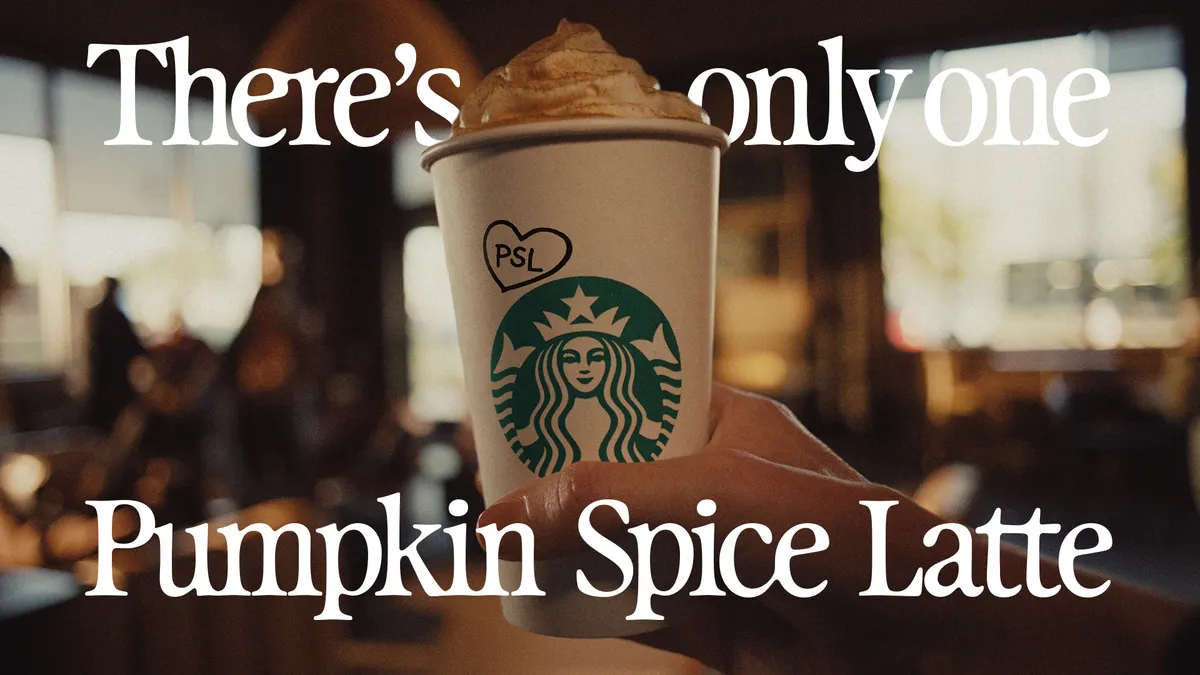
Table of contents
Jump to each section:
- Why PSL “basic” jokes are still useful marketing
- What Starbucks actually put into the campaign
- Why Belmont Cameli and “Off Campus” references fit the moment
- What this means for marketers
Why PSL “basic” jokes are still useful marketing
The PSL has been memed for so long that it functions like a cultural signal more than a menu item. People don’t just order it, they announce that they’re entering fall mode, sometimes ironically, sometimes proudly, often both at once.
That’s why “basic” is such a powerful angle. It’s not really an insult anymore, it’s a label people can reclaim to show they’re in on the joke. Starbucks’ creative choice here is to treat that joke as shared language, not as criticism to fight.
Putting Martha Stewart at the center helps because she’s already associated with fall aesthetics and “keeping it real.” Her line about the PSL making us “a little more basic” works like permission: you can like the mainstream thing without pretending you discovered it first.
What Starbucks actually put into the campaign
The campaign is built as social-first, then reinforced through TV. Starbucks’ content features Martha Stewart alongside actor Belmont Cameli, with Stewart nodding to the “basic” perception while still hyping the sensory fall association of the drink.
Starbucks also extended the push beyond social by running a 30-second TV spot tied to the seasonal return, designed to celebrate the PSL’s fan community by incorporating user-generated content. The TV creative is positioned around the idea that “There’s Only One PSL,” and it also splices in a clip from “Family Guy,” signaling that Starbucks sees PSL as pop culture, not just product.
A notable performance signal from the social side: the PSL video generated over 10 million views on Starbucks’ Instagram page shortly after debuting.
Why Belmont Cameli and “Off Campus” references fit the moment
Cameli’s presence matters less as “celebrity casting” and more as fandom shorthand. “Off Campus,” adapted from a romance novel series, sits inside a broader wave of hockey-centered, steamy storytelling that already has an online audience primed to clip, quote, and share.
In the ad, the contrast between ordering hot versus iced gives the campaign an easy bit of character texture, while still keeping the focus on the drink. It’s the kind of detail that travels well in short-form: the joke is legible even if you don’t know the show, but it’s extra rewarding if you do.
Starbucks also pushed ancillary content that leaned into Cameli’s on-camera charisma (including a video where he repeatedly winks at the camera), which reflects a very current social pattern: giving the audience “extra” versions of the same moment so they can pick a favorite and share it.
What this means for marketers
Seasonal marketing works best when it behaves like culture, not like a calendar reminder. Starbucks is treating PSL as a fandom object with rituals, jokes, and community content, and then using media choices (social-first plus TV) to scale that feeling.
- Reclaim the meme instead of correcting it
The “basic” label is the conversation, not a threat. By agreeing with the premise (and shrugging), the campaign makes the audience feel understood, not sold to. - Cast for cultural meaning, not just reach
Martha Stewart carries “fall authority,” while Belmont Cameli brings a current fandom reference point. Together, they make the PSL feel both classic and timely without changing the product story. - UGC is more credible when it’s treated as celebration
The TV spot’s inclusion of fan-made content frames PSL love as something people actively perform and create around, not something Starbucks has to manufacture. - Short-form needs “repeatable moments,” not one perfect ad
Ancillary content (like the wink video) gives the algorithm and the audience more hooks, while keeping the tone consistent with the main idea. - Use cross-channel media to legitimize what started online
Social makes the moment feel current; TV makes it feel like a shared seasonal event. That combination is especially effective for legacy products that live in everyday routines.
Bigger picture, this is a reminder that brands don’t “own” cultural jokes, communities do. The skill is knowing when to step into the joke with humility and when to step back and let fans do what they already do.
The PSL is valuable because it’s predictable in a comforting way, and because people have built their own language around it. Starbucks’ bet is that the fastest way to keep a seasonal icon relevant is to keep talking like the internet does, then scale that voice into mainstream media without sanding off the edges.