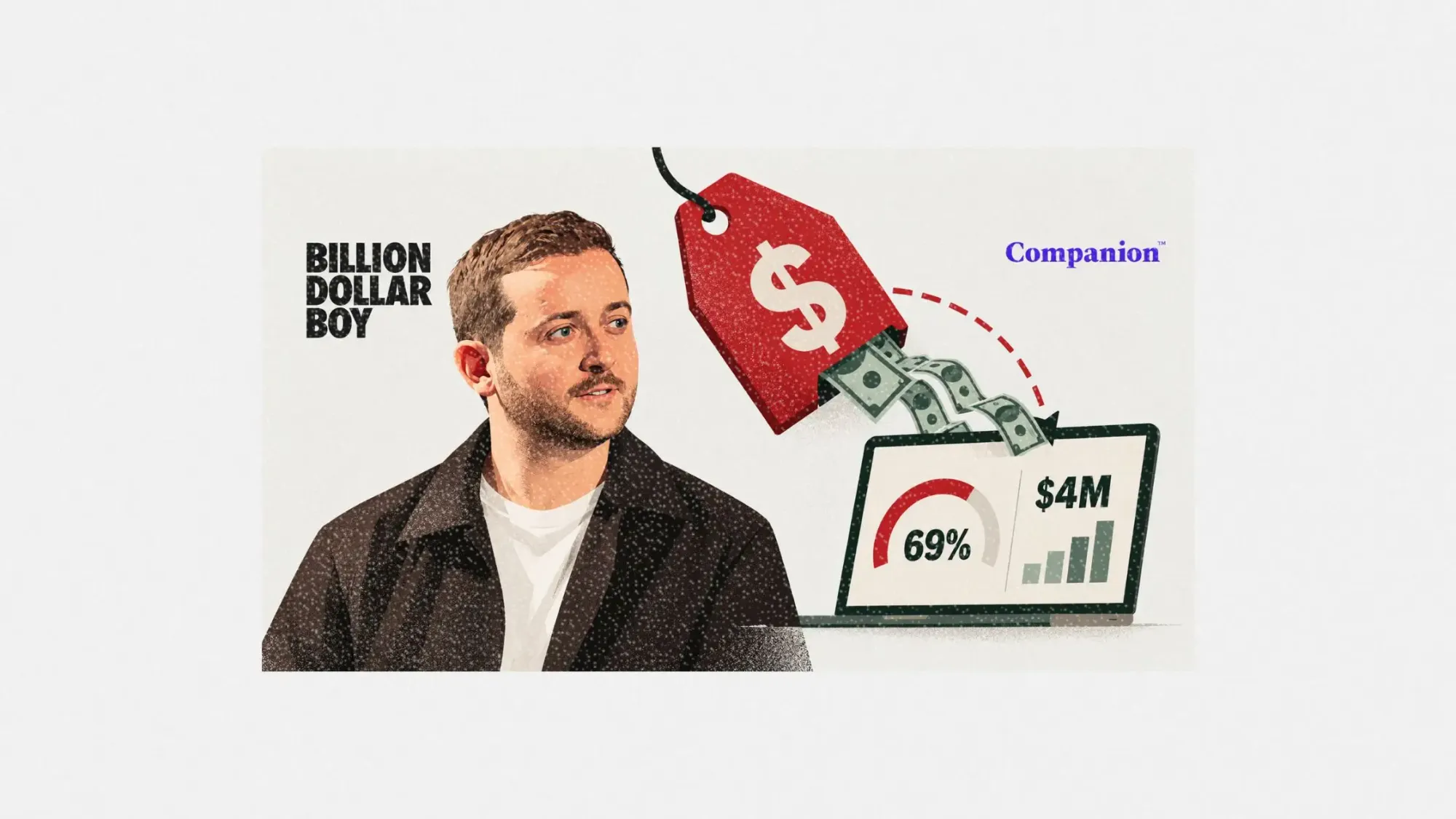
Ten markets. Hundreds of creator contracts. One retail brand had no idea its fees were running 69% above benchmark, until an audit put a number on it: US$4 million in potential savings walking out the door over nine months.
That’s the kind of leak Billion Dollar Boy, a global social and influencer marketing agency, built its latest tool to catch. The agency’s Companion platform launched Creator Investment Intelligence on July 30, 2026, giving brands a way to benchmark creator fees and track negotiations across teams and markets.
ContentGrip spoke with Thomas Walters, Billion Dollar Boy’s co-founder and Group Chief Innovation Officer, about where creator budgets go wrong and what marketers should capture before they approve a deal.
Table of contents
- What Companion launched
- Where the US$4 million went
- Why follower count misses the price
- What changes when teams centralize
- Local markets can break global benchmarks
- What marketers should ask before approving creator fees
What Companion launched
Creator Investment Intelligence is available to direct Companion clients as part of the platform. Billion Dollar Boy says the pricing system is informed by US$173 million in real creator campaign spend, covering more than 180,000 quotes, final deals and deal data points across 50 territories.
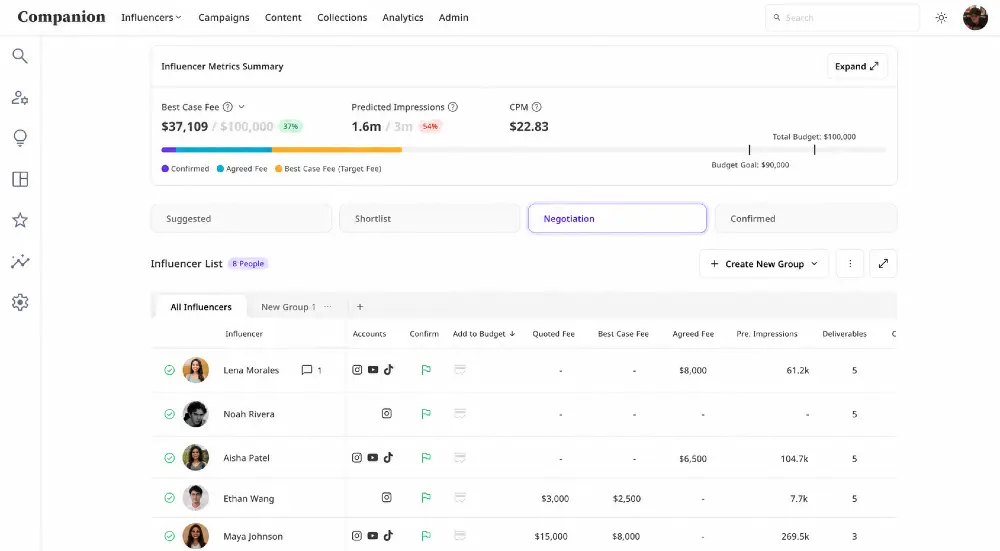
Its Benchmark Algorithm estimates a suggested fee using factors such as platform and format, region, usage rights, exclusivity, seasonality, production timelines, creator niche and predicted performance. Its Budget Tracker puts quotes, negotiations and final fees into one dashboard so teams can compare current deals with their own history.
The launch was supported by Censuswide research of 1,000 marketing and procurement decision-makers in the US and UK. Findings in that survey:
- 45% said their organization had mispriced creator fees
- 49% cited cross-team and cross-market budget management as a leading concern
- 73% said they still tracked creator spend manually through spreadsheets and email.
The audit behind the headline covered a global retail brand across ten markets. The company said its internal creator-fee spend sat 69% above benchmark, representing US$4 million in potential savings over nine months.
Where the US$4 million went
Thomas traces the leakage to fragmented negotiations. Local teams and agencies can end up buying the same creator at different prices because nobody can see the full history of earlier deals.
“Money leaks through fragmentation and missing market context.” Thomas said. “In an enterprise retail brand operating across ten markets, local teams and PR agencies often negotiate in isolated siloes without a central source of truth.”
That problem gets expensive when it repeats across hundreds of contracts. A slightly inflated quote in one market is manageable. Different markups, rights packages and negotiated terms across several markets can compound into a much larger gap.
For marketers, the practical issue is record quality. A budget file can show what was paid while still missing why that price changed.
Why follower count misses the price
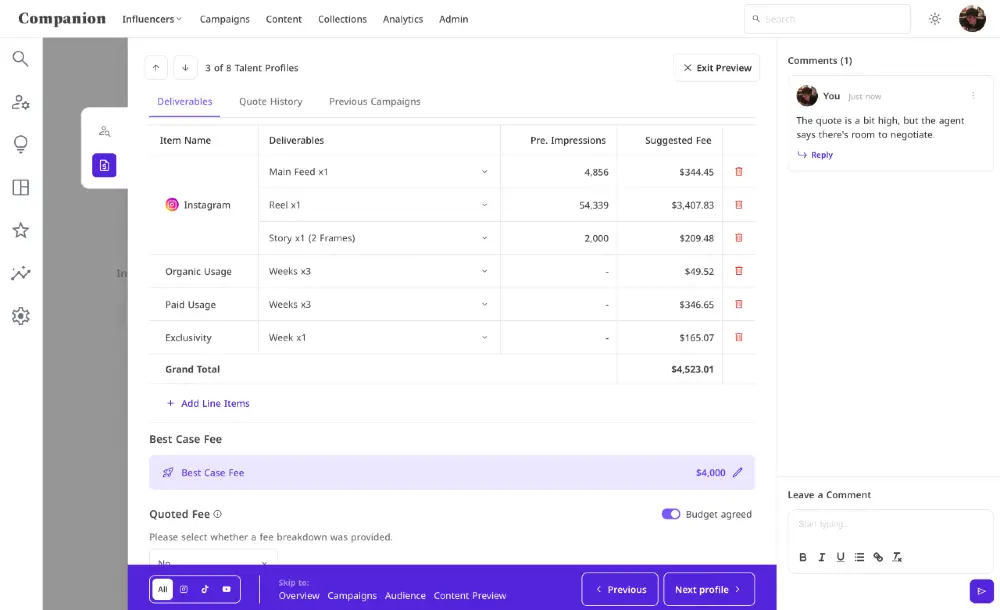
Two creators with the same audience size can carry very different commercial terms. Paid usage can let a brand run a creator’s work as advertising. Exclusivity can block that creator from working with competitors. A difficult production brief can demand more time, equipment or editing. A specialist niche can carry more value than raw reach suggests.
“Brands often expect two creators with identical follower counts to cost the same, but real commercial value is shaped by craft and terms, not reach.” Thomas said.
He pointed to paid usage, strict multi-category exclusivity, niche expertise and cultural relevance as variables that can move the suggested fee. Companion also factors predicted content performance into its model.
That changes what procurement teams need to compare. A creator quote is hard to judge in isolation when the deal includes different rights, territories or restrictions from the last campaign.
What changes when teams centralize
Historical data is often messy long before a company tries to centralize it. Thomas said the hardest material to clean up is non-standardized negotiation history, especially licensing rights or territorial limits buried in PDF attachments, email threads or local spreadsheets.
Currencies and inconsistent formats add another layer. The first useful change, in his view, is getting budget allocation across markets into one place so teams can compare active quotes with historical fee performance.
“When a brand transitions from static spreadsheets to Companion’s Budget Tracker, they immediately see the benefit of a centralized, single-dashboard view of active quotes and historical fee performance.” Thomas said.
He added that a shared view can expose cases where different departments are paying double or triple for the same talent. The exact scale of those savings will depend on a brand’s own deal history, but the operational lesson is broader: rate comparison only works when the underlying terms are captured consistently.
Local markets can break global benchmarks
Global rate cards can be a poor shortcut for local negotiations. Thomas said brands often take US or UK benchmarks and assume creator fees should fall in smaller markets.
“Global teams might assume local rates sit lower due to smaller population sizes, but local market dynamics create different outcomes.” Thomas said.
He cited high exclusivity demands, limited creator supply and tight talent-agency representation as factors that can push local rates higher. Companion’s Suggested Fee model uses territory-specific data rather than applying one benchmark everywhere.
For regional marketers, this means a global ceiling or floor can hide the conditions that actually set the price. The useful comparison is a local deal with similar rights, format, category and creator profile.
What marketers should ask before approving creator fees
Thomas’s answers point to a practical review checklist for creator deals:
- Can every team see the brand’s previous quotes and final fees for this creator?
- Are usage rights, exclusivity, territory and licensing terms recorded in the same format?
- Is the fee being compared with deals from the same market rather than a global average?
- Does the comparison account for production complexity, niche and predicted performance?
- Can procurement trace how the opening quote changed into the final agreed fee?
The same discipline can also protect creators. Thomas said emerging and highly specialized creators can underprice their work when they have little negotiation experience or no access to market benchmarks. A pricing model that accounts for performance and format complexity can move the conversation away from follower count alone.
For brands spending across multiple markets, the bigger lesson is simple: creator pricing becomes harder to govern as soon as deal history disappears into separate inboxes, spreadsheets and agencies. The benchmark is only as useful as the terms and local context behind it.