Sports sponsorship usually starts with visibility. A brand puts its name next to an athlete, borrows some of the attention around competition, and hopes the association transfers.
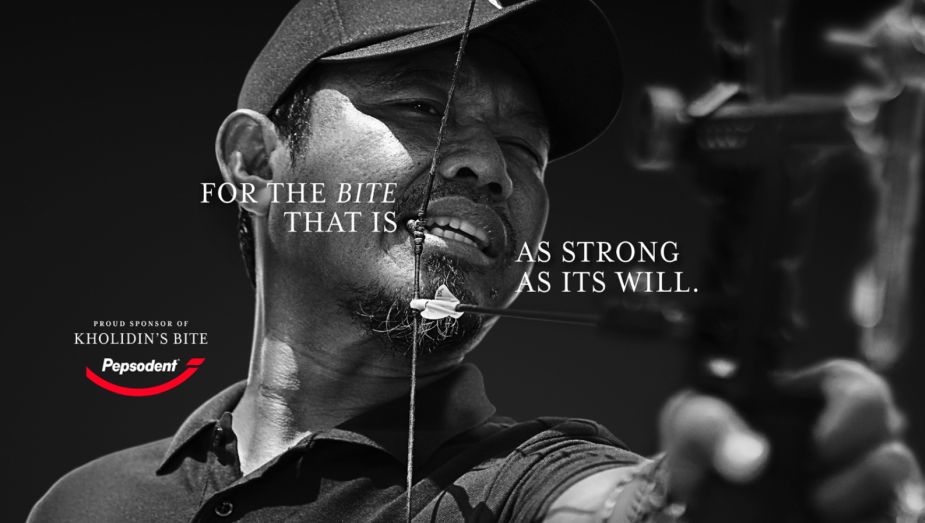
Pepsodent’s partnership with Indonesian para-archer Kholidin takes a more functional route. Its “Bite Into Glory” program is built around the fact that Kholidin uses his mouth and teeth to draw and release his bowstring, making oral health part of the technique he relies on to compete.
Table of contents
Jump to each section:
- Why Kholidin’s bite changes the sponsorship logic
- How Pepsodent moves from endorsement to performance support
- Why the adaptive technique is the campaign story
- What marketers should know about athlete-brand fit
Why Kholidin’s bite changes the sponsorship logic
Kholidin lost the use of one arm after an accident in 2017 and developed a mouth-draw technique that lets him pull and release the bowstring with his teeth. According to the campaign material, roughly 300 to 500 arrows can pass full draw tension through his bite during a day of shooting.
That makes the usual idea of “equipment” less obvious. A bow is still equipment, but so are the teeth and gums that make the adapted technique possible.
Pepsodent has built the partnership around that point. Instead of appearing only as a sponsor beside the athlete, the oral-care brand is providing professional periodontal support and an enhanced oral-care routine tailored to Kholidin as he prepares for the 2026 Para Games in Asia.
Madhurjya Banerjee, Unilever’s senior global brand director for oral care, described the difference simply: “we’re maintaining the equipment for performance.”
How Pepsodent moves from endorsement to performance support
The distinction matters because athlete partnerships often struggle with relevance. A famous athlete can generate reach for almost any category, but reach does not automatically explain why the product belongs in the athlete’s life.
Here, the category connection is unusually direct. Kholidin’s technique puts repeated physical demand on the part of the body Pepsodent is designed to help care for. The brand does not need to invent a metaphor between oral health and performance because the athlete’s routine already provides one.
That is also why the care component is more important than the endorsement label. Periodontal support and a tailored routine give the partnership a practical role before the documentary, social content, or campaign film enters the picture.
For marketers, this is a useful test of sponsorship fit. The strongest partnership is not necessarily the one with the biggest name. It can be the one where the brand can explain, in one sentence, what it contributes to the athlete’s actual performance or preparation.
Why the adaptive technique is the campaign story
“Bite Into Glory” also makes a careful creative choice: the adaptive technique is not hidden behind a generic inspirational narrative. It is the central mechanism of the campaign.
That changes the story from “brand supports para-athlete” to “brand supports the specific physical system this athlete uses to compete.” The difference is small in wording but large in strategy.
It gives Kholidin’s own method more agency. His mouth-draw technique is not treated as a limitation that the campaign needs to overcome. It is presented as a highly developed performance system with its own demands, maintenance and preparation.
The short documentary extends that idea by following his training and care ahead of Aichi-Nagoya. That gives Pepsodent a reason to stay close to the preparation process rather than appearing only at the finish line.
This is where athlete partnerships can become more credible. ContentGrip’s sports influencer marketing guide argues that brands should start with the role an athlete or creator can authentically play, rather than simply starting with a name. Pepsodent’s role is clear because the product category is tied to a real part of Kholidin’s competitive routine.
What marketers should know about athlete-brand fit
The broader lesson is that sponsorship relevance can be designed around utility, not only fame.
- Find the performance connection before the campaign line.“Bite Into Glory” works because the product-category link exists before the creative idea. The campaign names and dramatizes that connection instead of manufacturing it.
- Give the brand a job inside the partnership.Professional care and a tailored oral-health routine make Pepsodent an active participant. That gives the story more substance than a logo placement or one-off endorsement post.
- Let the athlete’s real technique drive the creative.The most distinctive detail here is already present in Kholidin’s sport. The campaign does not need a separate stunt because the mouth-draw technique gives it a naturally memorable visual and strategic hook.
- Treat adaptive performance as performance.The work is strongest when it focuses on preparation, repetition and competitive advantage. That keeps the athlete at the center of the sports story rather than reducing the partnership to an inspirational message.
For brands looking at sports sponsorship, Pepsodent’s move is a reminder that relevance can be more valuable than category convention. Oral care is not an obvious sports-marketing category, but Kholidin’s technique gives it a credible role. The partnership becomes memorable because the brand is supporting something the athlete genuinely uses to perform.