
There is a very specific kind of satisfaction in turning something everyday into something that feels like a treat for your hobby. That is the vibe McDonald’s Australia is tapping into with a reward that is less about fries and more about flexing in Azeroth.
McDonald’s Australia has added World of Warcraft rewards to its MyMacca’s app, letting members redeem points for 14 days of game time or in-game cosmetic items and a companion pet. The company outlined the details in an official partner rewards page.
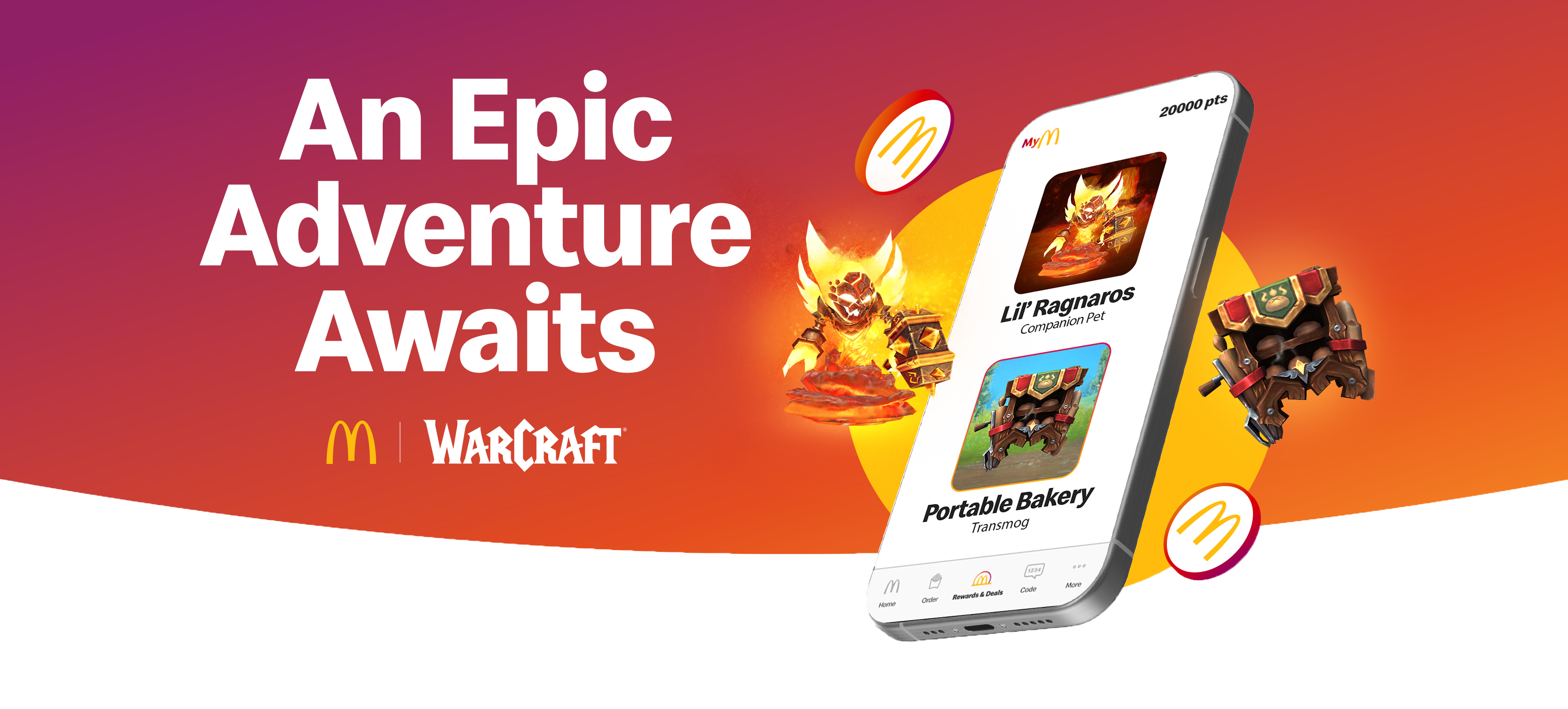
Table of contents
Jump to each section:
- What MyMacca’s members can redeem for World of Warcraft
- How the redemption works in the MyMacca’s app
- Why this collab fits modern loyalty behaviour
- What this means for marketers
What MyMacca’s members can redeem for World of Warcraft
For non-players: World of Warcraft is a long-running online PC game where players spend years building characters, collecting rare items, and showing off cosmetics that signal status or taste.
For players, the MyMacca’s reward list is straightforward:
- 14 Days of Game Time for World of Warcraft, delivered as a code that’s claimed via a Battle.net account
- In-game cosmetic rewards, described as a new cosmetic item to display on a character’s back
- A companion pet that follows your character in-game
McDonald’s Australia says each World of Warcraft reward can be unlocked for 2,000 MyMacca’s points each, with one redemption per MyMacca’s account, and availability is while stocks last.
How the redemption works in the MyMacca’s app
The flow is designed to keep the friction low for fans who already live inside apps and codes:
- Open the MyMacca’s app and go to Rewards & Deals
- Scroll to Partner Rewards
- Choose the World of Warcraft reward and redeem it using points
- Copy the unique code
- Log into (or create) a Battle.net account
- Go to account settings and Redeem Code
- Enter the code to claim the reward
The redemption window matters for anyone who tends to “save it for later.” McDonald’s Australia notes the codes are available to redeem in MyMacca’s until 22 January 2027, and must be claimed on Battle.net by 31 January 2027.
Why this collab fits modern loyalty behaviour
This works because it treats loyalty points like a flexible currency, not a coupon book. A burger brand is not trying to become a gaming brand here. It is offering fans a small, legible upgrade to something they already care about: time in-game and items that personalise a character.
It also matches how a lot of fandom-adjacent spending happens now. People do not only buy “more product.” They buy:
- access (game time)
- identity signals (cosmetics)
- small companion moments (pets)
That is the emotional hook: points you earned from routine purchases can turn into something that feels personal inside a hobby world.
What this means for marketers
Loyalty partnerships like this are less about “awareness” and more about translating points into something people actually want to show off or use.
- Reward value is clearer when it maps to an existing habit
“14 days of game time” is a clean mental model. Fans immediately understand what they are getting, and when they will use it. - Digital goods can make loyalty feel more personal
In-game cosmetics and pets do not compete with everyday essentials. They feel like a treat that expresses identity, which is often what loyalty programs struggle to deliver. - Scarcity and deadlines change redemption behaviour
“While stocks last” plus a defined claim window gives members a reason to act now, not “someday.” That can shift points from sitting idle to being redeemed. - Apps become the bridge between offline purchases and online identity
The MyMacca’s app is doing more than listing deals. It is acting like a passport that lets customers carry value from a physical routine into a digital world.
The bigger signal is that loyalty is drifting away from purely brand-owned perks and toward partner ecosystems that feel culturally relevant to specific communities. When the reward connects to an identity people already invest in, points stop feeling like a spreadsheet and start feeling like access.
That does not require every brand to chase gaming. It requires brands to get more honest about what their customers actually do for fun, where they spend time, and what “a small win” looks like in those worlds.
This article is created by humans with AI assistance, powered by ContentGrow. Ready to automate your content marketing?