
A cup of kopi, a slice of toast and a conversation can turn a quick stop at a Malaysian kopitiam into a small daily ritual. That is the kind of break KITKAT is trying to join. Rather than asking people to eat a wafer bar after their coffee, the chocolate brand is appearing inside familiar drinks and snacks. At Hock Kee Kopitiam, that idea now has an actual menu. The chain began serving six “Made With” KITKAT creations on November 19, 2026, in a partnership with Nestle Professional. There are four beverages and two sweet bites, with flavors built around kopi, matcha and toast, as the November 20 launch coverage details. The pairing is less about bringing a new sweet into the market than about putting an already familiar chocolate flavor into an everyday Malaysian setting.
Table of contents
Jump to each section:
- Why a kopitiam break means more than coffee
- Six new menu items put chocolate beside kopi and toast
- How the launch turns a snack slogan into a local ritual
- The wider flavor of Malaysian coffeehouse tie-ins
- What marketers should know about culture-led collaborations
Why a kopitiam break means more than coffee
A kopitiam is a coffeehouse, but calling it only a place to buy coffee misses much of its appeal. Its menu can move from a morning drink to a full meal, with the same table serving office workers, relatives or friends at different times. For a food brand, that makes the setting interesting precisely because the visit usually starts with an existing habit rather than a search for a promotional product. Hock Kee presents itself as a modern home for Nanyang coffeehouse traditions. The brand describes its heritage and sense of community through the idea of people from different backgrounds eating and talking together. That identity provides the local texture for the KITKAT collaboration. A chocolate wafer has a different relationship to daily life than a cup of kopitiam coffee, yet the two share the same simple proposition: a short, enjoyable pause. There is a difference between putting a logo beside a menu item and finding a place where the product feels natural. The former may catch the eye once. The latter might give a diner a reason to order something new without giving up the surroundings and flavors they came for in the first place. That is the cultural opening here. Hock Kee does not need to reinvent its coffeehouse to make room for KITKAT. The collaboration instead treats established drinks and snacks as the point of entry.
Six new menu items put chocolate beside kopi and toast
The new menu offers six creations across drinks and sweets. The four beverages are Cocoa Crunch Latte, Matcha Cocoa Bliss, Hor Ka Sai Special and Sai Ka Hor Special. The two food items are Cocoa Delight Croissant and Cocoa Crumble Toast. The names show the range of the experiment, from café-style chocolate drinks to local coffeehouse references and familiar baked goods.
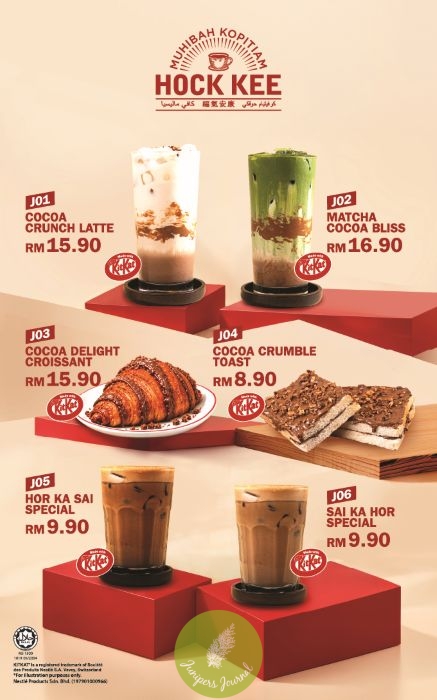
The Hor Ka Sai Special is particularly rooted in local coffee culture. Hor ka sai is a Malaysian-style coffee-and-chocolate-malt drink with a name that already belongs to kopitiam vocabulary. Bringing KITKAT chocolate into that pairing makes the brand part of an existing flavor idea rather than an unfamiliar imported dessert concept. The Matcha Cocoa Bliss, by contrast, makes a more contemporary combination of green tea and chocolate. For people who favor something to eat rather than a drink, Cocoa Crumble Toast brings chocolate into the bread-and-coffee ritual. The croissant provides a different, pastry-led format. The common ingredient is KITKAT’s chocolate and wafer character, but the occasions are not identical. The menu was unveiled at Makan-Makan by Hock Kee in Bangsar South, Kuala Lumpur, with representatives from both companies and a preparation demonstration. Launch reporting from The Rakyat Post confirms availability across Hock Kee outlets from November 19. Publicly verified prices and a fixed end date for the menu were not disclosed in the source material reviewed, so shoppers should check locally rather than assume a permanent offering. This is an accessible way to give a collaboration several entry points. Someone curious about matcha can try one drink; a coffee regular can take the Hor Ka Sai route; another guest can share a pastry. The partnership presents a range of choices rather than insisting on one signature item for everyone.
How the launch turns a snack slogan into a local ritual
“Have a break” is unusually easy for a food brand to repeat, but that familiarity is also a creative challenge. Repeating a well-known line does not automatically make a new menu feel like it belongs. The collaboration has to translate the idea of a break into a setting where people already know how they like to take one. At a kopitiam, the break might be the pause between errands, a shared table at lunchtime or a coffee ordered with something sweet. In this case, the product does not interrupt that experience. It changes what can be ordered within it. Nestle Professional supplies the flavor and wafer texture; Hock Kee supplies the everyday place and the local recipe language. The partners also framed the menu as an exercise in keeping recognizable tastes intact. Hock Kee founder Nick Ng linked it to familiar Malaysian flavors, while Yit Woon Lai, Nestle Professional’s business executive officer for Malaysia and Singapore, explained the choice of local partner in the release-based launch report. As Lai put it, Hock Kee “stays true to Malaysian kopitiam flavours while remaining open to new ideas.” That comment matters because a recognizable product can dominate a collaboration if the other partner is reduced to a distribution point. Here, there is an attempt to give both sides a distinct role. The KITKAT flavor is visible, but the coffeehouse vocabulary helps tell diners why it is there. The event itself offered a practical demonstration of the food and drink preparation, not simply a logo reveal. That helps people picture the menu as something a barista or kitchen team makes, and something a diner can order, rather than an image meant only to circulate on social media.
The wider flavor of Malaysian coffeehouse tie-ins
Malaysia’s coffeehouse and dessert brands have been experimenting with combinations that sound surprising on paper but draw on ingredients people already know. Inside Scoop previously brought Oriental Kopi’s white coffee into desserts. Another pairing saw Niko Neko Matcha work with Oriental Kopi on kaya and matcha. Those examples are not identical to the Hock Kee partnership. They help illustrate why local coffee, tea and spread flavors have become useful starting points for cross-brand food creations. The guest brand does not have to explain the entire product from scratch because part of its flavor story is already familiar. KITKAT’s approach adds a recognizable confectionery brand to that mix. It is not just borrowing the design of a kopi cup for an ad. It asks diners to taste the collaboration in the drink itself, which makes the concept tangible. The chocolate’s established identity gives the collaboration a hook, while Hock Kee’s menu and setting give it an occasion. There is another useful comparison within KITKAT’s own marketing. The brand has attached its idea of a break to different consumer habits around Asia, from character merchandise to snack-time rituals. The Hock Kee tie-in makes that same proposition edible in a new way: instead of a collectible inspired by a break, the break becomes a café order. That difference is the important part of the comparison, not a claim that either tactic sells better. The evidence so far supports a creative observation, not a performance verdict. No verified order volumes, sales lift or social engagement results for this particular menu were available in the sources reviewed. Its commercial impact remains an open question.
What marketers should know about culture-led collaborations
The interesting part of KITKAT’s new Hock Kee menu is not that chocolate can be mixed into coffee. It is that the two brands are working with a familiar Malaysian ritual rather than asking people to learn an entirely new one.
- Start with the way people already spend time. A kopitiam is a place for pauses, conversations and routine orders. Because that behavior already exists, the collaboration can focus on changing one small choice on the menu instead of trying to create an occasion from nothing.
- Let the local partner keep its identity. The names Hor Ka Sai and Sai Ka Hor carry local coffeehouse associations. Retaining those connections makes the KITKAT flavor feel like an addition to the menu, not a replacement for the host brand’s character.
- Give people more than one reason to try the idea. Four drinks and two sweet items mean the partnership can appeal to different tastes and times of day. Variety alone is not proof of success, but it offers more paths from curiosity to a purchase.
- Use the physical product to tell the story. The chocolate and wafer textures show up in things people can actually eat or drink. That makes the message easier to understand than a collaboration that exists only as packaging or an announcement.
The wider lesson is about scale and specificity. A global confectionery brand has a well-known promise, but a Malaysian kopitiam has local habits, language and flavors that cannot be reduced to the same slogan in every market. Letting those two things coexist is what makes the new menu worth examining. There is also a limit to what a fresh launch can tell us. Coverage establishes the menu, partners, location and product concept. It does not yet establish whether customers will return for the drinks after the novelty fades. That distinction matters for anyone evaluating the difference between a clever menu reveal and a lasting product. For a brand hoping to show up naturally in culture, the opportunity may be less about claiming ownership of the ritual and more about joining it carefully. The customer still comes for a coffee break. KITKAT simply gives that break another flavor.
