
A song can begin in a place that never appears in its music video. For singer-songwriter Niko Rubio, that can mean recording a melody on her phone while getting ready in the shower. Personal care brand method is turning that private creative habit into the premise of a new music partnership.
In its November 25 announcement, method said it has teamed up with COLORSxSTUDIOS, the music discovery platform known for pared-back performances, to produce two films with Rubio. One follows her preparation before a show, while the other puts her in front of the microphone.
The format speaks to a familiar pleasure of discovering a musician online: hearing a song and then learning how the person behind it makes music. By putting that relationship at the center of the campaign, the partners are giving viewers something more than a product cameo.
Table of contents
Jump to each section:
- Two films connect the bathroom and the stage
- Why an emerging artist makes sense for COLORS
- The shower becomes part of a wider creative identity
- What brand teams can learn from the method partnership
Two films connect the bathroom and the stage
The first installment, Me, Myself and I, is scheduled for November 28. It follows Rubio as she gets ready to perform in New York, with the shower presented as a place to warm up her voice and find ideas. The second, due November 29, moves into the Brooklyn COLORS studio for a rendition of her single “tokyo.”
The pair will distribute both videos through its channels on YouTube, TikTok and Instagram. The release separates preparation from performance instead of squeezing both into a single advertisement. Someone discovering Rubio through the performance can also encounter a less public part of her creative process.
The body wash featured is method Simply Nourish, which the company describes as a coconut, rice milk and shea butter formula. Rubio connects the coconut scent with memories of California. In the announcement, she describes the practical way she captures ideas: “Most of my songs start as voice memos.” The product has a place in that story without being made responsible for the finished song.
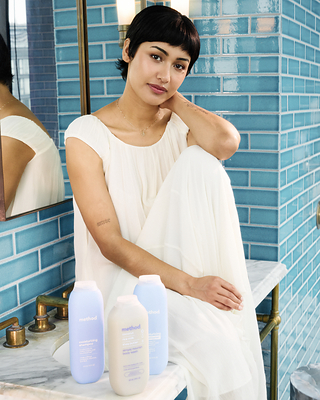
Image: method products, via PR Newswire.
Why an emerging artist makes sense for COLORS
Rubio is a Mexican-Salvadoran-American singer-songwriter raised in Southern California. Her debut album, late night swim, arrived on October 30 through Atlantic Records, with “tokyo” among its singles, as BroadwayWorld’s album coverage confirms.
More than 1.4 million monthly Spotify listeners and 48.5 million cumulative global streams were reported for Rubio by method in its November announcement. These describe the artist’s existing audience, not the performance of the new campaign.
For listeners who encounter artists before they become household names, a performance platform can offer a sense of discovery that a celebrity-led commercial rarely provides. COLORS has made its understated presentation part of that experience. The singer and song are the main attractions, rather than an elaborate narrative around them.
The collaboration is also arriving just ahead of Rubio’s scheduled California tour, which begins in San Francisco on December 4. That timing gives the music a reason to be in circulation independently of the body wash.
COLORS opened its permanent Brooklyn space in July 2026 with public music programming supported by partners including Levi’s, as Hypebeast reported. The method project gives that studio another way to support artists while making brand-funded work available to audiences beyond the physical venue.
The shower becomes part of a wider creative identity
The link between a bathroom and a recording studio might sound unusual for a personal care company. But the collaboration follows earlier method projects built around the idea that everyday objects and spaces can express taste.
This summer, method collaborated with seven Latinx artists on a limited-edition collection of body wash bottles. Dieline documented how individual designs were fitted into the brand’s recognizable packaging rather than replacing its shape. The brand also backed Bad Bunny’s Puerto Rico residency and has worked around Coachella.
There is a meaningful difference between those projects and the Rubio films. The bottle collection lets customers bring an artist’s work into their homes. The performance collaboration invites viewers to see what an artist does before making that work public. Both connect the product category to creative identity, but through different formats.
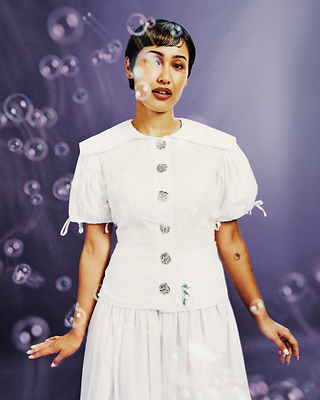
Image: method products, via PR Newswire.
That distinction also explains why the format needs restraint. An audience coming to COLORS for a song may not want a lengthy product demonstration. Giving the product its own narrative space in the preparatory film allows the performance to remain recognizable as a music video. Whether audiences actually respond that way is still unknown; the films have not premiered as of November 26.
What brand teams can learn from the method partnership
The interesting part of this collaboration is the connection between the artist’s ordinary routine and the experience her listeners seek out. Marketers can apply that distinction without assuming every brand needs to commission a music film.
- Build around a real creative habit. Rubio’s account of recording melodies in voice memos gives the brand a specific behavior to build on. An artist’s genuine use context can make the product feel less incidental than a contractual endorsement.
- Give the entertainment a reason to stand alone. Fans may arrive for a performance rather than for a personal care brand. Protect the qualities that attracted them to the platform in the first place, and reserve overt product storytelling for the format that can accommodate it.
- Match the timing to the artist’s work. An album release and approaching tour create a context for discovering a musician that exists independently of the advertising. Partners should consider the talent’s own release calendar, rather than treating it as secondary to a retail deadline.
- Measure each film by its role. Completion and repeat listening might tell a different story from product-page visits or purchase intent. The two pieces deserve separate objectives, with brand lift or sales measures used only if the necessary data exists.
There is no reported campaign reach, sales lift or evidence of fan response yet. Rubio’s existing listener numbers indicate a starting audience, but they do not tell method whether viewers will associate the performance with its body wash or return to buy it.
For a personal care brand, the longer-term opportunity is to make creative expression feel like a natural part of its identity, rather than a theme that disappears when a particular artist’s contract ends. For COLORS, the corresponding test is whether commercial partnerships can support a musician’s work while preserving the reasons listeners come to the platform.
That balance matters more than simply adding a recognizable face to a bottle. The films will offer an early look at how well method can connect a small, private ritual with a public act of creativity.
