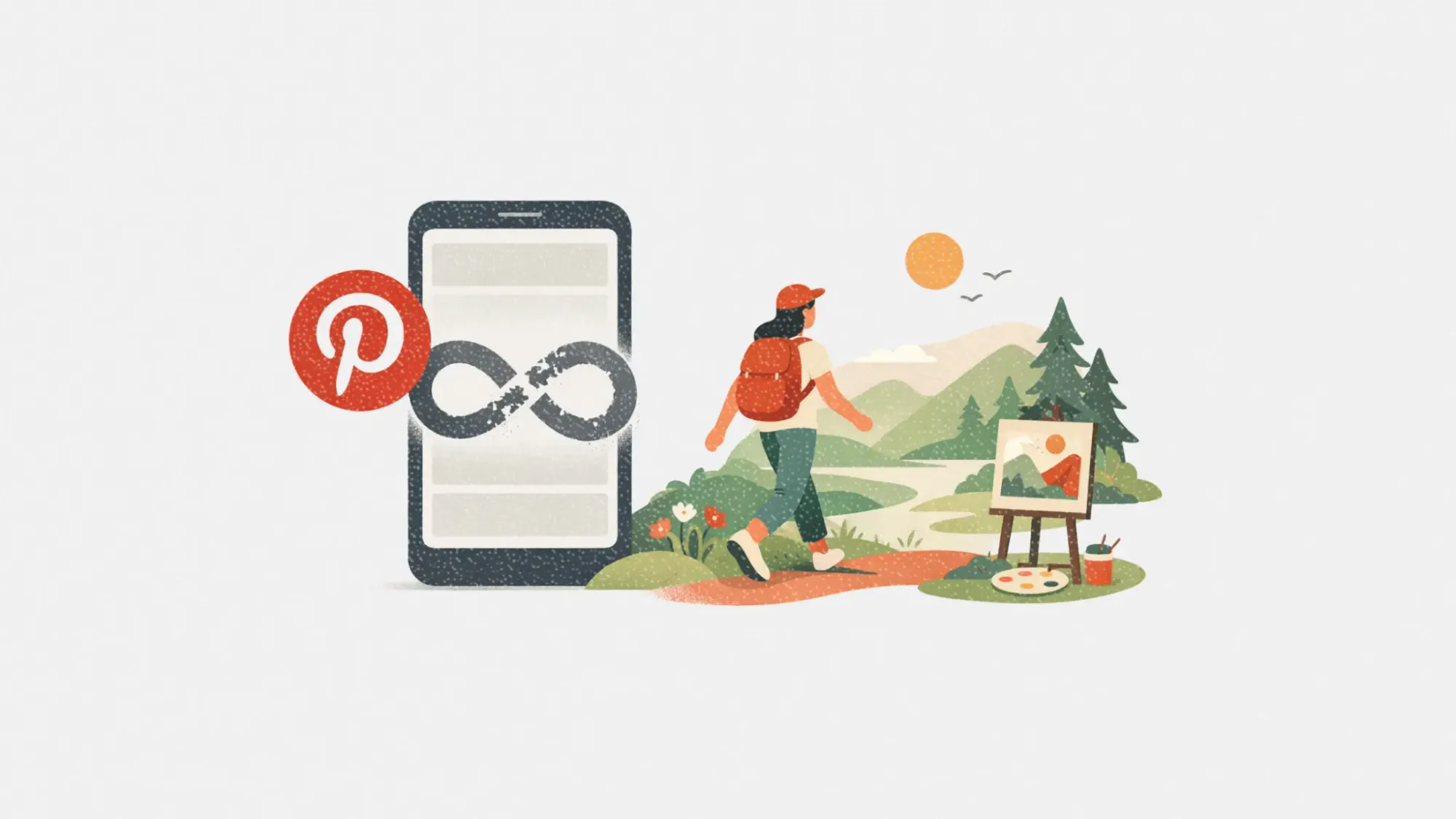
Pinterest is making a pointed statement about the state of social media and where it believes the internet should be heading next. In a landscape dominated by engagement loops and endless scrolling, the platform is repositioning itself not as another feed to consume, but as a tool to step away from screens entirely.
https://youtu.be/qr8bNBuptpU?si=aVBJO6HHgP5D_Bfn
This article explores Pinterest’s latest anti-doomscrolling campaign, what it signals about shifting platform strategies, and how marketers should interpret this growing push toward healthier digital behavior.
Short on time?
Here’s a table of contents for quick access:
- What is Pinterest’s new anti-doomscrolling campaign
- Why Pinterest is pushing offline behavior now
- How the campaign compares to broader anti-screen marketing trends
- What marketers should know about anti-doomscrolling positioning
 Patrecia Meliana
What is Pinterest’s new anti-doomscrolling campaign
Pinterest has launched a new brand campaign built around a simple but provocative idea: the best thing you can find online is a reason to go offline.
At the center of the campaign is a 60-second film titled “How did they do it?”, produced in-house by Pinterest’s House of Creative. The video stitches together old home movies and family photos sourced from employees, deliberately evoking a pre-social media era defined by spontaneity and real-world experiences.
The campaign will expand with a 30-second version and additional assets rolling out across TV, cinema, out-of-home, and digital channels starting May 1.
Pinterest’s Chief Marketing Officer Claudine Cheever framed the positioning clearly: while most platforms are designed to keep users scrolling, Pinterest aims to inspire action beyond the app. The message is less about competing for screen time and more about redefining its purpose within it.
Patrecia Meliana
Why Pinterest is pushing offline behavior now
The timing is not accidental. Social media platforms are facing growing scrutiny, particularly around teen mental health and screen addiction.
Pinterest cites research showing that nearly half of US teens feel they spend too much time on social media, with many believing it negatively impacts their peers. This aligns with broader regulatory and cultural pressure, including calls from Pinterest CEO Bill Ready to ban social media use for children under 16.
Beyond messaging, Pinterest is reinforcing this stance through experiential marketing. At Coachella, the brand introduced what it described as the first phone-free activation, encouraging attendees to disconnect from their devices and engage in real-world moments.
This reflects a strategic pivot. Instead of competing on addictive engagement metrics, Pinterest is leaning into a counter-position: utility over consumption, inspiration over distraction.
How the campaign compares to broader anti-screen marketing trends
Pinterest is not alone in tapping into anti-screen sentiment. Brands and even governments are increasingly addressing digital fatigue and attention overload.
Singapore’s Ministry of Digital Development and Information recently launched a Hari Raya campaign highlighting the importance of being present with family, showing the consequences of smartphone distraction during meaningful moments.
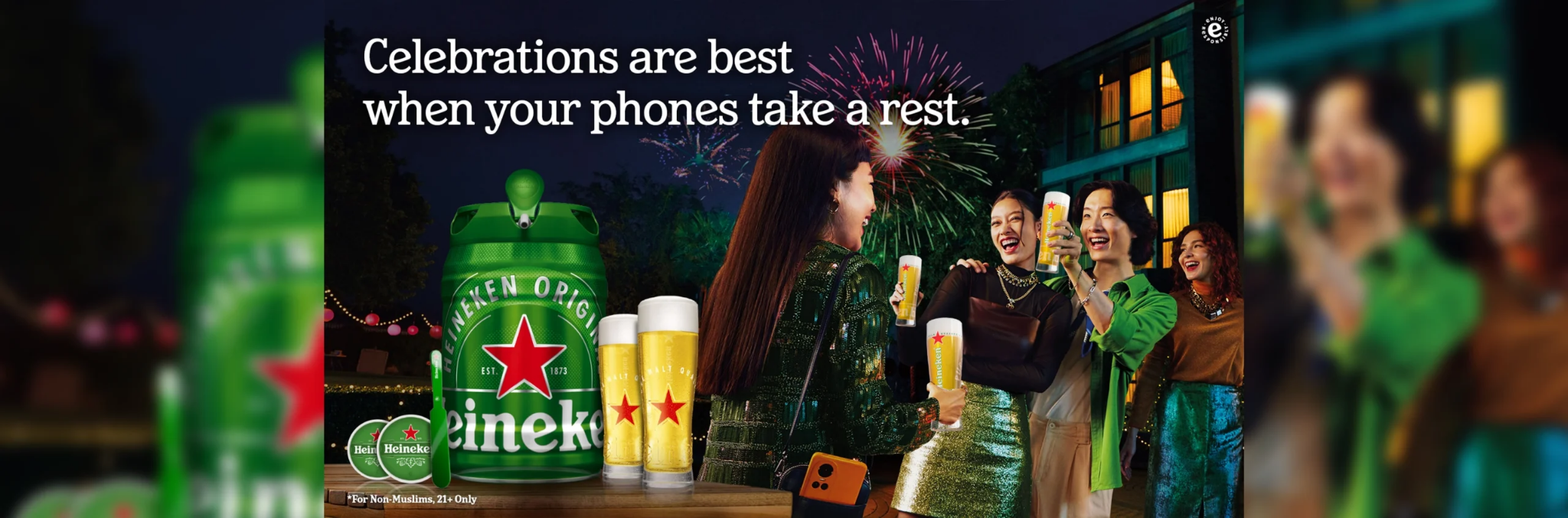
Similarly, Heineken’s “Phones off, tap on” campaign in Malaysia encouraged consumers to put away their devices during social gatherings and focus on real-world connections.
What sets Pinterest apart is that this message directly challenges the core business model of most social platforms. While other campaigns treat screen fatigue as a seasonal or cultural theme, Pinterest is embedding it into its brand identity and long-term positioning.
What marketers should know about anti-doomscrolling positioning
For marketers, Pinterest’s move signals a subtle but important shift in how digital platforms may differentiate themselves going forward.
Here are a few practical takeaways:
1. Engagement is being redefined
Traditional metrics like time spent and session length may face increasing scrutiny. Platforms that prioritize outcomes or real-world actions could gain credibility.
2. Brand safety now includes mental wellbeing
Advertisers are becoming more sensitive to the environments their ads appear in. Platforms that position themselves as “healthier” alternatives may attract premium brand budgets.
3. Experience-led marketing is gaining traction
Pinterest’s Coachella activation shows how offline experiences can reinforce digital positioning. Expect more hybrid strategies that bridge online inspiration with offline action.
4. Narrative matters more than features
Pinterest is not launching a new tool. It is reframing its value proposition. This highlights the growing importance of brand storytelling in platform differentiation.
5. Counter-positioning can be powerful
Instead of competing directly with TikTok or Instagram on engagement, Pinterest is creating a distinct category. This is a strategic move marketers can replicate when entering crowded markets.
Pinterest’s latest campaign is more than a creative statement. It is a strategic repositioning that challenges the dominant logic of social media.
As concerns about screen time and digital wellbeing continue to grow, platforms that offer a different kind of value may stand out. For marketers, the key takeaway is clear: attention is no longer just about capturing it. It is about using it responsibly and, increasingly, knowing when to give it back.