Search engines are no longer scanning pages for keyword density. They are evaluating whether your website genuinely understands a subject. That shift has made topic clusters one of the most important structural decisions a content team can make.
This guide walks through exactly how to build one, from choosing your core topic to publishing supporting content that strengthens the whole.
Table of contents
Jump to each section:
- What is a topic cluster?
- Why topic clusters matter right now
- Step 1: Choose your core topic
- Step 2: Map your cluster pages
- Step 3: Build the pillar page first
- Step 4: Write and publish cluster pages
- Step 5: Audit for orphan pages
- Step 6: Promote the cluster, not just individual posts
- Common mistakes to avoid
- The payoff is long-term
What is a topic cluster?
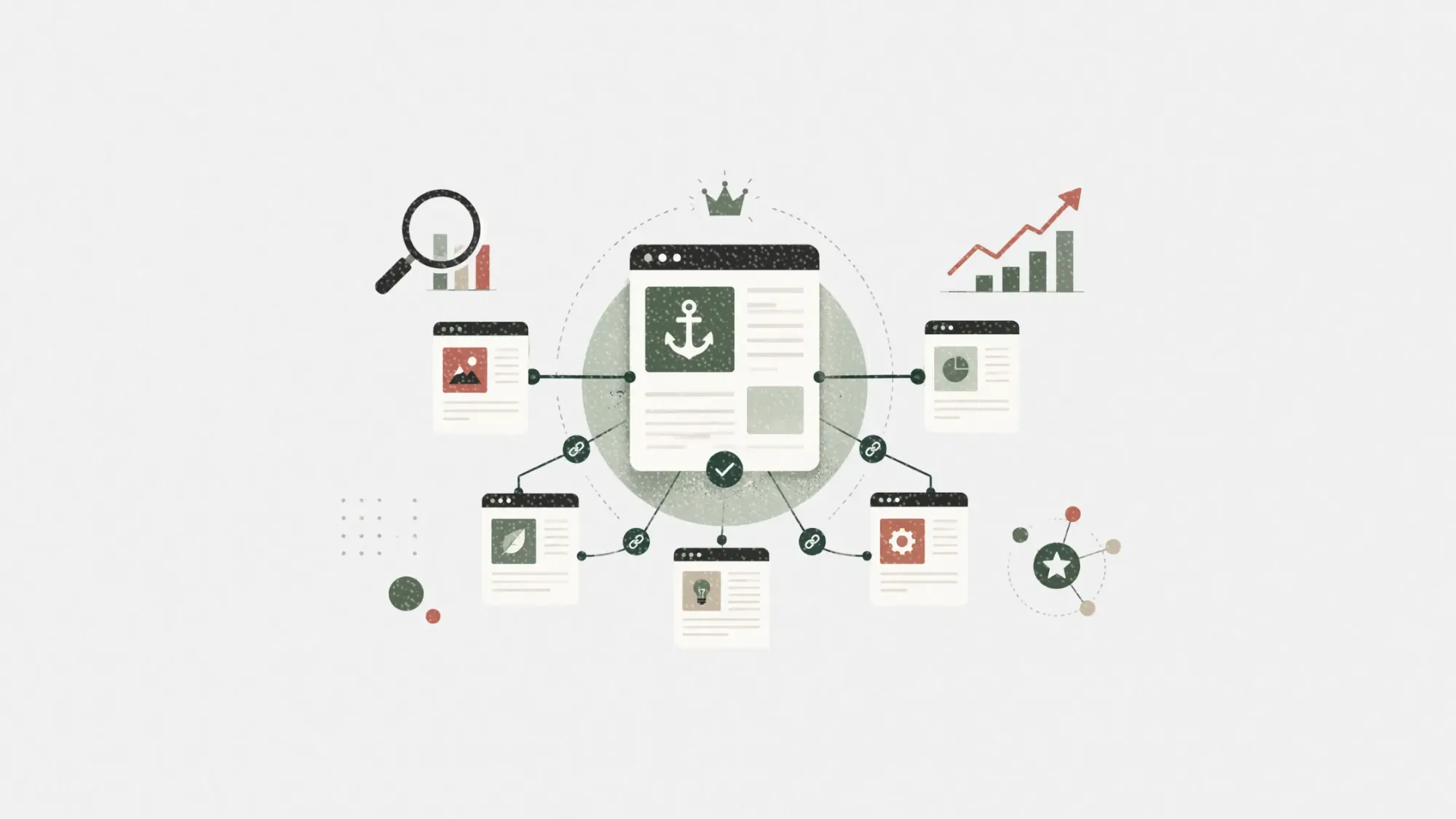
A topic cluster is a group of interlinked pages organized around a single broad subject. At the center sits a pillar page, a comprehensive resource that covers the topic at a high level. Around it are cluster pages, each diving into a specific subtopic in greater depth. Every cluster page links back to the pillar, and the pillar links out to each cluster page.
The structure serves two purposes. It helps users navigate a subject without leaving your site. And it signals to search engines that your domain has genuine depth on that subject, not just a handful of disconnected articles.
Why topic clusters matter right now
The data here is hard to argue with.
According to HireGrowth’s 2025 analysis, content organized into topic clusters drives approximately 30% more organic traffic and holds rankings 2.5 times longer than standalone pieces. The compounding effect is real: once a cluster earns authority, it becomes harder to displace.
Internal linking, the connective tissue of a cluster, carries its own weight. A study by Authority Hacker across more than one million websites found that proper internal linking can boost rankings by up to 40%. And research from JetOctopus in 2024 showed that optimized internal linking structures improved site crawl rates from 40% to 70%, meaning more of your content actually gets indexed and ranked.
Topic authority also matters for AI-generated results. When your cluster pages reinforce each other with consistent internal citations, AI systems like Google AI Overviews and ChatGPT are more likely to reference your content.
Step 1: Choose your core topic
Start broad, but not too broad. Your pillar topic should be something your target audience actively searches for and something your brand can genuinely speak to with authority.
Good pillar candidates tend to be:
- High search volume with multiple subtopics branching off it
- Aligned with a product, service, or audience problem you solve
- Broad enough to support 8 to 15 supporting cluster articles
For a B2B SaaS brand, a pillar like “email marketing automation” works. “Marketing” does not. “Email marketing automation for e-commerce” is a cluster page, not a pillar.
Run your candidate topic through a keyword tool. If the seed term generates dozens of related questions, long-tail variations, and “how to” queries, you have a viable pillar.
Step 2: Map your cluster pages
Before writing a single word, map the structure. List every subtopic your audience would logically want to explore after landing on your pillar page.
A practical way to do this:
- Type your core topic into Google and review the “People also ask” section
- Look at what your top-ranking competitors cover across their entire blog
- Run a keyword gap analysis to find subtopics you are missing
- Group similar queries together so you do not end up with five articles competing for the same intent
Aim for 8 to 12 cluster pages per pillar to start. Each cluster page should target a distinct intent, whether that is definitional, comparison, how-to, tool roundup, or case study.
Example for a pillar on “content marketing strategy”:
- What is a content audit and how to run one
- How to build an editorial calendar for a small team
- B2B content distribution channels ranked by ROI
- How to measure content marketing performance
- Content marketing tools for lean teams
- How to repurpose long-form content across channels
Each of these is a standalone article with its own search intent, but every one of them links back to the pillar.
Step 3: Build the pillar page first
The pillar page is not a blog post. It is closer to a resource hub.
It should cover the full breadth of the topic without exhausting every detail. Think of it as the table of contents for your cluster. Each section on the pillar gives an overview and then links to the deeper cluster page for readers who want more.
A well-structured pillar page typically includes:
- A clear definition of the topic
- Why it matters, backed by data
- A high-level breakdown of every major subtopic in the cluster
- Internal links to each cluster page as they are published
- A call to action aligned with your conversion goal
Aim for at least 2,000 words on the pillar. It needs enough substance to rank for the core term while remaining easy to navigate.
Step 4: Write and publish cluster pages
Each cluster page is a full article targeting a specific subtopic. The quality bar here is the same as anywhere else on your site: original insight, data where available, and a clear answer to the reader’s question.
A few structural rules to follow:
- Link back to the pillar every time
Every cluster page should include at least one contextual link back to the pillar using descriptive anchor text, not “click here” or “learn more.” Anchor text that describes the destination page’s topic passes more signal to search engines.
- Link sideways where relevant
If two cluster pages cover related subtopics, link between them. This creates a tighter semantic web and helps both pages gain authority from each other.
- Do not create duplicate intent
If two cluster pages are targeting the same underlying question, consolidate them. Keyword cannibalization fragments your ranking potential and confuses search engines about which page deserves priority.
- Update the pillar as you publish
Each time a new cluster page goes live, add a link to it from the relevant section of the pillar page. The cluster should grow as a connected unit, not as isolated posts.
Step 5: Audit for orphan pages
An orphan page is any page on your site with no internal links pointing to it. Search engines may never find it, or if they do, they have no context for where it fits in your content architecture.
Run a site crawl using a tool like Screaming Frog, Ahrefs, or Semrush. Look for:
- Blog posts that receive zero internal links
- Cluster pages that link to the pillar but receive no links from the pillar
- Old content that covers a subtopic relevant to a current cluster but was never connected to it
Retrofitting older content into your cluster structure is often faster than publishing new articles, and it can deliver ranking improvements quickly. Moz data from 2025 found that websites implementing topic clusters saw an average internal PageRank increase of 34% for cluster pages within 60 days of implementation.
Step 6: Promote the cluster, not just individual posts
Most content teams promote articles one at a time. A cluster rewards a different approach.
When you publish a new cluster page, revisit the pillar and update it. Share the pillar page repeatedly as the cluster grows, since its value increases each time a new supporting article goes live. Use newsletter segments, LinkedIn posts, and internal tools like Slack to circulate the full cluster, not just the newest piece.
The best pillar pages become evergreen assets that rank, convert, and compound. But they only get there if the team treats them as ongoing projects rather than one-time publications.
Common mistakes to avoid
- Starting with too many pillars
Most teams try to build five clusters simultaneously and end up with five incomplete ones. Pick one pillar, finish the cluster, then move to the next.
- Writing cluster pages before the pillar exists
The pillar is the anchor. Without it, cluster pages have nowhere to point back to and no framework to signal their relationship to each other.
- Ignoring search intent
A cluster page that does not match what a searcher actually wants when they type that query will not rank, regardless of how well it is connected to the pillar. Check the SERP before assigning a topic to a cluster page.
- Treating internal links as an afterthought
Links added in the last paragraph of an article carry less weight than contextual links woven into the body of the content. Internal linking should be part of the writing process, not a post-publication checklist item.
The payoff Is long-term
Topic clusters are not a quick win. The full ranking benefit builds over months as each cluster page earns its own authority and passes it upward to the pillar.
But the compounding nature of this approach is exactly what makes it worth building. A well-constructed cluster reduces your dependence on paid acquisition, shortens the time new content takes to rank, and creates a content foundation that is genuinely hard for competitors to replicate quickly.
If your content strategy is still organized around individual blog posts targeting individual keywords, a topic cluster is the single structural change most likely to change your SEO trajectory.
Pick your first pillar topic. Map the cluster. Build the pillar page. Publish one cluster article at a time.