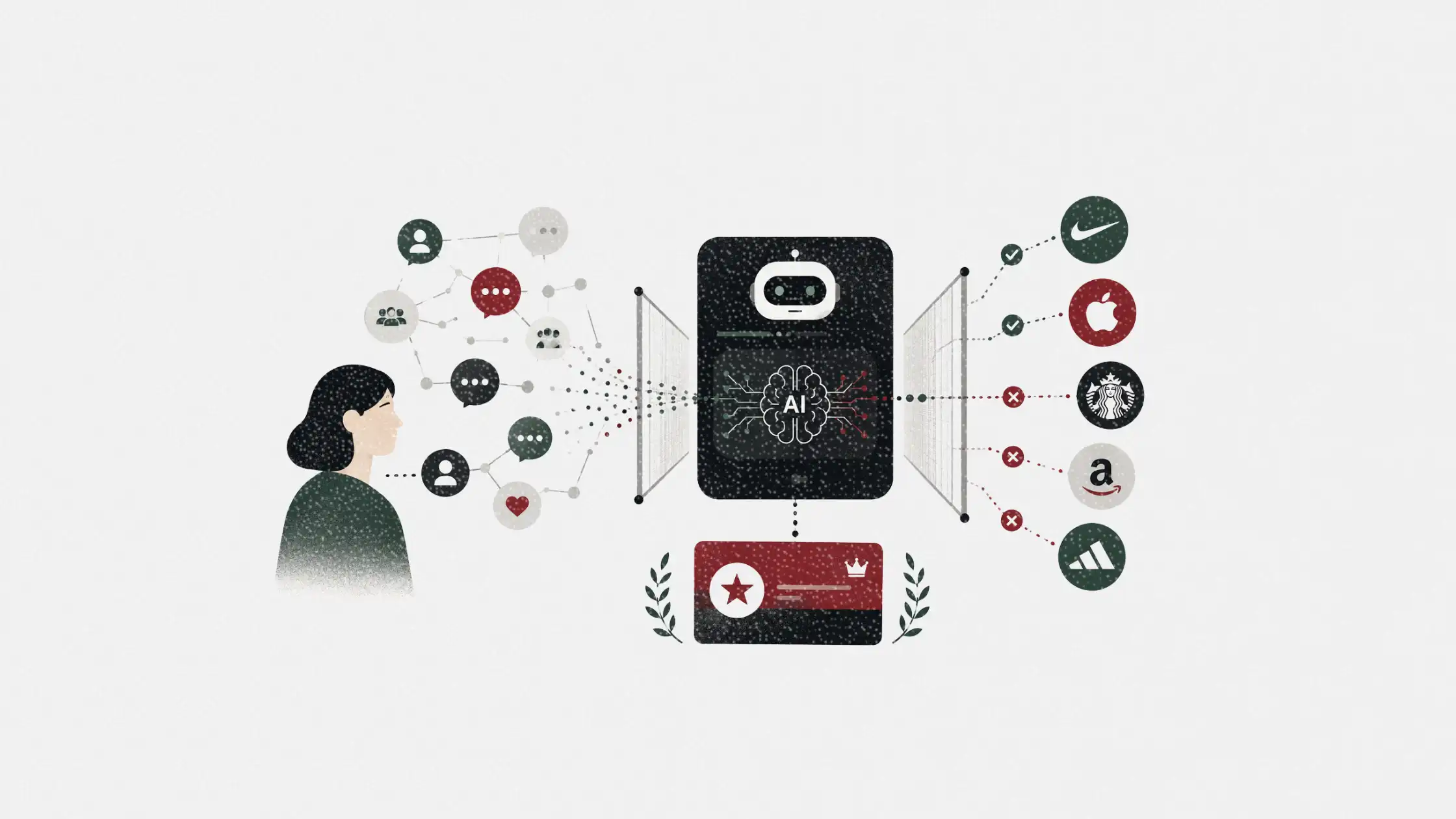
Consumers are increasingly letting AI systems act as a gatekeeper between them and brands, changing how loyalty is formed and how preference is expressed. That shift matters because loyalty is no longer only shaped by direct brand experiences, but also by what consumers tell assistants to prioritize.
Gale’s research suggests this is moving from experimentation to behavior: 56% of surveyed consumers said they are comfortable delegating all brand communications to AI, and nearly one-third have already instructed an assistant to prioritize certain brands. Gale surveyed 3,000 consumers in the US and UK.
Table of contents
Jump to each section:
- What “AI-set preferences” change about loyalty
- Why frictionless experiences become the loyalty baseline
- First-party data and community signals as inputs to AI
- What marketers should review in loyalty strategy and budgets
What “AI-set preferences” change about loyalty
If consumers instruct an assistant to prioritize a shortlist of brands, loyalty becomes partly an interface and data problem. The practical question shifts from “How do we win repeat purchases?” to “How do we stay in the set of brands an AI is allowed to consider?”
Gale’s report frames this as a “preference economy,” where consumers architect their commercial experiences through reliance on AI. Roughly a quarter of respondents said they expect to regularly set brand preferences with AI within the next year. Gale’s CEO Andrew Noel also projected that 60% to 70% of consumers could instruct large language models to set preferences within two to three years.
For marketers, the implication is disintermediation. Even strong campaigns can be filtered out if the AI layer is trained, prompted, or configured to narrow options, summarize alternatives, or reduce brand touchpoints to only a few interactions.
Why frictionless experiences become the loyalty baseline
Gale’s findings point to loyalty volatility that predates AI, but AI can amplify it. The average consumer is enrolled in four to six loyalty programs, yet many are “ghost members” who do not actively participate.
Younger cohorts may be engaged, but they are also quick to switch when the experience is better elsewhere. Among consumers aged 25 to 34, 61% said they abandoned a brand for a competitor due to a superior loyalty experience, even when the competitor’s rewards were worse.
That is a signal that experience design, not incentive size, can be the deciding variable. In an AI-mediated environment, any unnecessary friction can be costly because the assistant can shortcut decision-making and steer consumers toward brands that are easier to transact with, easier to understand, or easier to recommend.
First-party data and community signals as inputs to AI
Gale suggests that AI-driven disintermediation may push brands to double down on first-party data, especially as cookies decline. The stated goal is not just collecting data, but turning it into usable insight that can inform personalization and relevance.
Community signals are positioned as a differentiator in the research. Noel highlighted the need to stay close to communities through social listening, including in spaces like Discord, as well as using more traditional research methods for brands with significant physical footprints.
Gale also cited prior findings that nearly 70% of consumers are more likely to join a loyalty program with an active community, and 30% feel a stronger brand connection due to social aspects of loyalty. If AI becomes the “filter,” community engagement may function as the upstream mechanism that shapes what customers tell their assistants they want.
 Patrecia Meliana
What marketers should review in loyalty strategy and budgets
The research frames loyalty as an ongoing operating system, not a one-off discount mechanic. If consumers delegate brand interactions to AI, loyalty programs may need continuous updates to the experience, the mechanics, and the supporting technology.
This is happening while marketing budgets face pressure and more consumers trade down. That context raises a practical planning issue: loyalty spend competes with performance media and other short-term levers, but Gale’s view is that underinvesting in loyalty experience could become more expensive as AI reduces direct brand access.