The creator economy is no longer a consumer phenomenon. For most of its history, it was the domain of beauty YouTubers, gaming streamers, and lifestyle influencers pitching protein powder. That era is not over, but it is no longer the whole story.
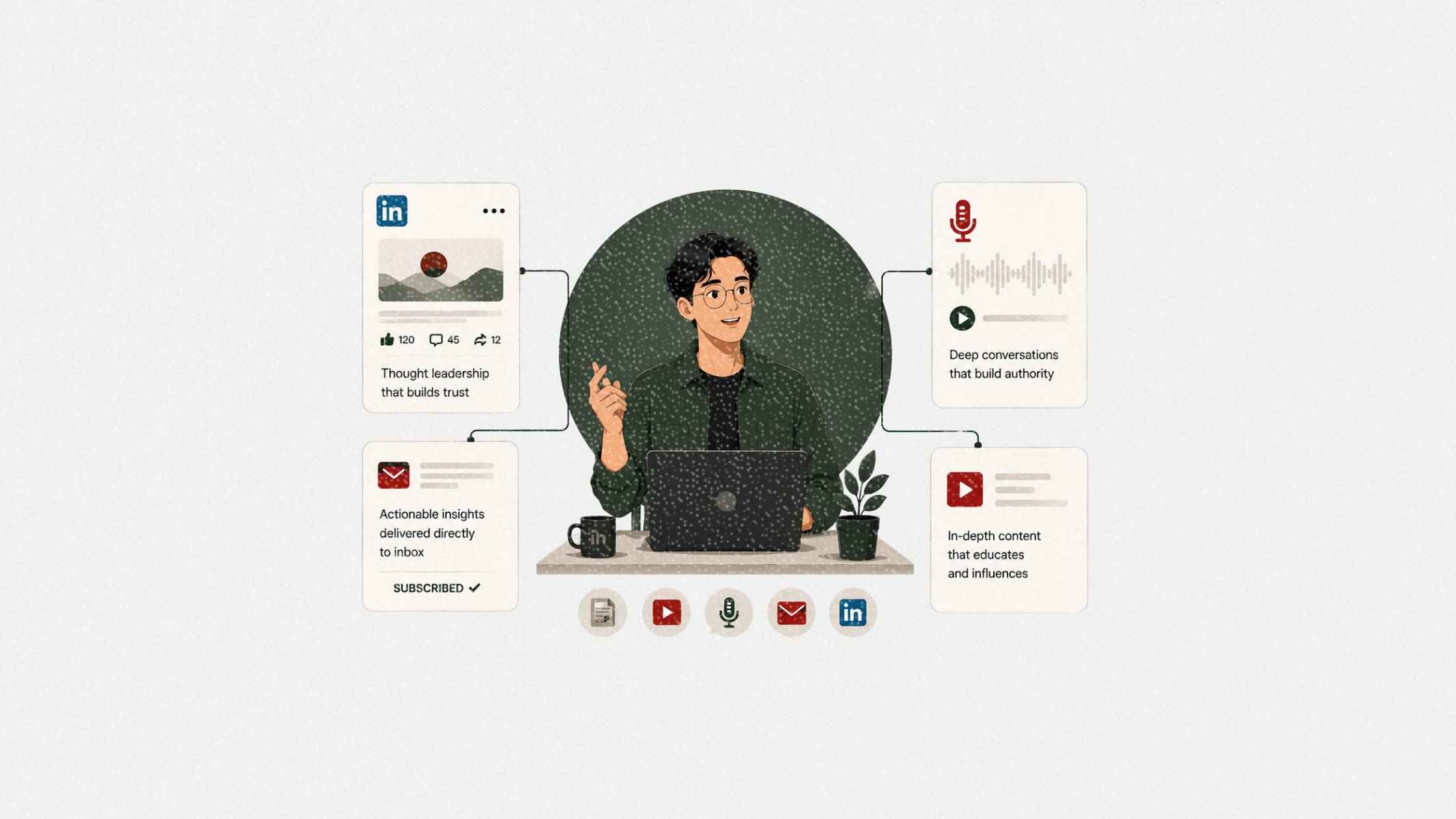
In 2026, the creator economy has matured into a multi-hundred-billion-dollar infrastructure that is quietly reshaping how B2B buying decisions get made. Industry analysts are projecting the market toward US$480 billion within a few years. LinkedIn has launched dedicated creator monetization tools. And research from LinkedIn’s own buyer surveys shows that more than half of B2B buyers consult creator content at the final stage of a purchase decision.
If you run a B2B brand and still think the creator economy is someone else’s concern, this piece is for you.
Table of contents
Jump to each section:
- What the creator economy is actually worth in 2026
- Why the valuations vary (and how to read them)
- The operator-creator: the tier B2B marketers keep overlooking
- How creator content is reshaping the B2B buying process
- LinkedIn’s creator infrastructure signals where B2B is heading
- What B2B marketers should do with all this
What the creator economy is actually worth in 2026
The headline figures are large and they vary, but the direction of travel is consistent regardless of which research house you consult.
Goldman Sachs Research estimates the total addressable market of the creator economy at roughly US$250 billion, with projections pointing toward US$480 billion by 2027. That would represent a near-doubling in under five years. Goldman Sachs puts the global creator population at around 50 million people, growing at a compound annual rate of 10 to 20 percent over the next five years.
Within that broader creator economy sits influencer marketing, which is the activation layer most brands actually buy into. According to Mordor Intelligence, the global influencer marketing market was valued at US$31.07 billion in 2025 and is projected to reach US$40.51 billion in 2026, a year-on-year increase of roughly 30 percent. That trajectory reflects a channel growing at a compound annual rate of 30.36 percent through 2031, and it has moved from experimental budget line to institutional spend across both B2C and B2B marketing.
 Ariana Sorensen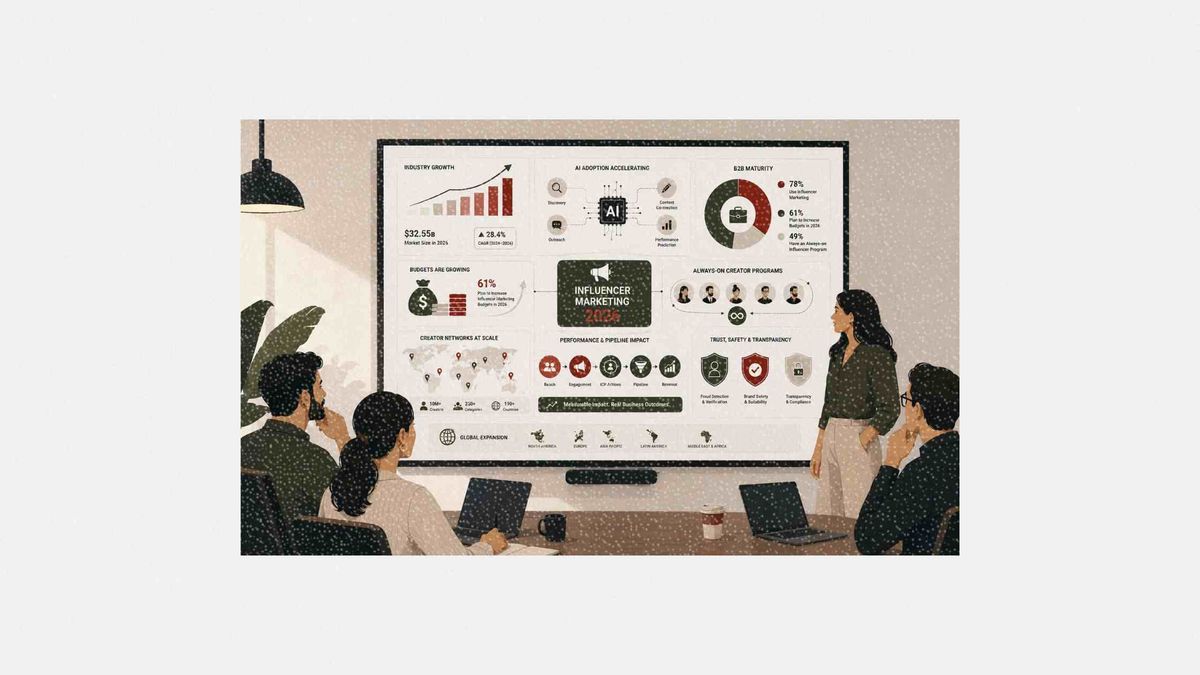
Why the valuations vary (and how to read them)
If you have spent any time reading creator economy reports, you will notice that the market size numbers rarely agree. Goldman Sachs pegs the current market at US$250 billion. Grand View Research put the 2024 figure at US$205.25 billion. Other firms project 2026 valuations well above US$300 billion. The variation is not errors in the data; it reflects genuinely different definitions of what counts.
Some researchers count only influencer marketing. Others include creator platform payouts, subscription revenue (Substack, Patreon), digital product sales, and live commerce. When Goldman Sachs says US$480 billion by 2027, they are projecting the full creator economy ecosystem, not just sponsored posts.
For B2B marketers, the most operationally useful number is influencer marketing spend, because that is the budget category most brands control. Mordor Intelligence puts that figure at US$31.07 billion in 2025, projected to reach US$40.51 billion in 2026.
What matters more than the exact figure is the behavioral signal. A market growing at 30 percent year-on-year does not do so because marketers are experimenting. It grows because the channel is working. According to Sprout Social’s 2025 influencer marketing research, 83 percent of marketers now rate their influencer programs as effective or very effective, a confidence level that directly precedes budget expansion.
Brand deals are the economic engine behind all of this. According to Goldman Sachs, approximately 70 percent of creator revenue comes from direct brand partnerships, not platform ad revenue shares or subscriptions. That means creators are, in large part, media businesses sustained by the marketing budgets of brands, and increasingly, those brands are in the B2B sector.
The operator-creator: the tier B2B marketers keep overlooking
The standard influencer marketing tier taxonomy covers nano (under 10,000 followers), micro (10,000 to 100,000), macro (100,000 to 1 million), and mega or celebrity (over 1 million). This taxonomy was designed for consumer marketing. It was built around follower counts and engagement rates on Instagram. It does not map cleanly onto how B2B influence actually works.
The tier that has emerged in the B2B creator economy does not fit neatly into any of those buckets. Call it the operator-creator: a practitioner who has built a substantive audience on LinkedIn, a newsletter platform like Substack, or a podcast by sharing genuine domain expertise.
These are former VPs of sales who write about pipeline, ex-CMOs who dissect campaign autopsies, SaaS founders who document their growth experiments in public, and category analysts who break down pricing models in detail.
A B2B operator-creator might have 8,000 LinkedIn followers. By consumer influencer standards, that is a nano account. But those 8,000 followers may include 400 procurement leads, 200 CTOs, and 60 founders who are actively evaluating solutions in the creator’s exact category. The audience density, meaning the proportion of ideal-fit buyers in that following, can be radically higher than any consumer influencer with ten times the reach.
This is the core insight that B2B marketers consistently miss. Follower count is not the right filter for B2B creator selection. The relevant questions are: Does this creator’s audience contain your buyers? Does this creator have enough credibility in the domain to move a professional buyer? And is the creator’s content format (LinkedIn posts, long-form newsletters, podcast episodes) appropriate for the buyer’s content consumption habits?
Traackr’s 2026 Creator Advantage US Report confirms the broader shift toward smaller-audience creators: across tracked brands in multiple consumer categories, nano and micro creators drove outsized growth in engagement, saves, shares, and total attention, outperforming larger tiers across most metrics. The down-market move in creator tier preference reflects an industry-wide recognition that audience quality now outranks audience size.
 Ariana Sorensen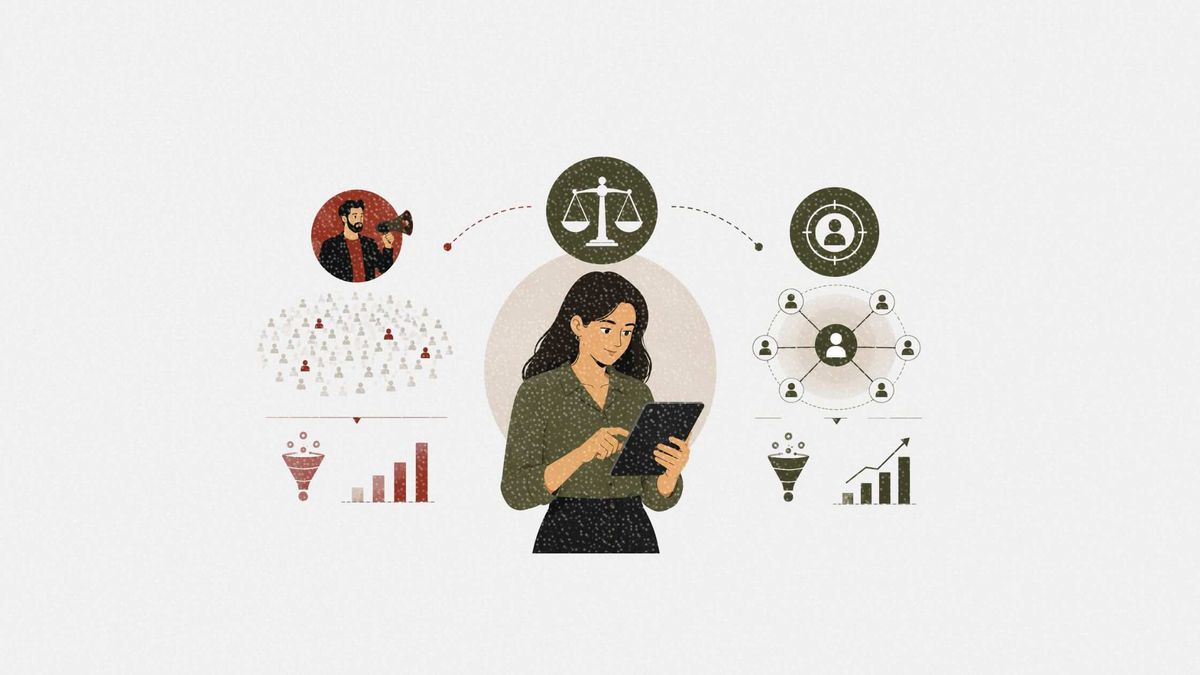
How creator content is reshaping the B2B buying process
The idea that professional buyers rely exclusively on analyst reports, vendor demos, and peer reference calls is outdated. LinkedIn’s 2026 Global B2B Marketing Outlook data tells a more complicated story.
According to LinkedIn research, 82 percent of B2B marketers say creators increase credibility with decision-makers. Seventy percent say their buyers rely more on peer voices and independent experts than on brand-produced content. And 56 percent of B2B buyers depend specifically on creator input during the final stage of the purchasing process to validate a recommendation before signing.
That last figure deserves close attention. Creator content is not operating purely at the top of the B2B funnel as an awareness play. For more than half of B2B buyers, creator voices factor into the final validation step of a purchase decision. That means the creator economy is now directly touching pipeline, not just brand lift.
This shift has a structural explanation. B2B buyers are flooded with vendor content. Every SaaS company publishes a blog, a newsletter, a podcast, and a LinkedIn page. The problem is that none of it is perceived as independent. When a practitioner who has actually built a sales team at a Series B company says a specific CRM helped them hit quota, that carries a different weight than anything that company’s own marketing team can produce.
LinkedIn’s own data reinforces this: 83 percent of B2B marketers say credibility matters more than traditional brand messaging, and 77 percent say buyers need to trust and know a brand before they are willing to engage. Creator partnerships accelerate both.
Dinda Anandita, Account Director at content-led PR agency Content Collision, puts it this way: “B2B buyers have become expert at filtering out content that exists to sell them something. The creator economy works in B2B precisely because the best operator-creators build trust through honest specificity. A CFO who follows a finance creator on LinkedIn is not looking for a brand pitch. They are looking for someone who has already done the hard thinking so they do not have to. That is a fundamentally different dynamic from traditional influencer marketing, and B2B brands that understand it will approach creator partnerships very differently.”
LinkedIn’s creator infrastructure signals where B2B is heading
LinkedIn’s product moves in 2025 and 2026 are worth reading as a directional signal, not just a feature update.
The platform launched BrandLink in May 2025, connecting brands with creators and publishers through pre-roll video placements directly in the LinkedIn feed. According to LinkedIn’s own performance data, BrandLink campaigns deliver 130 percent higher average video completion rates compared to standard in-feed video ads. Members exposed through a BrandLink campaign are up to 18 percent more likely to submit a Lead Gen Form.
BrandLink revenues surged nearly 200 percent quarter-over-quarter by Q2 2025, while creator and publisher payouts more than tripled year-over-year. The program has expanded to include partners such as BBC Studios, TED, The Economist, Reuters Japan, and TIME. By March 2026, LinkedIn added self-serve access to BrandLink through Campaign Manager, meaning teams without a dedicated LinkedIn account manager can now access the inventory directly.
In June 2026, LinkedIn launched Creator Marketplace and BrandWorks. Creator Marketplace allows brands to search for creators by topic and content expertise inside Campaign Manager, review performance data, and identify creator content eligible for amplification through Thought Leader Ads. The announcement also introduced Stripe-powered creator payouts, significantly reducing the operational friction that had made brand-creator deals slow and manual.
Taken together, these infrastructure moves represent LinkedIn’s bet that B2B creator partnerships are moving from relationship-driven one-off deals into a scalable, self-serve media channel. For B2B marketers, the implication is clear: the tooling to run systematic creator programs on LinkedIn now exists at a level it did not two years ago.
What B2B marketers should do with all this
The creator economy’s relevance to B2B marketing is no longer a thesis. It is a documented shift in buyer behavior backed by platform infrastructure investment and measurable campaign results. The question for B2B marketing teams is not whether to engage, but how to engage in a way that matches B2B buying realities rather than importing B2C tactics wholesale.
A few practical anchors:
Start with audience composition, not follower count. For every creator you evaluate, ask who is in the audience before you ask how large it is. A 6,000-follower LinkedIn creator whose audience is predominantly senior engineering leaders is more valuable to a DevSecOps SaaS than a 200,000-follower marketing generalist.
Match creator type to funnel stage. Operator-creators who share detailed practitioner content tend to perform at the mid and bottom of funnel, where B2B buyers are comparing options and validating decisions. Broad industry commentators or category analysts work better at the top of funnel for awareness and category education.
Plan for longer attribution windows. B2B sales cycles run weeks to months. A creator post that influences a buyer’s shortlist in January may not convert until April.
 Ariana Sorensen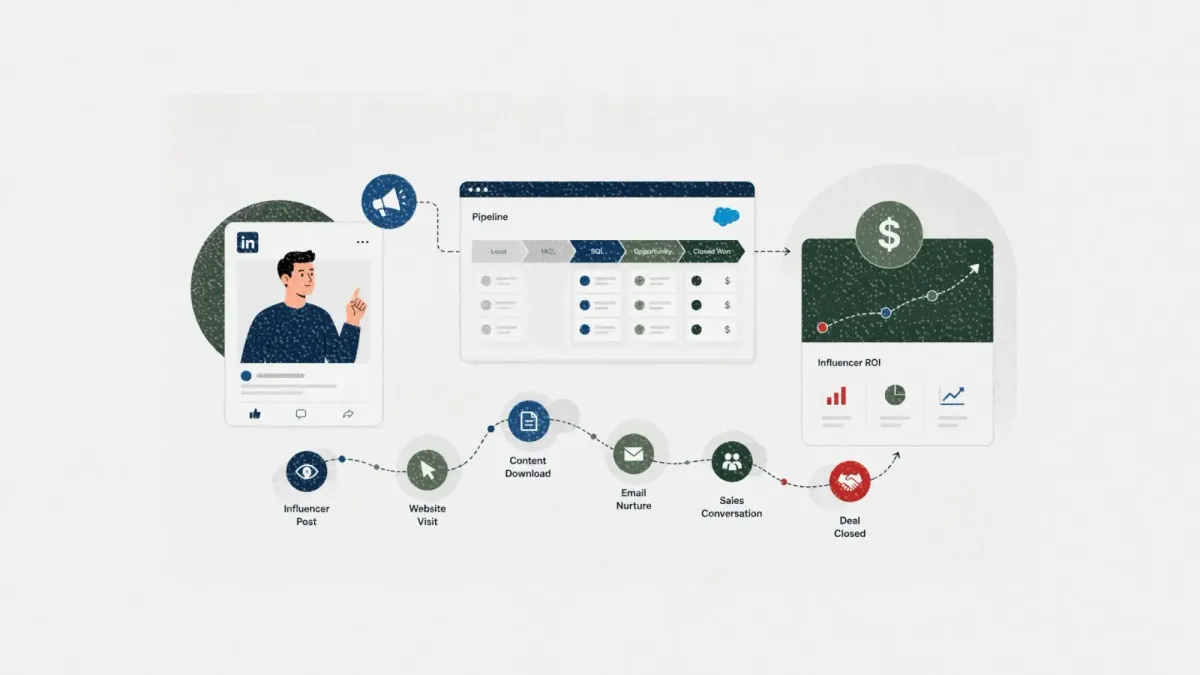
The US$480 billion projection Goldman Sachs puts on the creator economy by 2027 matters to B2B brands not because of the number itself, but because of what it signals: enormous amounts of marketing budget are shifting toward creator partnerships globally. B2B brands that build creator programs now are building relationships with emerging category voices before those voices become expensive or exclusive. That is a compounding advantage that only gets harder to replicate the longer you wait.