KFC is rolling out a Europe-wide collaboration tied to the theatrical release of Minions & Monsters, spanning 21 markets and combining limited-time food items with collectibles and in-restaurant activations.
The company outlined market-level execution details in an official campaign post, including banana-flavoured menu items and a boxed-meal collectible mechanic designed to extend the film’s universe into stores.
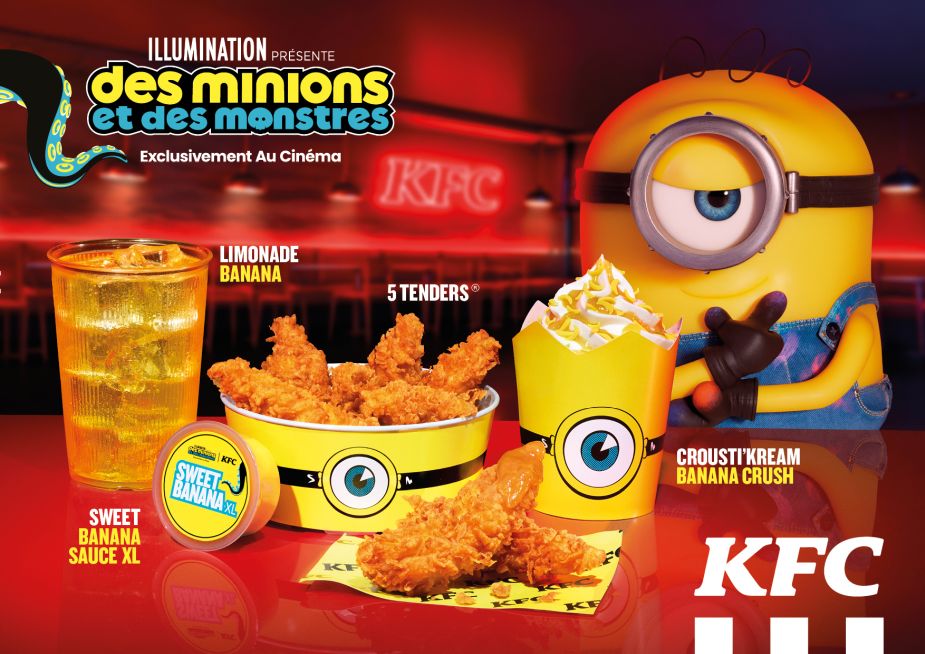
Table of contents
Jump to each section:
- What KFC is rolling out across Europe
- How the offer blends product innovation and collectibles
- Why music, influencers, and in-store matter in this concept
- What this means for marketers
What KFC is rolling out across Europe
The collaboration is positioned as a 360-degree campaign that runs across film, digital, social media, influencer marketing, out-of-home, and in-restaurant activations. The rollout is led as an international campaign conceived by Havas Paris and KFC France, and is executed across 21 European markets.
On the product side, the campaign includes a set of banana-forward menu items and themed packaging. The timing also aligns with the film’s release window, with the menu launching across many KFC European markets on June 17, followed by France on June 24.
How the offer blends product innovation and collectibles
The core mechanic is not just a themed menu. It’s a combination of product novelty and a collectible system designed to encourage repeat visits.
KFC’s campaign includes five mini-figures sold via blind bags, with an additional mystery figure produced in very limited quantities. That scarcity layer is designed to increase perceived value and trading behavior, which can help campaigns stay alive on social platforms beyond the first week of launch.
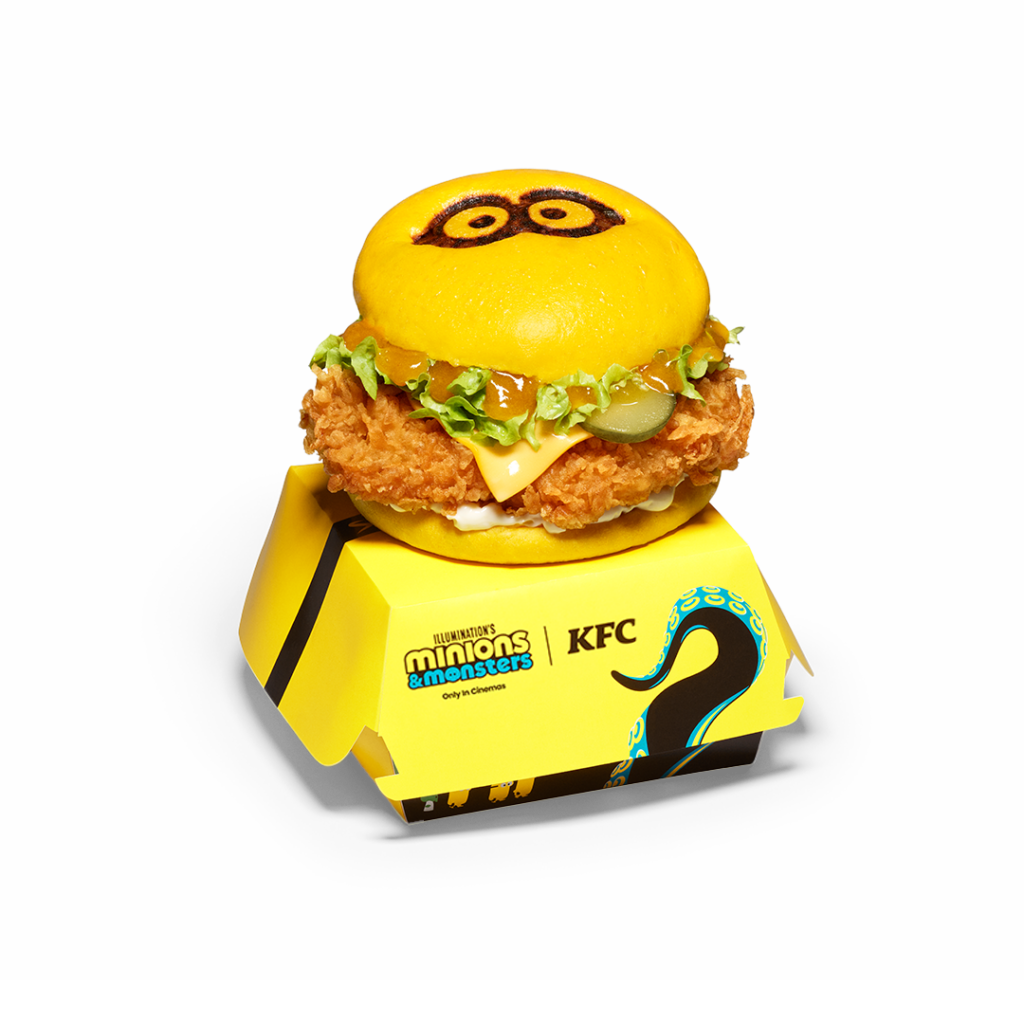
On the food side, KFC turns the Minions’ banana association into a product platform, including a banana dipping sauce for tenders, a “Minions-eye” stamped burger in selected markets, a banana-themed dessert, and banana-flavoured lemonade.
Why music, influencers, and in-store matter in this concept
The campaign is built to be encountered in multiple contexts, not just at the point of purchase. In practical terms, that means giving audiences multiple “entry points” into the idea: a cinema/TV layer for mass awareness, social and influencer layers for reinterpretation and sharing, and the in-restaurant layer for conversion and proof.
Music is also treated as a distribution lever, with the campaign powered by Chicken Banana by Crazy Music Channel, described as a viral phenomenon with more than 250 million views on YouTube. In this structure, the music is not background. It is part of how the collaboration becomes memetic enough to travel across markets with different languages and cultural cues.
What this means for marketers
Co-branded entertainment collaborations often fail when they stop at themed visuals. This one is structured around multiple reasons to participate, even for people who are not primarily motivated by the film itself.
- Build the campaign around a repeatable “collecting” behavior, not a one-time novelty
Blind bags and limited-quantity variants encourage multiple purchases and user-generated content, especially when the items are easy to display and trade. - Treat product innovation as the content engine
Banana sauce, banana dessert, and themed packaging create concrete, film-linked talking points that are easier for influencers and fans to demonstrate than generic branding. - Design for multi-surface distribution from day one
The plan spans cinema/TV, digital, social, influencer, out-of-home, and in-store. That matters because each surface plays a different role: awareness, interpretation, validation, and purchase. - Use audio as a portability layer across markets
A recognizable track can help standardize creative across regions without relying on localized copy to do all the work, especially when the concept is comedic and visual.
In Europe-wide activations, consistency is usually the hardest operational problem: the same idea has to work across different store footprints and media buying realities. This campaign’s structure suggests a practical way to manage that by keeping the core assets consistent (characters, banana-led menu twist, collectibles) while letting markets execute through the channels they can support.
For marketing teams, the broader lesson is that “brand collaboration” performs better when it is treated as a system: a product hook, a participation mechanic, and a distribution plan that anticipates how fans will remix it. That is what turns a limited-time offer into something people talk about beyond the restaurant visit.