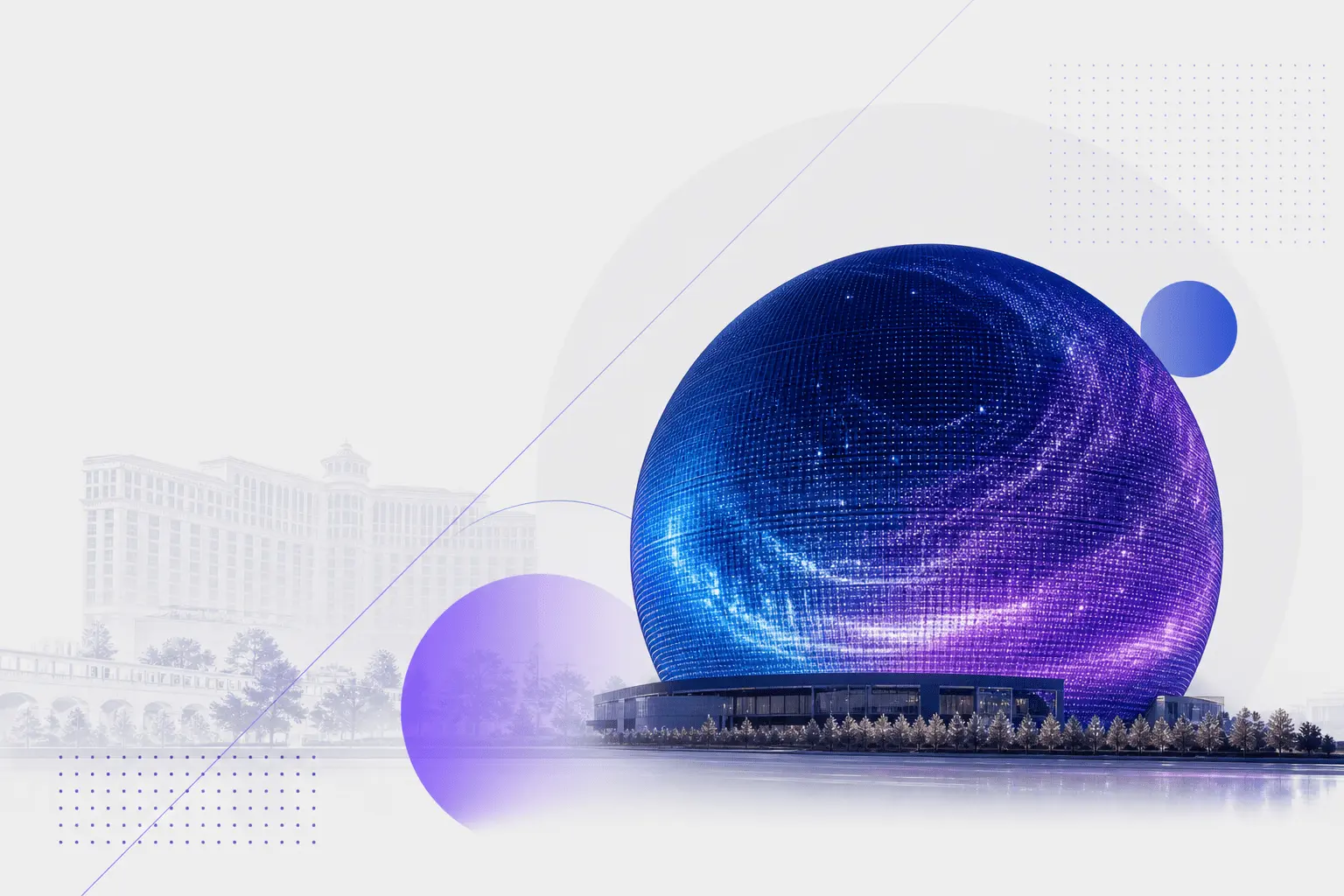
Seeing BTS visuals take over a public landmark is the kind of pop culture flex that fans treat like an event, not an ad. When a teaser loops on a screen as iconic as Las Vegas’ Sphere, it turns into a shared “did you see that?” moment, even for people who weren’t looking for K-pop content in the first place.
Google is leaning into that scale with Gemini, running a roughly 60-second teaser on the Sphere on rotation from August 2 to 8 (local time). The company framed it as a preview of what happens when Gemini’s AI meets BTS’s creativity, and it shared the details as part of an official announcement.

Table of contents
Jump to each section:
- Why the Sphere teaser works as a fandom moment
- What the teaser actually shows
- What this says about AI brands borrowing entertainment language
- What this means for marketers
Why the Sphere teaser works as a fandom moment
BTS fans are trained by years of comeback culture to treat teasers like puzzles: logos, quick cuts, a phrase on screen, and a few symbolic images can be enough to trigger theories, timelines, and group chats. Putting that teaser language on the Sphere makes it feel less like a typical tech partnership and more like a headline-making “spot the clues” drop.
The setting matters. The Sphere is a spectacle machine by design, so a rotating teaser doesn’t need extra explanation to signal importance. The medium itself tells viewers: this is big, pay attention.
What the teaser actually shows
The teaser opens with Gemini and BTS logos appearing on the Sphere exterior. It then shows a Gemini chat-style prompt that reads, “Gemini, I want to learn about BTS,” followed by sequences that include the venue audience, the BTS logo, and images tied to BTS’s fifth full-length album “ARIRANG.”
It also includes a shot of Gyeongbokgung Palace, positioning Korean cultural imagery inside the visual rhythm of a global tech campaign. The timing suggests a multi-step drip, too: Google described this as a follow-up teaser to an earlier teaser released on August 6.

What this says about AI brands borrowing entertainment language
The creative choice here is telling: instead of pitching capabilities, it frames Gemini like a curious fan. “I want to learn about BTS” is less a product demo and more an invitation to imagine AI as a companion for exploration, discovery, and context.
And choosing BTS as the creative bridge is a way to make “AI meets art” feel emotionally legible. Even if viewers don’t know what Gemini can do, they understand the collaboration vibe: fandom plus spectacle plus a teaser format that implies there’s more coming.
What this means for marketers
Big cultural placements work when they behave like culture first, media buy second. This teaser is built like a comeback breadcrumb trail, then amplified with a landmark screen that makes it feel unavoidable.
- Treat teaser formats as community fuel, not just awareness
Short, clue-like cuts invite rewatching and interpretation. That behaviour is the point, especially when you want people to talk before they fully understand what’s coming.
- Let the medium communicate scale
A landmark placement can do narrative work on its own. When the screen is famous, the campaign doesn’t need to shout; it can hint.
- Use “human prompts” to make AI feel less abstract
A chat phrase framed as curiosity (“I want to learn about…”) reads like a real person thought, which can make AI positioning feel less technical and more everyday.
- Cultural specificity can travel globally when it’s visual
Including a recognizable Korean landmark in the creative is a reminder that global campaigns can keep local identity without turning into an explainer.
If Google’s goal is anticipation, this approach makes sense: it’s not asking audiences to evaluate an AI product on specs. It’s asking them to feel like they’re early to a moment. For marketers, the broader signal is that AI brands are increasingly competing in the same attention economy as entertainment, where format, fandom behaviour, and spectacle can matter as much as features.